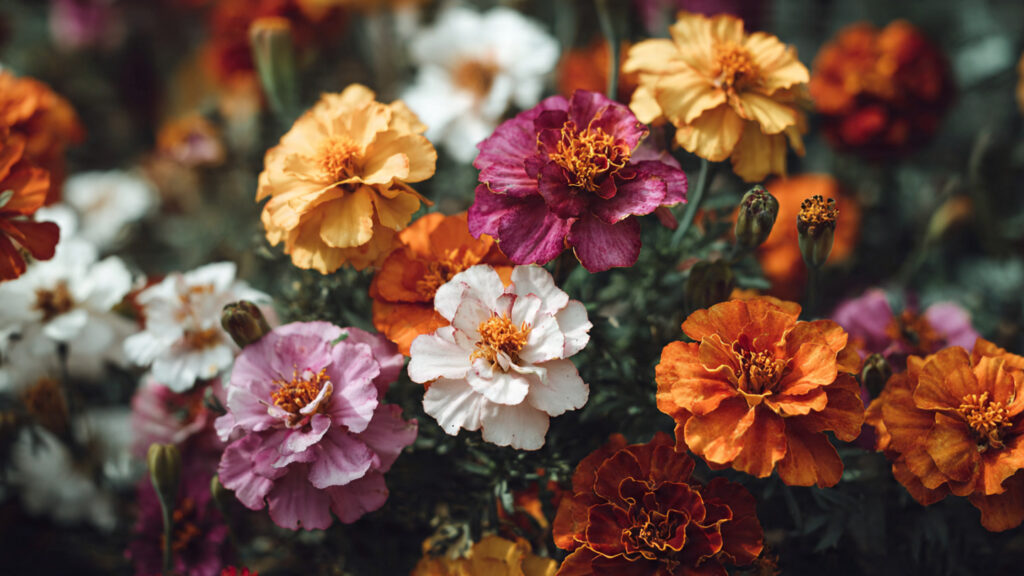
Gardening can be a fulfilling hobby, but not everyone has the time or energy to tend to plants daily. Between work, family, and other commitments, it’s easy to forget to water, prune, or fertilize flowers consistently. Fortunately, there are low-maintenance flowers that can thrive with minimal care, ensuring your garden remains vibrant and colorful even if you occasionally forget about it. These resilient plants are perfect for beginners, busy homeowners, or anyone who wants a beautiful garden without constant attention.
This guide explores 11 low-maintenance flowers that survive neglect, resist pests, and reward you with blooms, making gardening stress-free and enjoyable.
1. Marigolds (Tagetes spp.)
Marigolds are known for their bright yellow, orange, and red blooms and incredible resilience:
- Water Needs: Moderate; they tolerate drought once established.
- Sunlight: Full sun, though partial shade is acceptable.
- Maintenance: Minimal; deadhead occasionally to encourage new blooms.
Marigolds also have a natural pest-repellent quality, making them a perfect companion for vegetable gardens.
2. Zinnias (Zinnia spp.)
Zinnias are cheerful, colorful annuals that flourish even with sporadic care:
- Water Needs: Low to moderate; avoid overwatering.
- Sunlight: Full sun.
- Maintenance: Deadheading improves bloom longevity, but flowers will still flourish without it.
Zinnias attract pollinators like butterflies and bees, adding life to your garden effortlessly.
3. Coneflowers (Echinacea spp.)
Coneflowers are hardy perennials with distinctive daisy-like blooms and long-lasting petals:
- Water Needs: Low; drought-tolerant once established.
- Sunlight: Full sun to partial shade.
- Maintenance: Very low; leave spent flowers for natural seed propagation.
Coneflowers are excellent for creating wildflower-style gardens that thrive without constant attention.
4. Daylilies (Hemerocallis spp.)
Daylilies are renowned for their vivid blooms and tolerance to neglect:
- Water Needs: Low once established.
- Sunlight: Full sun to light shade.
- Maintenance: Minimal; occasional removal of spent leaves or flowers keeps the plant tidy.
They spread over time, creating a lush, colorful ground cover without much effort.
5. Sedum (Sedum spp.)
Sedum, or stonecrop, is a succulent perennial that survives in harsh conditions:
- Water Needs: Very low; drought-resistant.
- Sunlight: Full sun preferred.
- Maintenance: Practically none; ideal for rock gardens, containers, or borders.
Its fleshy leaves and clustered flowers provide texture and interest even when neglected.
6. Black-eyed Susans (Rudbeckia spp.)
Black-eyed Susans are bright yellow flowers with a dark center, famous for their durability:
- Water Needs: Moderate; drought-tolerant after establishment.
- Sunlight: Full sun.
- Maintenance: Low; minimal pruning needed, flowers may self-seed.
They attract butterflies and other pollinators, adding a natural touch to the garden.
7. Lavender (Lavandula spp.)
Lavender is not only visually appealing and fragrant, but also highly resilient:
➡️ How to Grow Malabar Spinach from Cuttings for Fast, Easy Greens
➡️ How to Grow Super Delicious Cabbage at Home Without a Garden
➡️ How to Grow Bean Sprouts at Home in Plastic Bottles Easily (Step‑by‑Step Guide)
➡️ Why is Your Lemon Tree Blooming in the Heart of Winter?
➡️ Why Should Your Garden Have a Dedicated Pollinator Highway?
➡️ Why Do Your Fruit Trees Need a Winter Wash to Thrive in Spring?
➡️ How Can Rice Water Transform Your Fruits into Sweeter Delights?
➡️ Jumpstart Your Winter Garden: Seed Starting Under Lights
- Water Needs: Low; prefers dry soil.
- Sunlight: Full sun.
- Maintenance: Occasional pruning maintains shape, but the plant thrives otherwise.
Lavender repels pests and attracts bees, making it both beautiful and functional in any garden.
8. Russian Sage (Perovskia atriplicifolia)
Russian Sage has silvery foliage and lavender-blue blooms, perfect for low-care gardens:
- Water Needs: Low; drought-tolerant.
- Sunlight: Full sun.
- Maintenance: Minimal; occasional pruning after flowering enhances appearance.
Its airy texture adds elegance to borders or mixed perennial beds without requiring much attention.
9. Gaillardia (Blanket Flower)
Gaillardia, or blanket flower, is a drought-resistant perennial with vibrant red and yellow blooms:
- Water Needs: Low; tolerates dry conditions.
- Sunlight: Full sun.
- Maintenance: Very little; deadheading encourages prolonged blooming but is optional.
Gaillardia thrives in poor soil, making it perfect for gardeners who want a colorful display with minimal effort.
10. Coreopsis (Coreopsis spp.)
Coreopsis produces bright, daisy-like flowers and spreads easily:
- Water Needs: Low to moderate; once established, very resilient.
- Sunlight: Full sun.
- Maintenance: Low; can self-seed and bloom continuously through summer.
Its prolific blooms make it ideal for naturalized or cottage gardens, requiring minimal upkeep.
11. Sedum ‘Autumn Joy’
Unlike traditional sedum, ‘Autumn Joy’ features late-season pink blooms that mature into coppery tones, providing color in fall gardens:
- Water Needs: Very low; extremely drought-tolerant.
- Sunlight: Full sun.
- Maintenance: Practically none; cut back in early spring to encourage fresh growth.
This variety ensures long-lasting interest even when other plants have faded.
Tips for Maintaining Low-Maintenance Gardens
Even with resilient flowers, a few strategic habits ensure your garden thrives:
1. Choose the Right Location
- Full sun gardens favor the majority of these flowers.
- Ensure proper spacing for airflow to reduce disease risk.
2. Prepare Soil Well
- Add organic matter to improve drainage and fertility.
- Most low-maintenance flowers tolerate poor soil but thrive in light, well-draining beds.
3. Mulch Around Plants
- Mulching retains moisture and reduces weed growth.
- Organic mulch breaks down over time, adding nutrients to the soil.
4. Group Plants by Water Needs
- Combining drought-tolerant plants in the same bed prevents overwatering and promotes healthy growth.
5. Minimal Fertilization
- Use slow-release fertilizer at the start of the season.
- Over-fertilizing can encourage weak, floppy growth that requires more maintenance.
Advantages of Low-Maintenance Flowers
Low-maintenance flowers offer many benefits for busy gardeners:
- Saves time and effort: No need for daily watering or pruning.
- Drought tolerance: Ideal for water-restricted areas or hot climates.
- Attracts pollinators: Many low-care flowers support bees, butterflies, and birds.
- Visual impact: Provides color, texture, and structure without constant care.
- Durability: Resilient to pests, diseases, and seasonal stress.
With these advantages, even a neglected garden can remain vibrant and productive, reducing stress while adding beauty to your outdoor space.
Creating a Low-Maintenance Garden Design
To maximize impact:
- Layer plant heights: Place taller flowers like Black-eyed Susans and Rudbeckia at the back, with shorter Zinnias and Marigolds in front.
- Use repetition: Planting the same species in clusters creates a bold, cohesive display.
- Incorporate perennials: They return each year with minimal effort.
- Mix textures: Combine foliage shapes, flower colors, and bloom times for year-round interest.
This design strategy ensures a vibrant garden that thrives even with minimal attention.
Conclusion
Gardening doesn’t have to be labor-intensive to be beautiful. By choosing the right plants, such as Marigolds, Zinnias, Coneflowers, Daylilies, Sedum, Black-eyed Susans, Lavender, Russian Sage, Gaillardia, Coreopsis, and Autumn Joy Sedum, you can create a lush, colorful garden that thrives even when you forget to tend it.
Pairing these hardy flowers with smart planting strategies, minimal fertilization, proper mulching, and appropriate watering, ensures your garden remains vibrant and resilient throughout the seasons. Whether you are a busy professional, a beginner gardener, or someone who simply enjoys effortless beauty, these low-maintenance flowers allow you to enjoy colorful blooms, pollinator-friendly spaces, and a thriving garden with minimal effort.
Embrace these resilient blooms, and your garden will flourish, proving that even with neglect, nature has a way of rewarding you with beauty.