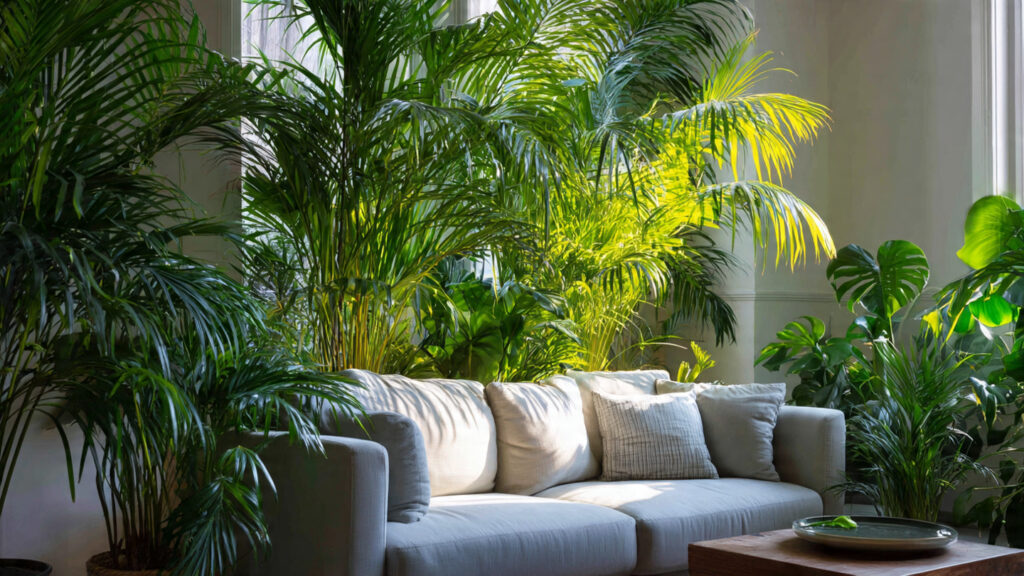
Imagine walking into your living room and being greeted by the soft rustle of palm fronds swaying gently, creating a lush, tropical indoor oasis. Palm plants are a popular choice for indoor greenery because they bring elegance, texture, and a calming vibe to any space. From classic Areca palms to the dramatic Majesty palms, these versatile plants can thrive indoors when given the right care.
If you’ve ever wanted to create a green sanctuary in your home, growing palm plants in your living room is an ideal way to combine style, wellness, and nature. Here’s a complete guide with the best tips to grow thriving palms indoors and turn your living space into a verdant paradise.
1. Choosing the Right Palm Plant for Indoor Living
Not all palms thrive indoors, so selecting the right species is essential. Some popular indoor palm varieties include:
- Areca Palm (Dypsis lutescens): Known for its feathery fronds and air-purifying qualities.
- Parlor Palm (Chamaedorea elegans): Compact, low-maintenance, and perfect for small spaces.
- Majesty Palm (Ravenea rivularis): Dramatic, tall, and tropical-looking for statement corners.
- Kentia Palm (Howea forsteriana): Elegant, slow-growing, and tolerant of lower light.
Choose a palm that suits your living room space, light availability, and maintenance preferences. The right palm ensures longevity and a lush, vibrant indoor garden.
2. Providing Adequate Light
Light is the most important factor for indoor palms. Most indoor palms thrive in bright, indirect light, but some can tolerate lower light levels:
- Bright Indirect Light: Place palms near east or west-facing windows, or use sheer curtains to diffuse sunlight.
- Low Light Tolerant Varieties: Parlor palms and Kentia palms can survive in low-light corners but will grow more slowly.
- Artificial Lighting: If natural light is limited, consider grow lights to supplement their needs.
Proper lighting ensures healthy green fronds, robust growth, and a lively indoor environment.
3. Choosing the Right Pot and Soil
The container and soil are crucial for a palm’s health:
- Pot Size: Choose a pot slightly larger than the root ball, with room for growth but not too big to avoid waterlogging.
- Drainage: Ensure the pot has drainage holes to prevent root rot.
- Soil Mix: Use a well-draining potting mix, preferably one designed for palms or indoor plants. Mix in sand or perlite for better drainage.
The right pot and soil combination supports strong roots, prevents disease, and ensures optimal hydration.
4. Watering Your Palm Plants
Watering is critical but often misunderstood. Too much or too little can harm your indoor palm:
- Consistency is Key: Water palms when the top inch of soil feels dry.
- Avoid Overwatering: Palms are susceptible to root rot if left in soggy soil.
- Humidity: Indoor palms thrive in moderate to high humidity. Mist the fronds occasionally or place a humidifier nearby.
Regular, measured watering ensures lush fronds and healthy growth without stressing the plant.
5. Feeding and Fertilization
Indoor palms benefit from nutrients to grow strong and vibrant:
- Balanced Fertilizer: Use a slow-release or liquid fertilizer formulated for palms during the growing season (spring and summer).
- Micronutrients: Palms need magnesium, potassium, and iron for healthy green fronds.
- Avoid Overfertilizing: Too much fertilizer can burn roots and damage foliage.
Proper feeding promotes new growth, vibrant color, and overall plant vitality.
6. Maintaining Optimal Temperature and Humidity
Palms are tropical plants and prefer warm and stable conditions:
- Temperature: Keep your living room between 65–80°F (18–27°C). Avoid sudden drafts or cold spots.
- Humidity: Increase humidity with a pebble tray, regular misting, or a room humidifier, especially in winter when indoor air is dry.
Stable conditions reduce stress, prevent leaf browning, and encourage continuous growth.
7. Pruning and Grooming Your Palms
Pruning keeps your indoor palms looking elegant and prevents disease:
➡️ How to Grow Malabar Spinach from Cuttings for Fast, Easy Greens
➡️ How to Grow Super Delicious Cabbage at Home Without a Garden
➡️ How to Grow Bean Sprouts at Home in Plastic Bottles Easily (Step‑by‑Step Guide)
➡️ Why is Your Lemon Tree Blooming in the Heart of Winter?
➡️ Why Should Your Garden Have a Dedicated Pollinator Highway?
➡️ Why Do Your Fruit Trees Need a Winter Wash to Thrive in Spring?
➡️ How Can Rice Water Transform Your Fruits into Sweeter Delights?
➡️ Jumpstart Your Winter Garden: Seed Starting Under Lights
- Remove Dead or Yellow Fronds: Trim fronds at the base to maintain a tidy appearance.
- Avoid Over-Pruning: Healthy green fronds should not be removed; they provide energy through photosynthesis.
- Dust the Leaves: Wipe fronds with a damp cloth to remove dust and allow better light absorption.
Grooming ensures a clean, lush, and attractive living room oasis.
8. Dealing with Pests and Diseases
Indoor palms are generally hardy but can face common pests and issues:
- Spider Mites: Tiny pests that thrive in dry indoor air. Mist regularly and use insecticidal soap if needed.
- Mealybugs: Look for cotton-like spots on fronds. Remove manually or apply natural insecticides.
- Leaf Browning: Often caused by low humidity, overwatering, or lack of nutrients. Adjust care accordingly.
Early detection and treatment keep your palms healthy and pest-free, maintaining a lush indoor appearance.
9. Propagating Your Palm Plants
For advanced indoor gardeners, propagating palms can expand your indoor oasis:
- Division: Some clumping palms, like Areca palms, can be divided at the roots.
- Seed Propagation: Collect seeds from mature palms and grow seedlings in moist, well-draining soil.
- Patience: Palm propagation is slow, but watching new plants grow is rewarding.
Propagation ensures a continuous supply of greenery and allows you to decorate multiple rooms.
10. Designing Your Indoor Palm Oasis
Creating a tropical living room involves more than just planting:
- Group Plants Together: Arrange palms in clusters to mimic a natural tropical environment.
- Combine Heights and Textures: Mix tall palms with shorter plants for visual interest.
- Decorative Pots: Use stylish pots to enhance your living room decor.
- Lighting Accents: Highlight palms with soft indoor lighting to create ambiance.
Thoughtful design transforms your living room into a vibrant, relaxing tropical retreat.
Bonus Tips for Thriving Indoor Palms
- Rotate the plant occasionally to ensure even growth and light exposure.
- Use a humidity tray or group plants to maintain optimal humidity.
- Avoid drafts from air conditioners or heaters to prevent stress.
- Clean fronds regularly for dust-free, glossy leaves.
- Research your palm species to tailor care for best results.
These tips ensure your living room oasis remains lush, vibrant, and healthy year-round.
Conclusion
Growing palm plants in your living room is a rewarding way to bring nature indoors, creating a tropical oasis that is both relaxing and visually stunning. By choosing the right species, providing adequate light, watering carefully, maintaining humidity, and practicing proper grooming, you can enjoy lush, healthy palms that enhance your indoor environment.
A living room filled with palm plants not only beautifies your home but also promotes better air quality, stress relief, and connection with nature. With the right care and attention, your indoor oasis can thrive year-round, providing a green sanctuary in the heart of your home.
Start today, follow these best tips for growing palm plants, and transform your living room into a lush tropical haven that your family and guests will love.