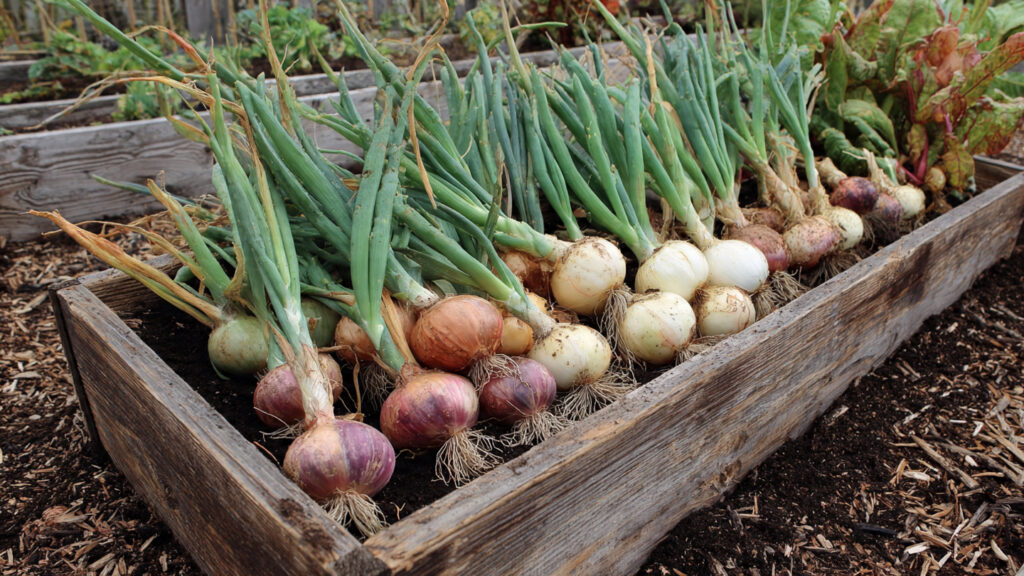
Onions are a kitchen staple, adding flavor, aroma, and nutrition to countless dishes. For home gardeners, the idea of growing a year’s supply of onions in a single raised bed might sound like a dream—but is it really possible? The answer is yes, with the right planning, techniques, and care, you can maximize a small growing area to produce an impressive harvest. In this article, we’ll explore how to grow a year’s worth of onions in one raised bed, from soil preparation to planting, maintenance, and storage strategies.
Why Raised Beds Are Ideal for Growing Onions
Raised beds offer several advantages that make them particularly suitable for onion cultivation:
- Improved Drainage – Onions dislike waterlogged soil. Raised beds allow excess water to drain freely, reducing the risk of rot and fungal diseases.
- Better Soil Quality – You can fill your bed with nutrient-rich, well-draining soil tailored for onion growth.
- Easier Maintenance – Raised beds reduce weeding, make watering more efficient, and simplify harvesting.
- Maximized Space – Careful planning and spacing can allow more onions per square foot than traditional in-ground planting.
These benefits make raised beds an excellent solution for gardeners seeking to grow large quantities of onions in a limited space.
Planning Your Onion Raised Bed
Before planting, careful planning ensures that your bed can produce a year’s supply of onions. Key considerations include:
1. Bed Size and Layout
- Standard raised bed dimensions are usually 4 feet wide by 8 feet long.
- Depth: Onions develop bulbs underground, so a bed 8–12 inches deep is sufficient.
- Spacing: Onions require approximately 4–6 inches between plants in rows spaced 12 inches apart. Using efficient spacing and succession planting, a raised bed can accommodate hundreds of onions.
2. Choosing the Right Onion Varieties
Your choice of onion variety affects yield, storage, and flavor. Popular types include:
- Short-day onions: Ideal for warmer climates; begin bulb formation with 10–12 hours of daylight.
- Long-day onions: Best for cooler climates; require 14–16 hours of daylight to form bulbs.
- Storage onions: Varieties like Walla Walla, Red Creole, and Yellow Sweet Spanish store well for months.
For a year-round supply, select varieties suited to your climate and intended storage duration.
3. Soil Preparation
Healthy onions need nutrient-rich soil. Follow these steps:
- Test your soil pH: Onions thrive in slightly acidic to neutral soil (pH 6.0–7.0).
- Add organic matter: Compost or well-rotted manure improves fertility and structure.
- Fertilize: Incorporate a balanced fertilizer high in nitrogen at planting, switching to phosphorus and potassium as bulbs develop.
- Ensure loose soil: Onions need loose soil to expand bulbs; heavy or compacted soil restricts growth.
A well-prepared raised bed sets the foundation for maximum yields.
Planting Techniques for Maximum Yield
To grow a year’s worth of onions in one bed, consider these planting techniques:
1. Direct Seeding vs. Transplants
- Seeds: Cheaper and offer a wide variety of types but take longer to mature.
- Sets (small bulbs): Faster and easier for beginners but may offer less variety.
- Transplants: Seedlings grown in trays and transplanted after 6–8 weeks combine fast growth with better selection.
For maximum yield, many gardeners combine early sets or transplants with direct seeding for staggered harvests.
2. Succession Planting
By planting in intervals, you can ensure a continuous supply:
- Plant early-season onions in spring for summer harvest.
- Sow mid-season varieties 2–3 weeks later.
- Late-season or storage onions can be planted for fall harvest and winter storage.
Succession planting makes it possible to harvest onions throughout the year from a single raised bed.
3. Square Foot Gardening
Using square foot gardening techniques maximizes space:
- Divide the bed into 1-foot squares.
- Plant 9 onions per square foot using close spacing, ensuring bulbs have enough room to develop.
- This method can dramatically increase your yield per bed compared to traditional row planting.
Careful planning ensures the raised bed produces more than enough onions for household use.
Caring for Your Onions
Even with optimal planting, onions require consistent care to thrive.
➡️ How to Grow Malabar Spinach from Cuttings for Fast, Easy Greens
➡️ How to Grow Super Delicious Cabbage at Home Without a Garden
➡️ How to Grow Bean Sprouts at Home in Plastic Bottles Easily (Step‑by‑Step Guide)
➡️ Why is Your Lemon Tree Blooming in the Heart of Winter?
➡️ Why Should Your Garden Have a Dedicated Pollinator Highway?
➡️ Why Do Your Fruit Trees Need a Winter Wash to Thrive in Spring?
➡️ How Can Rice Water Transform Your Fruits into Sweeter Delights?
➡️ Jumpstart Your Winter Garden: Seed Starting Under Lights
1. Watering
- Onions need regular watering, especially during bulb formation.
- Avoid overwatering; soggy soil promotes rot.
- Aim for deep, infrequent watering to encourage strong root growth.
2. Fertilization
- Side-dress with nitrogen-rich fertilizer every 3–4 weeks during early growth.
- Reduce nitrogen as bulbs mature to encourage size and firmness.
- Use organic fertilizers such as compost tea or fish emulsion for a natural approach.
3. Mulching
- Mulch with straw or shredded leaves to retain moisture, suppress weeds, and regulate soil temperature.
- Mulching also protects onions from frost during early or late plantings.
4. Pest and Disease Management
Common pests include onion maggots, thrips, and aphids. Strategies include:
- Crop rotation: Avoid planting onions in the same bed each year.
- Companion planting: Carrots, lettuce, and beets repel certain pests.
- Organic sprays: Neem oil or insecticidal soap can control infestations.
Diseases like downy mildew or fungal infections can be minimized with proper spacing, airflow, and soil hygiene.
Harvesting and Storing Onions
The key to having a year’s supply is proper harvest timing and storage.
1. Harvesting
- Onions are ready when tops begin to yellow and fall over naturally.
- Gently lift bulbs from the soil with a fork or hand tool.
- Allow onions to cure in a dry, airy location for 2–3 weeks to enhance storage life.
2. Storing
- Store cured onions in a cool, dark, well-ventilated area.
- Avoid plastic bags; mesh bags, crates, or baskets are ideal.
- Storage onions can last 6–12 months if kept dry and cool.
- Green onions or fresh onions are best used immediately or refrigerated for short-term use.
By staggering planting and using proper storage techniques, a single raised bed can indeed supply onions for an entire year.
Tips to Maximize a Raised Bed Yield
- Double-Dig or Deep-Till Soil – Ensures roots can grow deeply and bulbs develop fully.
- Interplant with Quick Crops – Lettuce or radishes can be harvested early, leaving room for onion bulbs to expand.
- Use High-Yield Varieties – Opt for onion types known for producing larger bulbs and dense clusters.
- Protect from Frost and Extreme Heat – Row covers or shade cloths extend the growing season and prevent stress.
- Regular Monitoring – Check for pests, diseases, or nutrient deficiencies throughout the season.
Following these tips ensures that your raised bed produces the maximum possible yield.
Is It Truly Possible to Grow a Year’s Supply?
The amount of onions a household consumes varies, but a raised bed 4×8 feet with careful planning, proper spacing, succession planting, and diligent care can easily produce 150–200 bulbs. For many families, this is enough to meet a year’s onion needs.
By combining storage onions, fresh-use onions, and green onions, gardeners can enjoy a continuous harvest while minimizing store-bought purchases. The key is efficiency—maximizing space, staggering planting dates, and storing bulbs properly.
Final Thoughts
Growing a year’s supply of onions in a single raised bed is not only possible but also highly rewarding. With thoughtful planning, the right onion varieties, proper soil preparation, and consistent care, a small garden space can become a self-sufficient onion powerhouse.
Raised beds simplify maintenance, improve soil quality, and allow gardeners to experiment with high-density planting techniques. By embracing succession planting, pest management, and storage strategies, you can enjoy a steady supply of fresh and storage-ready onions year-round.
Whether you’re a beginner or a seasoned gardener, dedicating a raised bed to onions can save money, reduce trips to the store, and give you the satisfaction of growing your own staple crops. With commitment and careful planning, your raised bed can indeed provide enough onions to last an entire year, proving that smart gardening can yield both abundance and convenience.