Harvest season is one of the most rewarding times for any gardener. After months of nurturing your plants, there’s nothing quite like the satisfaction of gathering fresh vegetables, fruits, and herbs straight from your garden. But the challenge comes next: how do you keep your harvest fresh for months without losing flavor, nutrition, or texture? Proper storage methods are key to extending the life of your produce, reducing waste, and ensuring you enjoy your garden’s bounty long after the growing season ends. Whether you’re a seasoned gardener or a beginner, here’s a comprehensive guide to the best storage techniques.
Why Proper Harvest Storage Matters
Freshly harvested produce is highly perishable. Without appropriate storage, fruits and vegetables can spoil within days, causing unnecessary waste and lost nutrients. Proper storage not only extends shelf life but also preserves flavor, texture, and vitamin content. Some reasons to invest in storage methods include:
- Reduce Food Waste: Properly stored harvests stay edible for weeks or months.
- Save Money: Stretch your homegrown produce and reduce trips to the grocery store.
- Maintain Nutrition: Fresh storage retains vitamins, antioxidants, and minerals.
- Enjoy Seasonal Foods Year-Round: Store winter squash, root vegetables, or apples to savor their flavors throughout the year.
Understanding storage methods for different types of produce is the first step to keeping your harvest fresh.
Storage Basics: Temperature, Humidity, and Airflow
The three most important factors for storing produce are temperature, humidity, and air circulation:
1. Temperature
- Most vegetables and fruits last longer at cooler temperatures, typically between 32°F and 50°F (0–10°C).
- Root vegetables like carrots, beets, and potatoes thrive near 32–40°F, while apples prefer slightly warmer conditions around 38–45°F.
2. Humidity
- High humidity (85–95%) is ideal for leafy greens, herbs, and carrots.
- Low humidity works better for squash, onions, and garlic to prevent mold and rot.
- Using perforated plastic bags, storage bins, or humidifiers can help maintain optimal moisture levels.
3. Air Circulation
- Proper airflow prevents mold, rot, and premature sprouting.
- Avoid overcrowding your storage containers or refrigerators.
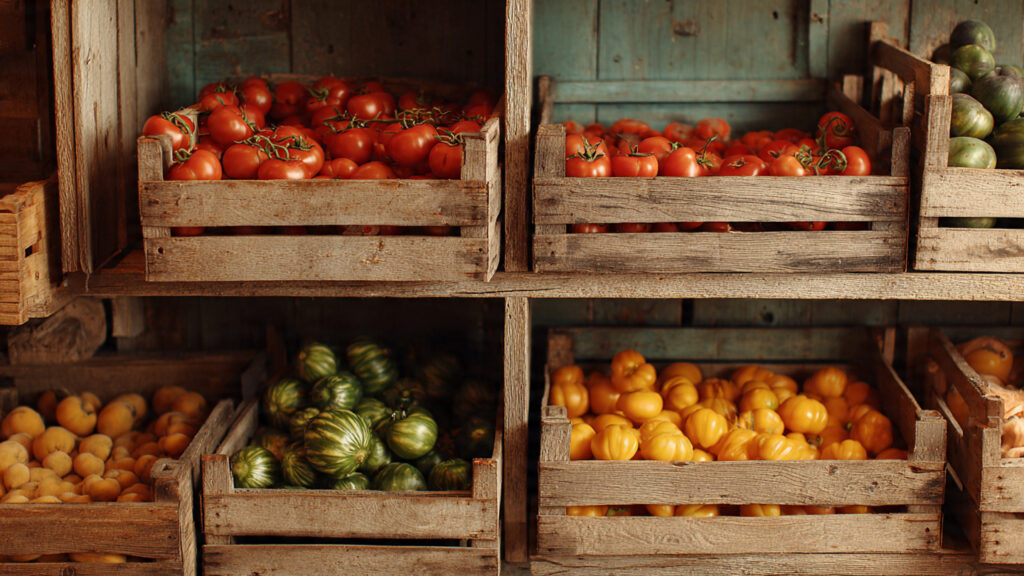
- Wooden crates, mesh bins, and perforated containers are excellent choices for allowing airflow around produce.
Methods to Keep Your Harvest Fresh for Months
Different types of produce require different storage techniques. Here are the most effective methods for preserving your harvest:
1. Cold Storage
- Ideal for root vegetables (carrots, potatoes, beets), cabbage, and winter squash.
- Store in a cool, dark, and humid place such as a basement, root cellar, or garage.
- Use sand, sawdust, or shredded newspaper to insulate roots and extend freshness.
- Remove damaged or rotting vegetables to prevent spoilage from spreading.
2. Refrigeration
- Leafy greens, herbs, berries, and certain fruits benefit from refrigeration.
- Wrap herbs in damp paper towels and place them in sealed containers or perforated bags.
- Keep fruits like apples and pears separate from ethylene-sensitive vegetables (lettuce, carrots) to prevent premature ripening.
- Use refrigerator drawers designed for produce, which maintain higher humidity levels.
3. Freezing
- Freezing is one of the best methods to preserve harvests for months while retaining nutrition.
- Blanch vegetables like green beans, spinach, and broccoli before freezing to preserve color, flavor, and nutrients.
- Fruits can be frozen raw, pureed, or in syrup, depending on intended use.
- Use airtight freezer bags or vacuum-sealed containers to prevent freezer burn.
4. Canning
- Canning allows long-term storage of fruits, vegetables, and even sauces or jams.
- Water bath canning works for high-acid foods like tomatoes, berries, and pickles.
- Pressure canning is essential for low-acid foods such as beans, corn, or squash to prevent bacteria growth.
- Sterilize jars and follow proper canning procedures to ensure safety.
5. Pickling and Fermentation
- Fermentation and pickling not only preserve produce but also enhance flavor and nutritional value.
- Cucumbers, cabbage (sauerkraut), and carrots are excellent candidates for fermentation.
- Vinegar pickling is ideal for radishes, onions, and peppers.
- Store fermented or pickled products in a cool, dark place for months of enjoyment.
6. Drying and Dehydration
- Drying removes moisture, which prevents spoilage and extends shelf life.
- Herbs, tomatoes, peppers, and mushrooms are excellent candidates for drying.
- Use a dehydrator, oven, or air-drying rack, and store dried foods in airtight containers.
- Dried fruits and vegetables can be rehydrated for cooking or enjoyed as snacks.
7. Root Cellar Techniques
- Root cellars are ideal for long-term storage of root vegetables, cabbages, and apples.
- Maintain temperatures between 32–40°F with high humidity.
- Layer vegetables in crates or bins, separating with straw or sand to absorb moisture.
- Rotate stored produce periodically to use older items first.
Tips for Specific Vegetables and Fruits
Root Vegetables:
- Carrots, parsnips, and beets store best in damp sand or sawdust in cool, dark places.
- Remove leafy tops before storage to prevent moisture loss.
Leafy Greens:
- Wrap spinach, lettuce, or kale in damp paper towels and store in perforated bags in the fridge.
- Use within 1–2 weeks for peak freshness.
Tomatoes:
- Store unripe tomatoes at room temperature until fully ripe.
- Fully ripe tomatoes can be frozen, canned, or turned into sauces for long-term storage.
Apples and Pears:
- Keep in a cool, humid, and ventilated area.
- Avoid storing near strong-smelling vegetables as fruits can absorb odors.
Squash and Pumpkins:
- Cure in a warm, dry space for 7–10 days before storage to harden skins.
- Store in a cool, dry, and dark location for 3–6 months.
Reducing Waste and Maximizing Freshness
Even with the best storage methods, some produce may spoil over time. To minimize waste:
- Harvest at the Right Time: Pick vegetables and fruits when they are mature but not overripe.
- Check Regularly: Inspect stored produce for signs of rot or mold and remove affected items immediately.
- Rotate Stock: Use older produce first to ensure nothing is forgotten at the back of storage containers.
- Preserve Excess: When harvests are abundant, consider freezing, canning, or pickling surplus items.
Conclusion
Keeping your harvest fresh for months is not only possible but also rewarding. With the right combination of cold storage, refrigeration, freezing, canning, drying, and pickling, you can enjoy your garden’s bounty long after the growing season ends. Proper storage preserves flavor, nutrition, and texture while reducing waste and saving money.
From root vegetables to leafy greens, fruits to herbs, every type of produce has a storage method that maximizes its shelf life. With a little planning, you can transform your garden’s harvest into a sustainable, year-round source of fresh, delicious food.
Whether you’re a casual gardener or a dedicated grower, mastering these storage techniques ensures that the fruits of your labor are enjoyed for months—delighting your taste buds and nourishing your family well beyond harvest season.