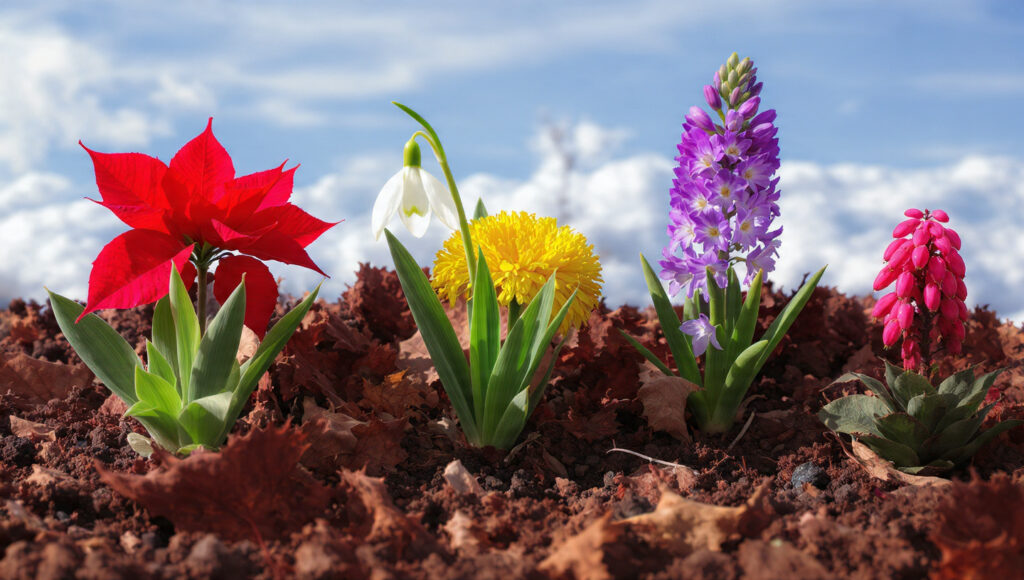
January can feel like the loneliest month in the garden. Bare branches, frost-covered lawns, and dormant perennials make it easy to think that your garden is asleep—and worse, that something has gone wrong. But seasoned gardeners know better: January blooms are not a mistake—they’re a natural part of the plant calendar. Several flowers thrive in cold weather and reward patient gardeners with color and life when most plants are resting.
If you’ve noticed unexpected blossoms popping up in the first month of the year, don’t panic. These five flowers are meant to bloom in January, providing beauty, fragrance, and optimism for your winter garden.
1. Hellebores (Helleborus spp.)
Often called “Christmas Rose” or “Lenten Rose”, hellebores are winter garden stars. These hardy perennials are famous for their nodding, cup-shaped flowers, which appear in shades of white, pink, purple, and green, often dusted with intricate veining.
Why Hellebores Bloom in January:
- Hellebores are adapted to cold temperatures and can withstand frost.
- They bloom on last year’s growth, so early winter or midwinter flowers are typical.
- Their deep-rooted nature allows them to survive and flourish during the harshest months.
Gardening Tips:
- Plant in partial to full shade for the best results.
- Enrich soil with compost to support strong blooms.
- Remove old leaves in late winter to reveal flowers and prevent disease.
Hellebores’ subtle colors contrast beautifully with bare winter shrubs, creating a serene, elegant display when most gardens are gray.
2. Snowdrops (Galanthus nivalis)
Snowdrops are perhaps the quintessential winter flower. Tiny, delicate, white pendants peek through the snow, giving early hope for spring. Their understated beauty makes them favorites for naturalized garden beds and woodland areas.
Why Snowdrops Bloom in January:
- They are true winter-hardy bulbs, often blooming even under a light snow layer.
- They complete their life cycle early in the year to avoid competition with summer-growing plants.
- Their bulbs store energy from the previous growing season, allowing early flowering.
Gardening Tips:
- Plant bulbs in well-drained soil in autumn.
- Allow foliage to die back naturally to feed the bulb for next year.
- Group bulbs in drifts or clusters for a more dramatic effect.
Snowdrops signal resilience and optimism, reminding gardeners that growth and beauty continue even in the coldest months.
3. Winter Jasmine (Jasminum nudiflorum)
Winter jasmine is a hardy, trailing shrub that produces bright yellow flowers on bare stems. Unlike many flowering shrubs, it blooms in late winter, often starting in January, bringing vibrant color to otherwise muted landscapes.
Why Winter Jasmine Blooms in January:
- It blooms on old and new wood, allowing flowers to appear early in the season.
- Cold temperatures trigger its flowering cycle.
- It requires minimal sunlight to produce blooms, making it ideal for short winter days.
Gardening Tips:
- Train stems along fences or walls for a cheerful splash of color.
- Prune lightly after flowering to encourage dense growth.
- Plant in well-drained soil with full sun or partial shade.
Winter jasmine’s bright blooms can lift spirits during gray days, and its sprawling growth makes it a practical groundcover or trellis plant.
4. Camellias (Camellia japonica and Camellia sasanqua)
Camellias are classic winter-blooming shrubs, cherished for their glossy leaves and exquisite flowers, ranging from deep crimson to soft pink and pristine white. Depending on the species, they may bloom in late fall, winter, or early spring.
➡️ How to Grow Malabar Spinach from Cuttings for Fast, Easy Greens
➡️ How to Grow Super Delicious Cabbage at Home Without a Garden
➡️ How to Grow Bean Sprouts at Home in Plastic Bottles Easily (Step‑by‑Step Guide)
➡️ Why is Your Lemon Tree Blooming in the Heart of Winter?
➡️ Why Should Your Garden Have a Dedicated Pollinator Highway?
➡️ Why Do Your Fruit Trees Need a Winter Wash to Thrive in Spring?
➡️ How Can Rice Water Transform Your Fruits into Sweeter Delights?
➡️ Jumpstart Your Winter Garden: Seed Starting Under Lights
Why Camellias Bloom in January:
- Camellia japonica typically blooms mid-winter.
- They store energy from the previous growing season to support early blooms.
- Cold temperatures can enhance flower color and longevity.
Gardening Tips:
- Plant in acidic, well-drained soil with protection from harsh winter winds.
- Mulch around the base to retain moisture and protect roots.
- Prune after flowering to shape the shrub and remove weak growth.
Camellias bring a sense of elegance to the winter garden, and their showy flowers often dominate otherwise barren borders.
5. Witch Hazel (Hamamelis spp.)
Witch hazel is a deciduous shrub known for its spidery, fragrant flowers, which appear in shades of yellow, red, or orange during the coldest months. Some varieties bloom as early as January, adding warmth and scent to the winter landscape.
Why Witch Hazel Blooms in January:
- It flowers on old wood before leaf emergence, ensuring blooms are visible.
- Cold conditions actually enhance the intensity and longevity of flowers.
- The shrub’s natural adaptation to winter ensures reliable blooms each year.
Gardening Tips:
- Plant in full sun to partial shade for optimal flowering.
- Tolerates a wide range of soils but prefers slightly acidic conditions.
- Minimal pruning is needed; remove dead wood after flowering.
Witch hazel provides multi-sensory appeal in winter gardens, with both vibrant flowers and a pleasant fragrance that can lift spirits during gray months.
Why These Flowers Matter in Winter
Winter blooms do more than add color—they have psychological and ecological benefits:
- Visual Relief: Colorful flowers break up the monotony of brown and gray landscapes.
- Wildlife Support: Early blooms provide nectar and pollen for winter-active insects and birds.
- Garden Structure: Winter-flowering shrubs maintain form and interest, supporting the garden’s visual balance.
- Gardener Motivation: Seeing life and growth in January encourages continued care and planning for spring.
By understanding which plants naturally bloom in winter, gardeners can set realistic expectations and enjoy beauty instead of worrying that something is “wrong” with their garden.
Tips for Encouraging Healthy Winter Blooms
- Protect from Extreme Frost: Mulch around the roots to insulate against severe temperatures.
- Water During Dry Spells: Even in winter, plants need moisture, especially evergreens and shrubs with exposed blooms.
- Avoid Late Fertilization: Fertilizing in late winter can encourage tender growth susceptible to frost damage.
- Prune Strategically: Prune after flowering for shrubs like camellias and witch hazel to maintain structure without reducing blooms.
- Choose the Right Varieties: Some cultivars are specifically bred for winter flowering, ensuring reliability in cold months.
Designing a January-Ready Garden
To maximize winter appeal, mix early bloomers with plants that provide structural interest:
- Combine hellebores and snowdrops for ground-level winter blooms.
- Use winter jasmine or witch hazel for mid-height color.
- Add camellias for striking, larger flowers and evergreen foliage.
- Layer plants with different textures—spiky, glossy, or delicate—to create visual variety.
By designing with winter flowering in mind, your garden can remain vibrant and layered even during the coldest months.
Final Thoughts
January blooms are a gentle reminder that life in the garden doesn’t stop just because the calendar says winter. Hellebores, snowdrops, winter jasmine, camellias, and witch hazel all thrive during this quiet time, providing color, fragrance, and hope.
Rather than panicking when you see flowers in January, embrace them. These hardy plants are perfectly adapted to winter conditions, and their blooms offer a welcome contrast to otherwise dormant landscapes. By selecting the right species, providing proper care, and understanding their natural cycles, gardeners can enjoy a lively and beautiful garden even in the heart of winter.
Winter need not be dull—these five flowers prove that January can be just as vibrant and rewarding as any other month of the year.