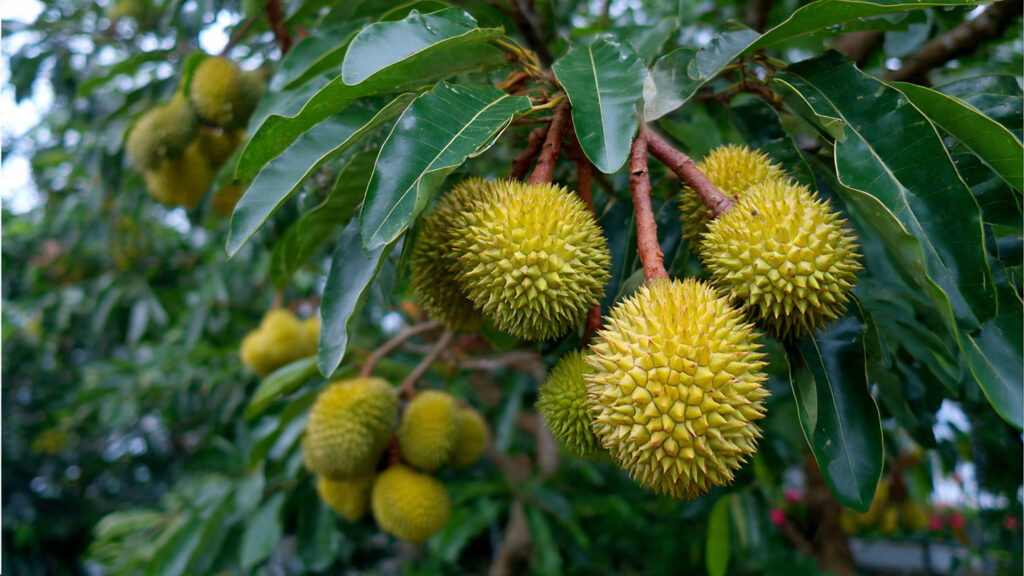
Durian, often called the “King of Fruits,” is celebrated not just for its unique flavor and aroma but also for its high commercial value. However, growing durian trees from seeds can be a long and unpredictable process. Trees grown from seeds may take 8 to 10 years to bear fruit and often display inconsistent fruit quality. This is where grafting, particularly the fast cleft grafting method, becomes a game-changer for durian growers seeking strong, productive trees in a shorter period.
In this article, we’ll explore the cleft grafting technique step by step, its benefits, and essential tips for ensuring successful durian propagation.
1. Why Grafting Durian Is Important
Grafting is the process of joining a piece of a desired plant (scion) onto a compatible rootstock to grow as one plant. For durian, grafting offers several advantages:
- Faster fruiting: Grafted trees can bear fruit in 3 to 5 years, compared to 8–10 years from seed-grown trees.
- Consistent fruit quality: Scions from superior durian varieties ensure uniform flavor, aroma, and size.
- Stronger and disease-resistant trees: Selecting healthy rootstock can improve overall tree vigor and resilience.
- Controlled growth: Grafting allows better management of tree height and canopy structure, making harvest easier.
Among various grafting methods, fast cleft grafting is highly effective for durian because it offers a high success rate and rapid union between scion and rootstock.
2. Understanding Fast Cleft Grafting
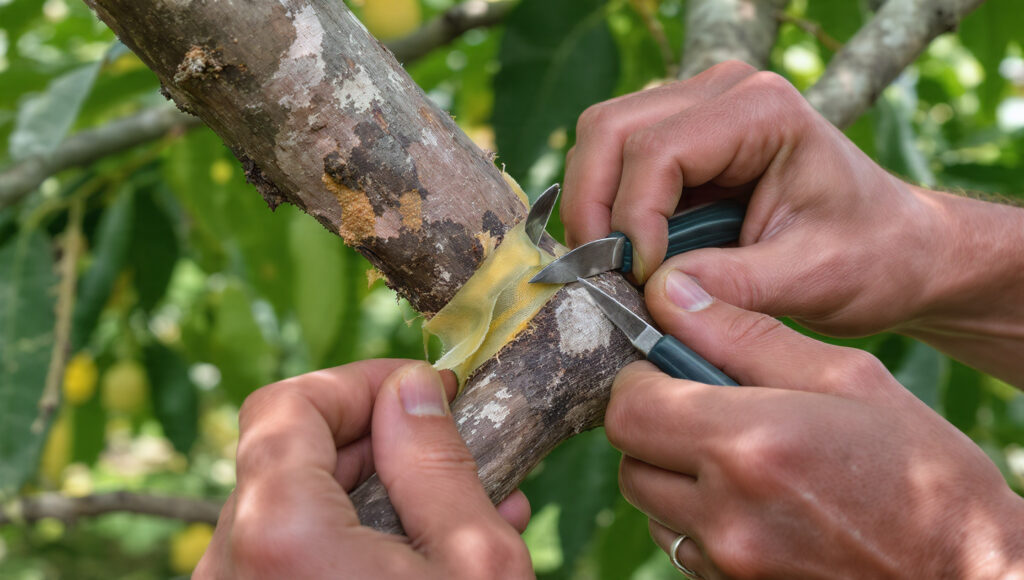
Fast cleft grafting is a technique where a scion is inserted into a cleft or slit in the rootstock. This method is particularly suitable for durian because of its thick stem and slow healing tendencies. Key aspects of fast cleft grafting include:
- Quick execution: The graft can be completed in minutes with proper preparation.
- Strong graft union: Proper alignment and tight binding ensure that the scion and rootstock grow together strongly.
- High survival rate: With careful handling, survival rates can exceed 85–90%.
3. Selecting the Right Rootstock
Choosing the right rootstock is critical for successful grafting and long-term tree health. Ideal rootstock traits include:
- Healthy and disease-free: Avoid rootstocks with visible damage, fungal infections, or pests.
- Vigorous growth: Rootstocks with strong growth ensure better scion support.
- Compatibility: The rootstock must be compatible with the chosen durian variety to prevent graft failure.
Tip: Use 1- to 2-year-old durian seedlings as rootstock. These young plants are easier to graft and heal faster.
4. Selecting a Healthy Scion
The scion is the part of the plant you want to grow, usually taken from a superior durian variety. Consider the following when choosing a scion:
- One-year-old shoots: Mature, healthy shoots from the previous season are ideal.
- Free from disease and pests: Avoid scions with discoloration, fungal growth, or insect damage.
- Dormant or semi-dormant state: Scions in this state are more likely to establish quickly.
Tip: Collect scions early in the morning and keep them in a cool, moist environment until grafting to maintain vitality.
5. Preparing the Rootstock for Cleft Grafting
Fast cleft grafting requires careful preparation of the rootstock:
- Cut the rootstock: Trim the rootstock to about 30–50 cm above the soil line for optimal handling.
- Make a vertical slit: Use a sharp knife to create a 3–5 cm vertical slit in the center of the rootstock.
- Smooth the edges: Remove any rough edges to ensure the scion fits snugly, preventing air pockets that can hinder grafting.
Tip: Sterilize the knife with alcohol to prevent infection at the graft site.
6. Preparing the Scion for Grafting
Proper scion preparation ensures a strong union:
- Trim the base: Shape the scion into a wedge, about 2–3 cm long, to fit into the cleft.
- Remove lower leaves: Strip off leaves at the base to reduce moisture loss and prevent fungal growth.
- Check alignment: Make sure the cambium layer (green layer beneath the bark) of the scion aligns with that of the rootstock for maximum nutrient flow.
Tip: The success of cleft grafting largely depends on precise cambium alignment between scion and rootstock.
7. Inserting the Scion
With rootstock and scion prepared, the grafting process begins:
- Insert the scion: Carefully slide the wedge-shaped scion into the cleft. Ensure tight contact between the cambium layers.
- Adjust position: Gently tap or press the scion to secure it in place. The union should be firm but not forced.
- Check for gaps: Any air pockets can cause graft failure. Fill minor gaps with grafting wax or moist sawdust if necessary.
Tip: Avoid excessive handling of the scion to prevent bruising or breaking.
➡️ How to Grow Malabar Spinach from Cuttings for Fast, Easy Greens
➡️ How to Grow Super Delicious Cabbage at Home Without a Garden
➡️ How to Grow Bean Sprouts at Home in Plastic Bottles Easily (Step‑by‑Step Guide)
➡️ Why is Your Lemon Tree Blooming in the Heart of Winter?
➡️ Why Should Your Garden Have a Dedicated Pollinator Highway?
➡️ Why Do Your Fruit Trees Need a Winter Wash to Thrive in Spring?
➡️ How Can Rice Water Transform Your Fruits into Sweeter Delights?
➡️ Jumpstart Your Winter Garden: Seed Starting Under Lights
8. Securing the Graft
After inserting the scion, secure the graft to prevent movement and maintain moisture:
- Tie with grafting tape: Wrap tightly but gently around the graft junction.
- Apply grafting wax or sealant: This prevents drying out and infection.
- Optional shade protection: Cover the grafted area with a small bag or shade cloth for 7–10 days to reduce stress from direct sunlight.
Tip: Keep the tape or wax for 4–6 weeks, removing it only when the graft shows signs of strong growth.
9. Post-Grafting Care
Fast cleft grafting doesn’t end with insertion. Proper aftercare ensures the graft grows into a strong, productive tree:
- Watering: Maintain consistent soil moisture but avoid waterlogging.
- Fertilization: Apply balanced, slow-release fertilizers to support both rootstock and scion.
- Pest management: Watch for ants, aphids, or fungal infections around the graft site.
- Pruning: Remove competing shoots or suckers from the rootstock to direct energy to the scion.
Tip: Regularly check for signs of graft failure, such as discoloration or scion wilting, and take immediate corrective action.
10. Benefits of Fast Cleft Grafting for Durian Trees
Adopting the fast cleft grafting method offers numerous advantages:
- Rapid fruit production: Trees begin bearing fruit in 3–5 years.
- High-quality harvest: Grafted trees retain the desirable traits of the parent variety.
- Disease resistance: Selecting robust rootstocks reduces vulnerability to root and soil-borne diseases.
- Stronger trees: Proper grafting leads to well-structured trees capable of supporting heavy fruits.
- Cost-effective: Reduces land and maintenance costs compared to waiting for seed-grown trees to mature.
11. Common Challenges and Solutions
Even experienced gardeners face challenges with durian grafting. Knowing them in advance helps improve success rates:
- Scion desiccation: Keep scions moist and perform grafting during cooler hours.
- Poor cambium alignment: Double-check alignment before securing the graft.
- Pest attacks: Use protective barriers or organic pesticides around the graft site.
- Excessive heat or sun: Provide temporary shade to prevent scion stress.
Tip: Success often comes with practice. Start with a few grafts and gradually scale up as you gain confidence.
12. Final Thoughts
Fast cleft grafting is a practical and efficient method to propagate durian trees that are strong, productive, and true to type. By combining careful selection of rootstock and scion with precise grafting techniques and attentive post-grafting care, growers can reduce the time to fruiting, ensure high-quality harvests, and maintain healthy trees for decades.
In a competitive durian market, adopting fast cleft grafting provides a significant advantage. Not only does it shorten the waiting period for fruit production, but it also maximizes tree resilience, fruit quality, and long-term productivity. For anyone serious about durian cultivation, mastering this grafting technique is an investment in a thriving and profitable orchard.