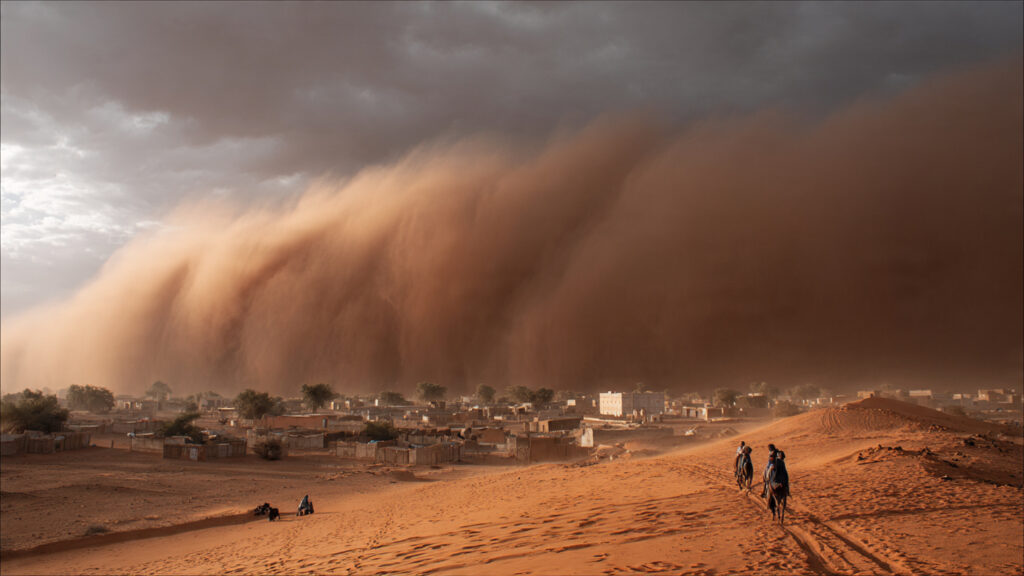
For centuries, the Sahara Desert has been synonymous with relentless sunshine, blistering heat and dust‑dry winds. It is the epitome of aridity — a place where rain is rare and life must eke out an existence against seemingly impossible odds. But new scientific research is challenging that age‑old image. According to a major climate modelling study, the Sahara’s skies may not stay clear forever — and that could transform both the region and Africa’s broader ecological and economic balance in profound and unpredictable ways.
A Future of More Rainfall — Not Less
Groundbreaking research, published in npj Climate and Atmospheric Science, suggests that annual rainfall across large parts of the Sahara could increase by as much as 75% by the end of the 21st century under both moderate and high greenhouse gas emissions scenarios. This is not a small shift — it marks a dramatic departure from the desert’s historical average of about 3 inches (roughly 8 cm) of rain per year.
The reason behind this unusual projection lies in how warming temperatures alter the behavior of the atmosphere. Warmer air holds more moisture and, combined with shifting wind patterns and large‑scale tropical circulation changes, can fuel stronger, more frequent storm systems — even over historically dry regions. These storm systems, known as convective storms, can unleash intense downpours over short periods, far beyond what the Sahara normally experiences.
Why Increased Rainfall Could Upend the Sahara’s Delicate Balance
At first glance, more rain might sound like a blessing for one of the world’s driest places. And to be sure, Africa’s ancient climate record shows that the Sahara was once much wetter — with lakes, grasslands and even human settlements thriving thousands of years ago. Yet the new research highlights that the consequences of amplified rainfall today are far more complex and uncertain.
1. Flash Floods and Erosion Instead of Greening
Unlike savannahs or tropical forests, most of the Sahara’s surface is made up of hard‑packed sand, gravel and rock with very thin soils. These soils are not capable of absorbing large amounts of rainwater. When heavy storms hit such ground, much of the water runs off rapidly rather than soaking in. This can cause sudden flash floods, soil erosion, and even landslides in hilly areas — hazards for both people and infrastructure.
In other words, more rain doesn’t automatically mean more greenery. In many places, it might simply mean more water rushing away before it can nourish plants or recharge underground aquifers. Even if vegetation does sprout following a wet season, it could easily disappear during dry spells, leaving landscapes unstable and unpredictable.
2. Social and Economic Disruption Across Africa
A wetter Sahara would not affect only sand dunes and acacia bushes — its effects would ripple across entire regions.
Shifting Monsoons and Farming Calendars
African weather systems are finely tuned. Traditional farming cycles — especially in the Sahel belt south of the Sahara — depend on monsoon rains arriving and retreating at predictable times. The study suggests that increased rainfall and changes in atmospheric circulation could disrupt this rhythm. Even slight shifts in the onset or end of rainy seasons can lead to missed planting windows, reduced yields, and greater food insecurity for millions of smallholder farmers.
Urban Stress and Flood Risks
Urban centers across Africa already struggle with inadequate drainage and aging infrastructure. Intense, intermittent storm rainfall can overwhelm drainage systems, turning streets into raging waterways, contaminating drinking water, and elevating risks of water‑borne diseases. Without significant investment in infrastructure upgrades, these hazards will worsen as climate extremes become more common.
3. Water Resources: Opportunities and Challenges
The potential for more rainfall also brings complex water resource implications. On the positive side, updated rainfall regimes could:
- Replenish depleted aquifers after years of drought.
- Expand rain‑fed agriculture into areas previously too dry to cultivate.
- Support new wetland corridors that boost biodiversity and ecological resilience.
But these opportunities hinge on effective water management, storage, and soil conservation. In regions lacking strong governance or where water rights disputes are common, an influx of water could spark competition, conflict, and unsustainable exploitation of resources rather than provide lasting benefits.
Different Futures Across Africa
It’s also important to note that rainfall changes won’t be uniform across the continent:
| Region | Projected Rainfall Change | Concerns |
|---|---|---|
| Sahara | +Up to 75% | Flooding, rapid runoff, unstable vegetation |
| Central & Southern Africa | +17–25% | Changing growing seasons, flood risk |
| Far Southwest Africa | -Up to -5% | Increasing water scarcity |
This uneven pattern underscores a stark reality: while some regions could see more moisture and potential agronomic gains, others may face worsening drought and declining water supplies. Areas like Namibia, Angola and parts of South Africa could see slight declines in rainfall, compounding existing water scarcity issues.
Lessons from the Past, Risks for the Future
The Sahara’s past tells us that extreme shifts in rainfall are not without precedent. Geological and paleo‑climate records show that the region enjoyed significantly wetter conditions during the African Humid Period roughly 8,000–4,000 years ago, supporting lakes, grasslands and thriving human settlements. But that ancient shift ultimately gave way to the hyper‑arid desert we know today, reminding us that climate zones can pivot dramatically over relatively short periods of time.
However, today’s changes are driven not by natural variability alone but by human‑induced climate change. That adds a layer of urgency and uncertainty, because rapid warming can push ecosystems, agriculture and societies far beyond their historical bounds.
➡️ How to Grow Malabar Spinach from Cuttings for Fast, Easy Greens
➡️ How to Grow Super Delicious Cabbage at Home Without a Garden
➡️ How to Grow Bean Sprouts at Home in Plastic Bottles Easily (Step‑by‑Step Guide)
➡️ Why is Your Lemon Tree Blooming in the Heart of Winter?
➡️ Why Should Your Garden Have a Dedicated Pollinator Highway?
➡️ Why Do Your Fruit Trees Need a Winter Wash to Thrive in Spring?
➡️ How Can Rice Water Transform Your Fruits into Sweeter Delights?
➡️ Jumpstart Your Winter Garden: Seed Starting Under Lights
Adapting to a Wetter, Yet Unpredictable Future
Researchers are clear that planning and adaptation must begin now — long before the most dramatic rainfall shifts occur. Preparing for a wetter Sahara does not mean simply hoping for more water; it means building systems to manage water wisely and protect vulnerable communities.
Key Adaptation Strategies Include:
1. Flood‑Resilient Infrastructure
Constructing retention basins, restoring wetlands, and upgrading urban drainage can help communities absorb intense rainfall without destructive flooding.
2. Climate‑Smart Agriculture
Developing crops that can withstand both heavy rain and short dry spells, and updating planting calendars annually, can help farming systems stay productive in an unpredictable climate.
3. Early Warning Systems
Investing in satellite monitoring and seasonal forecasting can alert farmers and policy‑makers to extreme events well in advance.
4. Transboundary Water Cooperation
Rivers like the Niger River, Nile River and Congo River traverse multiple countries. Changes in upstream rainfall patterns will affect downstream flows and water security, making regional cooperation essential.
Conclusion: Hope and Hazard in a Changing Sahara
The idea of a greener Sahara conjures images of blossoming landscapes and new opportunities for agriculture and water security. But the reality is far more nuanced. As the latest research warns, excessive rainfall driven by climate change could bring both promise and peril. Floods, soil erosion, disrupted farming cycles, strained cities, and new environmental stresses may create just as many challenges as opportunities.
Africa’s climate — and the lives dependent on its rhythms — stands on the brink of transformation. How nations, communities and international partners respond to these looming changes will shape not only the Sahara’s future, but the resilience of the entire continent.