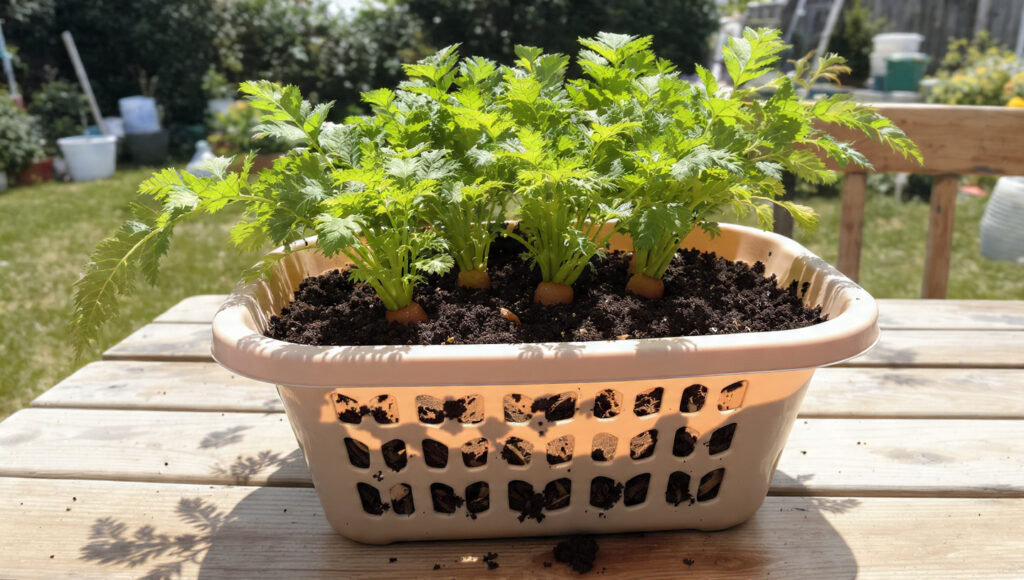
If you have an old plastic basket sitting around the house—maybe one with a cracked handle or slightly faded color—don’t throw it away just yet. That simple household item could become the perfect container for growing fresh, crunchy carrots at home.
Container gardening has become increasingly popular, especially for people with limited space. Balconies, terraces, patios, and even sunny windowsills can transform into productive mini-gardens. And surprisingly, carrots—often thought to require deep garden beds—can thrive beautifully in something as simple as a plastic basket.
Let’s explore how you can turn that old plastic basket into a productive carrot-growing station and enjoy a satisfying harvest right at home.
Why Grow Carrots in a Plastic Basket?
Carrots are root vegetables, which means the part we eat grows underground. They require loose, well-draining soil so the roots can grow straight and long. Traditional garden soil can sometimes be compacted, rocky, or heavy with clay, which causes carrots to become short, forked, or twisted.
A plastic basket offers several surprising advantages:
1. Excellent Drainage
Most plastic baskets have natural gaps or holes in their structure. These openings allow excess water to drain out easily, preventing root rot.
2. Lightweight and Portable
You can easily move the basket to follow sunlight or protect plants from harsh weather.
3. Space-Saving
Perfect for balconies or small outdoor spaces.
4. Cost-Effective
Repurposing old items reduces waste and saves money.
Choosing the Right Basket
Not all baskets are ideal, so consider a few factors:
- Depth: Choose a basket at least 10–12 inches deep for standard carrot varieties. For shorter varieties, 8–10 inches may suffice.
- Width: Wider baskets allow more carrots to grow in one container.
- Sturdiness: Ensure the basket can hold soil weight without collapsing.
If the basket has large holes, you’ll need to line it before adding soil.
Preparing the Basket for Planting
Step 1: Line the Basket
Because baskets have openings, soil would fall through without lining. Use:
- Old burlap sacks
- Coconut coir liners
- Landscape fabric
- Thick newspaper layers
The lining should allow water to drain but prevent soil from escaping.
Step 2: Prepare the Soil Mix
Carrots thrive in light, loose, and sandy soil. A good mix includes:
- 50% garden soil or potting soil
- 30% compost
- 20% sand or coco peat
The key is avoiding stones or clumps. Carrots grow best when roots can move freely downward.
➡️ How to Grow Malabar Spinach from Cuttings for Fast, Easy Greens
➡️ How to Grow Super Delicious Cabbage at Home Without a Garden
➡️ How to Grow Bean Sprouts at Home in Plastic Bottles Easily (Step‑by‑Step Guide)
➡️ Why is Your Lemon Tree Blooming in the Heart of Winter?
➡️ Why Should Your Garden Have a Dedicated Pollinator Highway?
➡️ Why Do Your Fruit Trees Need a Winter Wash to Thrive in Spring?
➡️ How Can Rice Water Transform Your Fruits into Sweeter Delights?
➡️ Jumpstart Your Winter Garden: Seed Starting Under Lights
Avoid adding too much nitrogen-rich fertilizer, as it encourages leafy growth at the expense of root development.
Choosing the Right Carrot Variety
While you can grow many carrot types in baskets, shorter varieties are often best for containers. Consider:
- Nantes
- Chantenay
- Parisian (round carrots)
- Baby carrot varieties
These varieties mature well in limited depth and are less likely to become misshapen.
Planting Carrots in the Basket
Step 1: Fill the Basket
Fill it almost to the top with your prepared soil mix, leaving about an inch of space from the rim.
Step 2: Sow the Seeds
Carrot seeds are tiny, so sprinkle them lightly across the surface. Avoid overcrowding.
Gently cover the seeds with a thin layer of fine soil—about ¼ inch deep.
Step 3: Water Gently
Use a spray bottle or gentle watering can to moisten the soil without washing away seeds.
Keep the soil consistently moist until germination, which usually takes 7–14 days.
Positioning Your Basket
Carrots need at least 6–8 hours of sunlight daily. Place your basket in:
- A sunny balcony
- A terrace corner
- A patio with direct sunlight
If sunlight shifts throughout the day, the basket’s portability allows you to reposition it easily.
Thinning for Healthy Growth
Once seedlings reach about 2 inches tall, thin them out. This step is crucial.
Leave about 2–3 inches between each plant. Crowded carrots compete for space and grow small or misshapen.
It may feel wasteful to remove seedlings, but thinning ensures better root development.
Watering Tips for Basket-Grown Carrots
Consistent moisture is essential.
- Keep soil evenly moist but not soggy.
- Avoid letting soil dry out completely.
- Water deeply to encourage downward root growth.
Because baskets drain quickly, you may need to water more frequently than in-ground gardens, especially in hot weather.
Fertilizing the Right Way
Carrots are moderate feeders.
About 3–4 weeks after germination, apply a light dose of balanced liquid fertilizer or compost tea. Avoid excessive nitrogen, as it leads to lush tops but weak roots.
Compost mixed into the soil at planting time often provides sufficient nutrients.
Common Problems and How to Avoid Them
Forked or Twisted Carrots
Cause: Heavy or rocky soil
Solution: Use loose, sandy soil mix
Small Roots
Cause: Crowding or insufficient nutrients
Solution: Proper thinning and light feeding
Cracked Carrots
Cause: Irregular watering
Solution: Maintain consistent moisture
Pests
Carrots in baskets are less prone to soil pests. However, watch for aphids on leaves and wash them off with water if necessary.
Harvesting Your Basket Carrots
Most carrots are ready to harvest in 60–80 days, depending on variety.
Signs they’re ready:
- The top of the carrot root is visible at soil level
- The root appears well-colored
- The size matches your variety’s maturity description
To harvest:
- Gently loosen soil around the carrot.
- Pull slowly from the base of the greens.
If soil feels compacted, wiggle slightly rather than pulling hard to avoid breaking the root.
Benefits of Growing Carrots This Way
Growing carrots in an old plastic basket offers more than just fresh vegetables.
1. Recycling and Sustainability
Repurposing reduces plastic waste and supports eco-friendly gardening.
2. Perfect for Urban Living
Even apartment dwellers can grow root vegetables successfully.
3. Easy Soil Control
You control soil texture completely, leading to straighter, healthier carrots.
4. Reduced Weeding
Container gardening drastically reduces weed problems.
Seasonal Timing
Carrots prefer cooler weather.
- Best planted in early spring or fall.
- In very hot climates, partial afternoon shade helps prevent stress.
Basket gardening makes seasonal adjustments easier since containers can be relocated.
Can You Grow Successive Crops?
Absolutely.
Once you harvest one batch, loosen the soil, add fresh compost, and sow new seeds. With proper care, you can grow multiple carrot crops in the same basket throughout the season.
Expanding the Idea
Once you see how effective basket gardening is, you can experiment with:
- Radishes
- Beets
- Spinach
- Lettuce
Old household items can become productive growing spaces with a little creativity.
Final Thoughts
That old plastic basket gathering dust could be the start of your next gardening success story. With proper soil preparation, consistent watering, and good sunlight, carrots can thrive in containers just as well—sometimes even better—than in traditional garden beds.
Gardening doesn’t require expensive equipment or large plots of land. Sometimes it just takes a fresh perspective and a willingness to repurpose what you already have.
So before you toss that worn-out basket away, imagine it filled with rich soil and topped with feathery green carrot leaves. A few weeks later, you could be pulling up sweet, crunchy carrots grown entirely by your own hands.