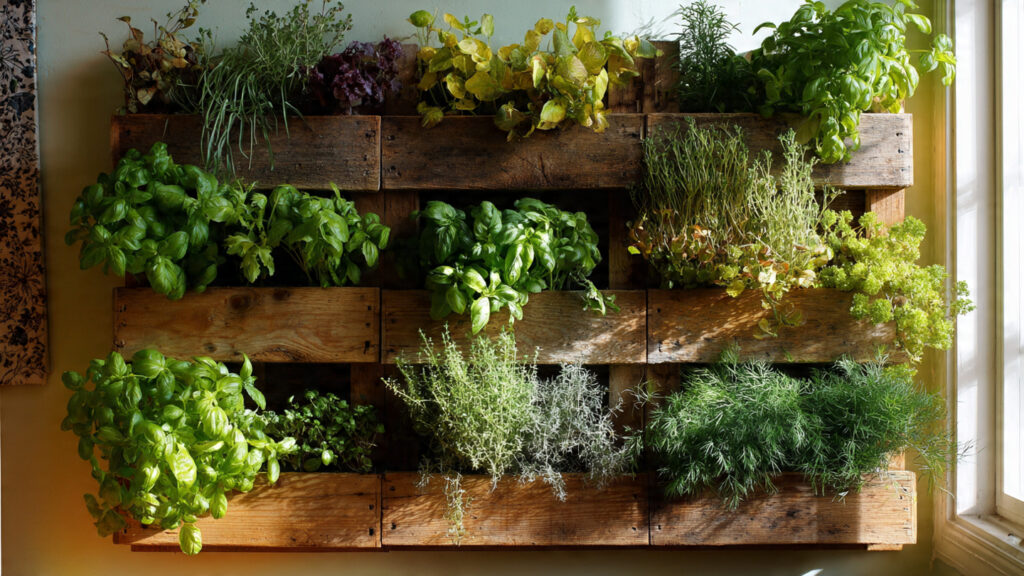
Imagine stepping into your kitchen and picking fresh basil for your pasta, mint for your tea, or rosemary for roasting vegetables—daily. A vertical herb garden on your kitchen door makes this possible, even in small spaces, while adding charm and greenery to your home. This easy DIY setup brings fresh flavors within arm’s reach and transforms a simple kitchen door into a functional and decorative garden. In this guide, we’ll explore how to create a vertical herb garden, maintain it, and enjoy fresh, aromatic herbs all year long.
1. Why Choose a Kitchen Door for a Vertical Herb Garden?
Using your kitchen door for a vertical garden is both practical and innovative.
Benefits of a door-mounted vertical herb garden:
- Space-saving: Perfect for apartments or homes with limited counter or balcony space.
- Accessibility: Herbs are within easy reach for cooking and garnishing.
- Sunlight exposure: Many kitchen doors face south or west, giving plants the light they need.
- Visual appeal: Adds greenery and natural beauty to a functional area of your home.
By maximizing vertical space, you can grow multiple herbs in a compact area, making fresh cooking ingredients a daily convenience.
2. Choosing the Right Herbs for Your Kitchen Door
Not all herbs are suitable for a vertical door garden. Look for plants that thrive in containers, have shallow roots, and tolerate indirect sunlight if your door doesn’t get full sun.
Recommended herbs:
- Basil: Sweet and aromatic, perfect for Italian dishes.
- Mint: Easy to grow but invasive—best in separate pockets.
- Thyme: Hardy and low-maintenance, adds flavor to meats and vegetables.
- Parsley: Rich in vitamins and versatile in recipes.
- Cilantro/Coriander: Quick-growing for salsas and curries.
- Chives: Mild onion flavor, great for garnishes.
Choosing the right herbs ensures your garden thrives and provides a consistent supply of fresh flavors.
3. Materials You’ll Need
Creating a vertical herb garden on a kitchen door is simple, requiring minimal materials:
- Containers or pockets: Small pots, mason jars, or fabric wall pockets
- Hooks, adhesive strips, or a trellis: For securing containers to the door
- Potting soil: Lightweight, nutrient-rich soil suitable for herbs
- Herb seedlings or seeds
- Watering can or spray bottle
- Optional: Labels for identifying herbs
Having the right materials ready makes the setup smooth and ensures your herbs thrive in their new environment.
4. Preparing the Kitchen Door
Before hanging pots or pockets, make sure your kitchen door can safely support the weight of soil, water, and plants.
Tips for preparation:
- Clean the surface: Wipe down the door to remove grease and dirt.
- Protect the door: Use a waterproof backing or tray if water runoff might damage paint or wood.
- Plan placement: Arrange containers so taller herbs don’t shade smaller ones. Consider spacing for watering and harvesting access.
A well-prepared surface prevents damage and ensures your vertical garden remains secure and attractive.
5. Hanging Your Vertical Herb Garden
Depending on your door type, there are several ways to mount a vertical garden:
- Over-the-door hooks: Simple and removable, perfect for rental spaces.
- Fabric pocket organizers: Each pocket holds one herb and can be rotated for sunlight exposure.
- Mounted shelves or mini trellis: Attach small shelves or a trellis system to hold pots securely.
- Magnetic containers: If your door is metal, small magnetic pots offer easy customization.
Choose a method that balances weight, stability, and accessibility. For most kitchen doors, over-the-door hooks combined with small pots or jars provide a sturdy and easy-to-maintain solution.
6. Filling Containers and Planting
Once the containers are in place, it’s time to fill them with soil and herbs.
➡️ How to Grow Malabar Spinach from Cuttings for Fast, Easy Greens
➡️ How to Grow Super Delicious Cabbage at Home Without a Garden
➡️ How to Grow Bean Sprouts at Home in Plastic Bottles Easily (Step‑by‑Step Guide)
➡️ Why is Your Lemon Tree Blooming in the Heart of Winter?
➡️ Why Should Your Garden Have a Dedicated Pollinator Highway?
➡️ Why Do Your Fruit Trees Need a Winter Wash to Thrive in Spring?
➡️ How Can Rice Water Transform Your Fruits into Sweeter Delights?
➡️ Jumpstart Your Winter Garden: Seed Starting Under Lights
Step-by-step planting tips:
- Add lightweight potting soil to each container, leaving about an inch from the top.
- Plant herb seedlings or sow seeds according to instructions. For seedlings, gently loosen roots before planting.
- Water lightly, ensuring soil is moist but not soggy. Overwatering can lead to root rot.
- Label each herb for easy identification and care.
Proper planting ensures your herbs get the nutrients and space they need to grow well in a vertical arrangement.
7. Watering and Maintenance
Vertical gardens require careful attention to watering since pots dry out faster than traditional garden beds.
Watering tips:
- Use a spray bottle or small watering can for controlled watering.
- Water from the top so gravity distributes moisture to lower herbs.
- Check soil daily, especially in warm or dry kitchens.
- Rotate herbs occasionally to ensure even light and airflow.
Regular maintenance keeps your kitchen herb garden healthy and full of fresh, flavorful leaves for daily use.
8. Sunlight and Light Management
Most herbs need 4–6 hours of sunlight daily. If your kitchen door faces south or west, natural light may be sufficient.
Alternative lighting solutions:
- Use LED grow lights if sunlight is limited or inconsistent.
- Rotate containers to ensure all herbs receive adequate light.
- Avoid placing herbs in direct hot sun that can scorch leaves.
Proper light exposure is key to vibrant growth and strong flavor development in your herbs.
9. Fertilizing Your Herbs
Herbs in containers can deplete nutrients quickly, so occasional fertilization is important.
Fertilizing tips:
- Use a diluted, water-soluble fertilizer every 3–4 weeks.
- Avoid over-fertilizing, which can make herbs taste bitter.
- Organic options like compost tea or worm castings enhance flavor naturally.
A balanced nutrient supply ensures your herbs remain healthy, aromatic, and flavorful all year round.
10. Pest Management for Indoor Herb Gardens
Even indoor gardens can face pests such as aphids or spider mites.
Preventive measures:
- Inspect herbs regularly for damage or sticky residues.
- Remove pests manually or use natural sprays like neem oil.
- Ensure good airflow to reduce fungal growth and mildew.
Keeping pests under control guarantees a clean and productive kitchen garden.
11. Harvesting for Daily Flavor
One of the joys of a vertical herb garden is having fresh herbs at your fingertips.
Harvesting tips:
- Pick leaves in the morning for maximum flavor.
- Use scissors to trim rather than pull, promoting regrowth.
- Harvest regularly but avoid cutting more than one-third of a plant at a time.
- Rotate harvesting from different pots to maintain steady growth.
With daily harvesting, your vertical garden becomes a continuous source of fresh, aromatic ingredients.
12. Decorating and Customizing Your Garden
Beyond function, your kitchen door herb garden can be a stylish feature.
Ideas for customization:
- Paint or decorate pots with colors matching your kitchen.
- Add chalkboard labels for each herb.
- Hang small decorative elements like mini planters or wind chimes.
- Integrate a small vertical watering system for ease.
A beautiful vertical herb garden adds both flavor and visual charm to your cooking space.
13. Benefits of a Kitchen Door Vertical Herb Garden
Creating a vertical herb garden on a sunny kitchen door comes with multiple advantages:
- Convenience: Fresh herbs are always within reach for cooking.
- Space efficiency: Ideal for apartments or homes with limited outdoor space.
- Eco-friendly: Reduces packaging waste from store-bought herbs.
- Aesthetic appeal: Adds greenery and natural beauty to your home.
- Health and nutrition: Homegrown herbs are free of pesticides and packed with nutrients.
This small investment in time and effort transforms your kitchen into a hub of fresh, sustainable living.
14. Conclusion
A vertical herb garden on your kitchen door is a simple, creative, and sustainable way to enjoy fresh flavors daily. By carefully selecting herbs, arranging containers, managing water and light, and practicing regular maintenance, you can have a thriving mini-garden right in your cooking space.
This DIY approach maximizes space, encourages sustainable living, and brings a touch of nature indoors. With your vertical herb garden, you not only enhance the flavor of your meals but also create a charming, functional feature that grows and evolves with your home. Every morning, as you reach for fresh basil or mint, you’ll experience the satisfaction of growing your own food—right on your kitchen door.