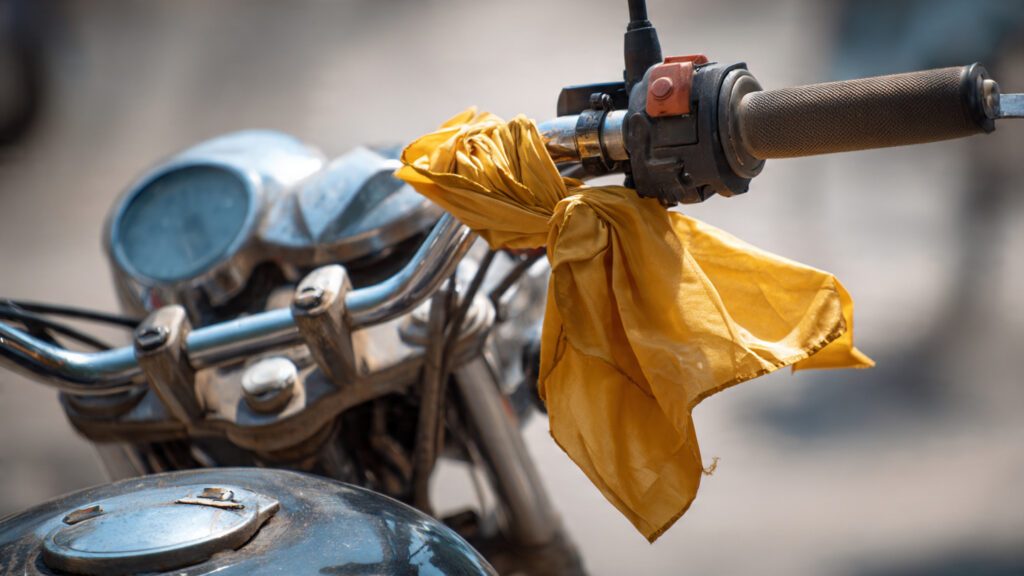
If you’ve ever been on the road and noticed a motorbike with a bright yellow rag tied to its handlebar, you might have paused and wondered: what’s the story behind it? Is it a fashion statement? A quirky decoration? Or is it a secret signal among riders? The truth is far more practical, rooted in safety, culture, and local traffic traditions. In this article, we’ll unravel the mystery of the yellow rag on motorbike handlebars, exploring its significance, origins, and why it matters for both riders and fellow commuters.
The Yellow Rag: More Than Just a Piece of Cloth
At first glance, a yellow rag might seem like a random accessory. But for motorbike riders, this small piece of cloth can convey an important message. In many countries, particularly in parts of Asia and India, a yellow rag is not decorative—it’s a warning. It signals that the motorbike is either new, under repair, or the rider is inexperienced. This small visual cue is designed to grab the attention of other drivers, encouraging them to exercise extra caution.
Unlike stickers or helmets that indicate official status, the yellow rag is an informal, yet widely recognized, form of communication on the road. It’s a way for riders to silently ask for patience and understanding from others.
Why Yellow? Understanding the Choice of Color
Colors have a powerful psychological effect, and yellow is no exception. It is universally associated with caution, alertness, and visibility. Think about traffic lights, warning signs, and school buses—all of these use yellow because it catches the eye quickly.
When tied to a motorbike’s handlebar, the yellow rag serves a similar purpose. Its bright color is hard to miss, even from a distance, making it an effective tool for warning others. Unlike white or black cloth, which could blend into the environment, yellow stands out against almost any background, day or night.
Common Reasons Riders Use a Yellow Rag
While the overarching theme is caution, there are several specific reasons why a rider might tie a yellow rag to their handlebar:
1. New Bike on the Road
A freshly purchased motorbike is often unfamiliar to the rider. Handling, braking, and maneuvering a new bike can feel different, especially for beginners. A yellow rag signals to other motorists: “I’m new here, please give me space.” This small warning can prevent accidents caused by sudden stops, unexpected turns, or hesitant driving.
2. New Rider
Even if the bike isn’t new, the rider might be. Learning to ride a motorbike safely is challenging, especially in heavy traffic. Tying a yellow rag lets others know that the person is inexperienced and might make unpredictable movements.
3. Mechanical Issues
Sometimes, the yellow rag isn’t about the rider—it’s about the bike itself. If the vehicle has recently undergone repairs or is still prone to technical problems, a yellow rag signals that caution is necessary. It’s a practical measure that protects both the rider and other road users.
4. Temporary Warning
In some regions, a yellow rag is used temporarily, such as during a long ride, when visibility is low, or when passing through particularly crowded areas. The rag serves as a portable alert that can be removed once it’s no longer needed.
Cultural Significance and Local Traditions
In countries like India, Vietnam, and Thailand, traffic can be chaotic and unpredictable. Roads are crowded, lane discipline is often ignored, and riders frequently weave through traffic. In such environments, small signals like a yellow rag become essential.
Interestingly, the practice has roots in local driving traditions. It reflects a community-based approach to road safety, where informal signals communicate important information efficiently. While traffic rules and signs exist, riders often rely on these small, visual cues to navigate safely.
How Other Drivers Should React
Seeing a yellow rag on a motorbike is not just a curiosity—it’s an instruction. Other drivers should:
- Maintain Distance: Give extra space to the bike, especially in crowded traffic. Avoid tailgating or overtaking aggressively.
- Anticipate Sudden Movements: A new rider or bike may make abrupt stops, lane changes, or slower accelerations.
- Be Patient: Road frustration is common, but the yellow rag is a reminder to stay calm and considerate.
- Avoid Honking Excessively: Noise may startle inexperienced riders, increasing the risk of accidents.
By understanding and respecting this small signal, drivers contribute to safer roads for everyone.
Safety Benefits of the Yellow Rag
The yellow rag is more than tradition—it’s a practical safety measure. Several studies in traffic psychology emphasize the importance of visual cues in preventing accidents. Here’s how the yellow rag helps:
➡️ How to Grow Malabar Spinach from Cuttings for Fast, Easy Greens
➡️ How to Grow Super Delicious Cabbage at Home Without a Garden
➡️ How to Grow Bean Sprouts at Home in Plastic Bottles Easily (Step‑by‑Step Guide)
➡️ Why is Your Lemon Tree Blooming in the Heart of Winter?
➡️ Why Should Your Garden Have a Dedicated Pollinator Highway?
➡️ Why Do Your Fruit Trees Need a Winter Wash to Thrive in Spring?
➡️ How Can Rice Water Transform Your Fruits into Sweeter Delights?
➡️ Jumpstart Your Winter Garden: Seed Starting Under Lights
- Increases Visibility: A bright rag draws attention, making the bike more noticeable in heavy traffic.
- Reduces Aggressive Driving: Other motorists often give more space when they see a cautionary signal.
- Improves Rider Confidence: Knowing that others are aware of their status, new riders feel safer on the road.
- Prevents Minor Collisions: By signaling caution, the yellow rag helps avoid fender-benders and sudden brakes.
In regions with dense traffic and mixed vehicle types—motorbikes, cars, buses, trucks—the yellow rag can significantly reduce accident risks.
Alternatives to the Yellow Rag
While the yellow rag is widely recognized, some riders and organizations use other methods to convey the same message:
- Colored Flags: Some communities use small flags attached to bikes.
- Stickers or Decals: Signs like “New Rider” or “Beginner Driver” are alternatives, especially in urban areas.
- Reflective Bands: These are particularly useful for night rides, combining caution with visibility.
Despite these alternatives, the yellow rag remains popular due to its simplicity, low cost, and immediate recognizability.
Legal Perspective: Is It Mandatory?
In most countries, tying a yellow rag is not legally required. It’s a voluntary, informal practice. However, traffic authorities often encourage such signals for new riders or bikes because they enhance safety. In some areas, insurance companies and road safety organizations even recommend visible caution markers for beginners.
It’s worth noting that while the rag itself is safe, it should never obstruct mirrors, lights, or controls. A loose or dangling cloth can be dangerous if it interferes with riding.
The Modern Context: Yellow Rag in Urban Traffic
With cities growing more congested, the yellow rag is more relevant than ever. Urban traffic conditions, combined with distracted driving, increase the chances of accidents. The rag acts as a simple, cost-effective tool to alert fellow commuters.
Moreover, in an era where safety campaigns emphasize shared responsibility on the road, the yellow rag reflects a rider’s proactive approach to traffic safety. It’s a small but meaningful gesture that signals awareness and caution.
Final Thoughts: Small Symbol, Big Impact
A yellow rag on a motorbike’s handlebar is a quiet hero of road safety. It communicates experience level, signals caution, and fosters a culture of mutual respect among road users. While it may seem like a small, almost trivial detail, its implications for safety are substantial.
For riders, it’s a way to protect themselves and others. For fellow drivers, it’s a gentle reminder to exercise patience and awareness. In a world where road accidents are a major concern, such small, simple symbols can make a surprising difference.
Next time you see a yellow rag fluttering on a bike, don’t overlook it. That little piece of cloth carries a message: “Take care, I’m learning, and we’re all in this together.” By understanding and respecting this humble signal, we contribute to a safer, more courteous road culture—one yellow rag at a time.