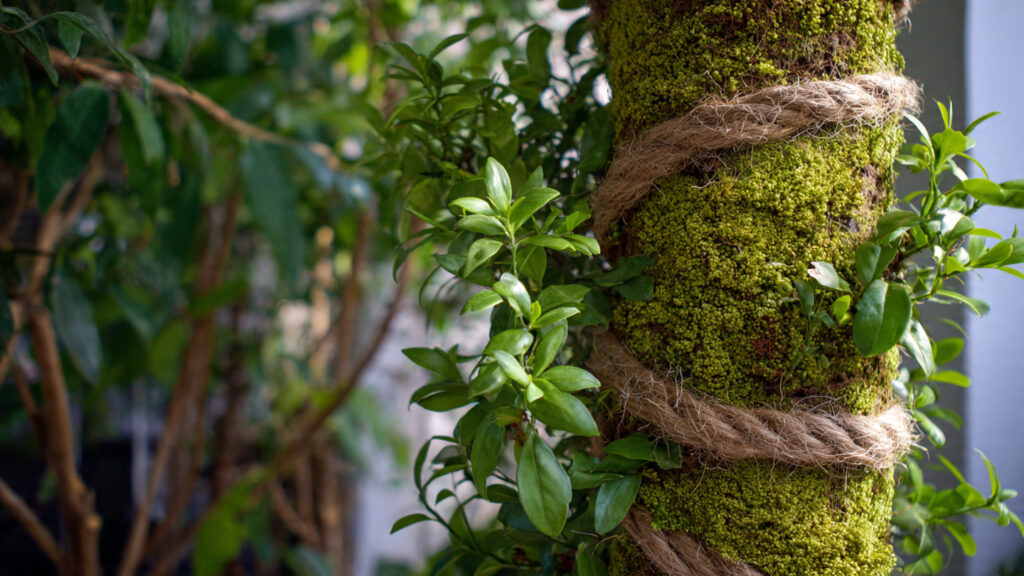
If you’ve ever admired a lush monstera climbing tall with giant leaves, or a pothos growing like a jungle vine indoors, chances are it was supported by something called a moss pole. Moss poles have become one of the most popular plant accessories for indoor gardeners—and for good reason.
Climbing plants naturally want to grow upward, and a moss pole provides the perfect structure for them to thrive. But what exactly is a moss pole? How does it work? And why do so many plant lovers swear by it?
In this guide, you’ll discover everything you need to know about moss poles, how they benefit climbing plants, and how to use one correctly for stunning plant growth.
What Is a Moss Pole?
A moss pole is a vertical plant support covered in moisture-retaining material such as:
- Sphagnum moss
- Coconut coir
- Natural fiber wraps
It is placed inside a plant pot to give climbing plants something to attach their aerial roots to as they grow upward.
Unlike ordinary stakes, moss poles mimic the natural environment of tropical climbing plants, which typically grow by attaching themselves to trees in rainforests.
A moss pole is more than just support—it’s a tool that encourages healthier, larger, and more natural growth.
Why Do Climbing Plants Need Support?
Many popular houseplants are actually natural climbers, meaning they evolved to grow vertically in search of sunlight.
In the wild, these plants climb up tree trunks using aerial roots for stability and moisture.
Without support indoors, they often:
- Trail downward instead of climbing
- Develop smaller leaves
- Grow unevenly
- Become leggy or weak
A moss pole helps recreate their natural climbing behavior, allowing them to grow stronger and fuller.
How Does a Moss Pole Help Climbing Plants?
Moss poles provide multiple benefits beyond simply holding a plant upright. Let’s explore the biggest advantages.
1. Encourages Upward Growth
Climbing plants naturally want to grow toward light. A moss pole gives them a clear vertical direction.
Instead of spreading sideways or drooping, the plant begins to grow upward, creating a tall, dramatic indoor display.
This makes moss poles ideal for small spaces where vertical gardening is preferred.
➡️ How to Grow Malabar Spinach from Cuttings for Fast, Easy Greens
➡️ How to Grow Super Delicious Cabbage at Home Without a Garden
➡️ How to Grow Bean Sprouts at Home in Plastic Bottles Easily (Step‑by‑Step Guide)
➡️ Why is Your Lemon Tree Blooming in the Heart of Winter?
➡️ Why Should Your Garden Have a Dedicated Pollinator Highway?
➡️ Why Do Your Fruit Trees Need a Winter Wash to Thrive in Spring?
➡️ How Can Rice Water Transform Your Fruits into Sweeter Delights?
➡️ Jumpstart Your Winter Garden: Seed Starting Under Lights
2. Supports Aerial Root Development
Many climbers like monstera and philodendrons produce aerial roots, which help them anchor to surfaces.
A moss pole gives those roots something soft and moist to grip.
Once attached, the plant becomes more stable and grows faster because it feels “supported,” just like it would on a tree.
3. Promotes Bigger and Healthier Leaves
One of the most exciting benefits of moss poles is the way they encourage leaf enlargement.
When climbing plants grow upward with proper root attachment, they often produce:
- Larger leaves
- Deeper splits or fenestrations
- Stronger stems
- More mature growth patterns
For example, a Monstera deliciosa will develop much bigger leaves when climbing a moss pole compared to trailing in a hanging basket.
4. Improves Plant Structure and Appearance
Plants without support can look messy or tangled over time.
A moss pole helps create a clean, upright form, making your plant look:
- Fuller
- Neater
- More decorative
- More natural
It turns a basic houseplant into a stunning indoor centerpiece.
5. Retains Moisture for Roots
Unlike wooden stakes, moss poles hold moisture.
When kept slightly damp, the moss provides humidity and hydration to aerial roots, helping the plant absorb additional moisture and nutrients.
This is especially helpful for tropical plants that thrive in humid environments.
Which Plants Benefit Most From Moss Poles?
Not all houseplants need moss poles, but many climbing species thrive with them.
Here are some of the most common moss pole-loving plants:
- Monstera deliciosa
- Philodendron (Brasil, Pink Princess, Heartleaf)
- Pothos varieties
- Syngonium (Arrowhead plant)
- Scindapsus pictus
- Rhaphidophora tetrasperma
- Vanilla orchid vines
If your plant has vines, aerial roots, or climbing habits, a moss pole can be a game changer.
Moss Pole vs. Trellis vs. Stake: What’s the Difference?
It’s easy to confuse plant supports, but each serves a different purpose.
Moss Pole
- Best for tropical climbers
- Encourages aerial root attachment
- Holds moisture
Trellis
- Works well for flowering vines
- Provides structure but not moisture
- Mostly decorative
Stake
- Offers basic upright support
- Doesn’t promote climbing behavior
- No moisture retention
For indoor climbing plants, moss poles are often the most natural and effective choice.
How to Use a Moss Pole Properly
Using a moss pole is simple, but doing it correctly ensures the best results.
Step 1: Choose the Right Size
Pick a moss pole that matches your plant’s height and growth potential.
It should be tall enough for future climbing, not just current size.
Step 2: Insert the Pole Securely
Place the pole into the pot near the center or behind the main stem.
Push it deep enough so it stays stable and won’t wobble.
Step 3: Gently Attach the Plant
Use soft plant ties, twine, or Velcro strips to guide the vines upward.
Avoid tying too tightly—you want support, not restriction.
Step 4: Encourage Root Attachment
Position aerial roots toward the moss surface.
Over time, they will naturally grip the pole.
Step 5: Keep the Pole Moist
Mist the moss regularly or water it lightly.
A slightly damp pole helps aerial roots grow into it, boosting plant growth dramatically.
How to Make a DIY Moss Pole
You can buy moss poles, but making one at home is easy.
You’ll need:
- PVC pipe or wooden stick
- Sphagnum moss or coconut coir
- Mesh wire or garden netting
- Twine or zip ties
Wrap moss around the pole, secure it with mesh, and tie it tightly.
DIY moss poles are affordable, customizable, and fun to create.
Common Mistakes to Avoid
While moss poles are helpful, avoid these mistakes:
- Letting the pole dry out completely
- Using a pole that is too short
- Tying vines too tightly
- Overwatering the pot because the pole stays wet
- Ignoring aerial roots instead of guiding them
Proper care makes the moss pole far more effective.
Extra Tips for Thriving Climbing Plants
To get the best results:
- Rotate the plant for even light
- Fertilize during growing season
- Increase humidity indoors
- Repot when roots outgrow the pot
- Extend the pole as the plant grows
With the right care, your climbing plant can become a tall, lush indoor jungle feature.
Conclusion
A moss pole is one of the best tools for helping climbing plants grow the way nature intended. By providing vertical support, moisture retention, and a surface for aerial roots to cling to, moss poles encourage:
- Stronger growth
- Bigger leaves
- Healthier structure
- Stunning upright displays
Whether you’re growing a monstera, pothos, or philodendron, adding a moss pole can transform your plant from ordinary to extraordinary.
So if your climbing plant is trailing, leaning, or producing smaller leaves, it might be time to give it the support it’s been craving—a moss pole.