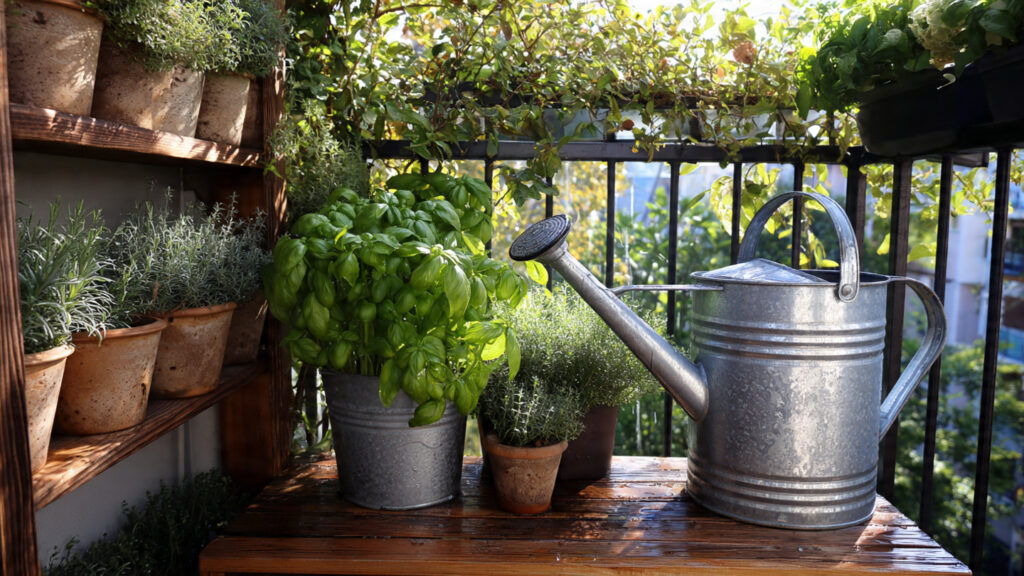
A thriving balcony herb garden is one of the simplest and most rewarding ways to grow fresh food in small spaces. Whether you live in an apartment, a townhouse, or an urban high-rise, a few pots of basil, mint, thyme, or coriander can bring fragrance, flavor, and life to your home.
But if you truly want to transform your balcony herb garden—making it healthier, more sustainable, and more productive—there’s one powerful practice to consider: collecting rainwater.
Rainwater harvesting may sound like something reserved for large gardens or rural homes, but even small-scale collection can make a remarkable difference for balcony growers. Let’s explore how collecting rainwater can elevate your herb garden in ways you may not expect.
Why Water Quality Matters for Herbs
Most balcony gardeners rely on tap water. While convenient, tap water often contains:
- Chlorine or chloramine
- Dissolved salts
- Fluoride
- Hard minerals
Over time, these substances can accumulate in potting soil. Because container gardens have limited soil volume, salt buildup can happen faster than in ground beds. This may lead to:
- Leaf tip burn
- Slower growth
- Reduced flavor intensity
- Soil compaction
Rainwater, by contrast, is naturally soft and free from chemical treatments. It closely resembles the water plants evolved to thrive on.
For delicate herbs like basil, parsley, cilantro, and mint, this difference can be significant.
1. Healthier, More Vigorous Growth
Rainwater contains trace amounts of nitrogen and other naturally occurring elements absorbed from the atmosphere. While not a replacement for fertilizer, it provides a gentle nutritional boost.
More importantly, rainwater:
- Allows roots to absorb nutrients more efficiently
- Prevents salt buildup in containers
- Supports beneficial soil microbes
When herbs are watered consistently with rainwater, many gardeners notice:
- Lusher foliage
- Deeper green leaves
- Stronger aroma
- Faster recovery after harvesting
The improvement may be gradual, but over time it becomes clear that the plants are thriving under more natural conditions.
2. Better Soil Health in Containers
Balcony gardens rely entirely on potting mix. Unlike garden soil, container soil doesn’t benefit from natural rain cycles, deep earth microbes, or groundwater movement.
Tap water minerals can accumulate in pots because there is limited leaching. You may notice a white crust forming on the soil surface or around the rim of pots—this is salt residue.
Rainwater helps prevent this problem by:
- Flushing excess salts naturally
- Maintaining balanced soil pH
- Supporting microbial life
Healthy soil biology leads to better nutrient cycling, which directly impacts herb flavor and growth.
➡️ How to Grow Malabar Spinach from Cuttings for Fast, Easy Greens
➡️ How to Grow Super Delicious Cabbage at Home Without a Garden
➡️ How to Grow Bean Sprouts at Home in Plastic Bottles Easily (Step‑by‑Step Guide)
➡️ Why is Your Lemon Tree Blooming in the Heart of Winter?
➡️ Why Should Your Garden Have a Dedicated Pollinator Highway?
➡️ Why Do Your Fruit Trees Need a Winter Wash to Thrive in Spring?
➡️ How Can Rice Water Transform Your Fruits into Sweeter Delights?
➡️ Jumpstart Your Winter Garden: Seed Starting Under Lights
3. Enhanced Flavor and Aroma
Herbs are grown primarily for their essential oils—the compounds responsible for their flavor and fragrance.
When herbs experience mild stress from mineral buildup or inconsistent watering, oil production can be affected. By providing consistent, clean hydration, rainwater supports optimal plant health, which can enhance:
- Basil’s sweetness
- Mint’s cooling intensity
- Rosemary’s aromatic oils
- Thyme’s concentrated flavor
While many factors influence flavor—sunlight, soil quality, pruning—water quality is often overlooked.
4. Lower Water Bills and Greater Sustainability
Collecting rainwater reduces dependence on municipal water supplies. Even on a small balcony, you can collect meaningful amounts during monsoon or rainy seasons.
This offers several benefits:
- Lower water costs
- Reduced strain on city water systems
- Decreased environmental footprint
- Greater resilience during water restrictions
In regions with seasonal rainfall patterns, storing water during rainy months can help support your herb garden during dry spells.
Balcony gardening becomes not only productive, but environmentally responsible.
5. Greater Drought Resilience
Climate unpredictability is increasing in many parts of the world. Having a stored supply of rainwater gives you control during:
- Water shortages
- Municipal restrictions
- Supply interruptions
Even a few stored containers can provide backup irrigation when needed.
For balcony gardeners in urban areas, this self-sufficiency adds peace of mind.
6. Easy Setup for Small Spaces
You don’t need a large roof or complex system to collect rainwater for a balcony garden. Small-scale options include:
- Placing clean containers under balcony overhangs
- Using buckets during heavy rainfall
- Installing a small rain barrel connected to a balcony drain (where allowed)
- Collecting runoff from terrace edges
If your balcony is partially covered, you may still capture wind-driven rain.
Always check building regulations before installing any permanent system.
7. Simple Storage Solutions
Collected rainwater should be stored safely and properly.
Best practices include:
- Using covered containers to prevent mosquito breeding
- Choosing food-grade barrels or bins
- Keeping storage in shaded areas to limit algae growth
- Using collected water within a few weeks
For balcony herb gardens, even 20–50 liters of stored water can last for days or weeks, depending on plant size and weather conditions.
8. Supporting Organic Gardening Practices
If you’re growing herbs for culinary use, you likely care about keeping them as natural as possible.
Rainwater aligns perfectly with organic gardening principles. It:
- Contains no synthetic additives
- Supports soil microbes naturally
- Reduces reliance on chemical water treatment
When combined with compost, natural fertilizers, and proper pruning, rainwater helps create a closed-loop mini ecosystem—even on a balcony.
9. Reduced Plant Stress
Herbs in containers are more vulnerable to stress because their roots are confined. Watering inconsistently or with mineral-heavy water can amplify that stress.
Rainwater’s gentle composition reduces shock to roots. Plants respond with:
- Fewer yellowing leaves
- Less tip burn
- More consistent growth
This is especially helpful for sensitive herbs like coriander or chives.
10. Encourages Mindful Gardening
Collecting rainwater changes your relationship with your garden. Instead of turning on a tap automatically, you become more aware of:
- Weather patterns
- Seasonal changes
- Water usage
- Plant needs
This mindfulness often leads to better overall plant care.
Balcony gardening becomes not just about growing herbs, but about building a sustainable habit.
Safety Considerations
While rainwater is generally safe for plants, keep a few precautions in mind:
- Avoid collecting runoff from dirty surfaces.
- Clean containers regularly.
- If you live in heavily polluted areas, allow the first heavy rainfall to rinse surfaces before collecting.
- Use stored water within a reasonable timeframe.
For culinary herbs, rainwater is safe for watering but should not replace proper washing before consumption.
Combining Rainwater with Smart Irrigation
To maximize benefits:
- Water early in the morning to reduce evaporation.
- Use a watering can with a narrow spout for precise application.
- Consider self-watering pots filled with rainwater reservoirs.
- Mulch the soil surface with coco coir or bark to retain moisture.
Efficient watering ensures that every drop counts.
A Small Change with Big Results
Balcony gardens operate on a smaller scale than traditional gardens, but that doesn’t mean small changes can’t have big impacts.
Switching from tap water to rainwater may seem minor, yet over time it can:
- Improve soil health
- Enhance plant vigor
- Boost flavor
- Increase sustainability
- Lower costs
For urban gardeners seeking healthier herbs and a greener lifestyle, rainwater collection is one of the most practical steps you can take.
Final Thoughts
Your balcony herb garden is more than just a collection of pots—it’s a living ecosystem in miniature form.
By collecting rainwater, you provide your herbs with a more natural, balanced source of hydration. In return, they reward you with stronger growth, richer aroma, and abundant harvests.
In a world where resources are precious and sustainability matters more than ever, even small actions—like placing a bucket out during a rainstorm—can transform the way you garden.