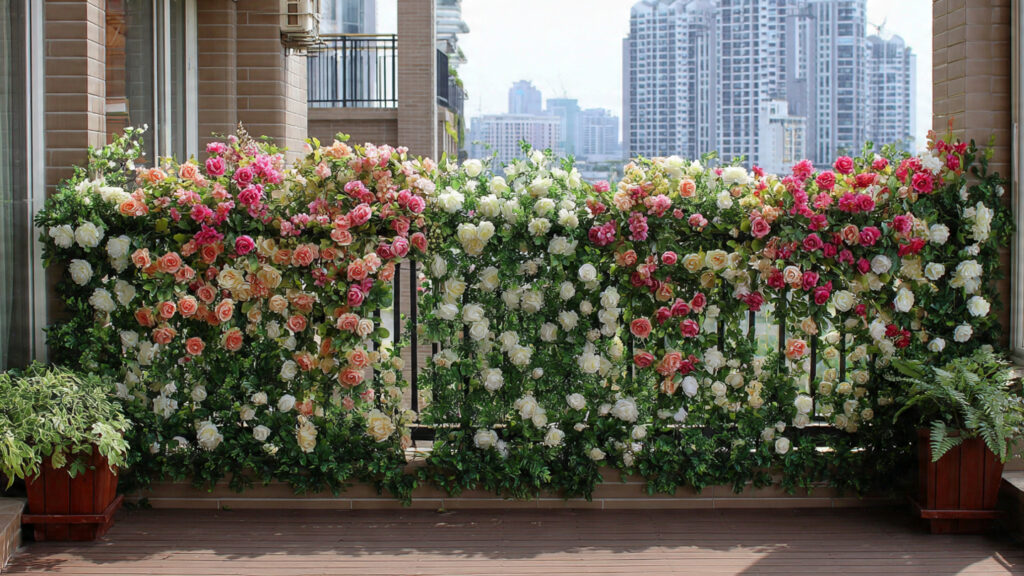
Balconies are one of the most versatile spaces in any home — a cozy retreat, a mini-garden, or an extension of your living area. But not everyone has the time or resources to maintain real plants. This is where balcony artificial flower fences come in. They instantly transform dull railings into colorful, vibrant privacy screens without the hassle of watering, pruning, or seasonal changes.
With so many options available, choosing the best artificial flower fence can be confusing. From material quality to UV resistance, color, size, and installation methods, there are several factors to consider. This guide will help you make the right choice and create a balcony that is stylish, low-maintenance, and visually appealing.
1. Why Choose an Artificial Flower Fence for Your Balcony?
Artificial flower fences are increasingly popular due to several benefits:
- Year-round beauty: Unlike real flowers, artificial fences stay vibrant in all seasons.
- Low maintenance: No watering, trimming, or fertilizing is required.
- Privacy: They can act as a natural screen, providing privacy from neighbors.
- Durability: High-quality artificial fences are weather-resistant and long-lasting.
- Versatility: Suitable for balconies, terraces, gardens, patios, or even event decorations.
Whether your goal is aesthetics, privacy, or both, an artificial flower fence can dramatically enhance your balcony’s appeal.
2. Materials Matter: Choosing Durable Artificial Flowers
Not all artificial flower fences are created equal. The material used affects durability, appearance, and UV resistance.
Common Materials
- Plastic/Polyethylene (PE): Lightweight, flexible, and waterproof. Suitable for outdoor use.
- Silk: Offers a realistic look and texture but may fade faster under direct sunlight.
- Polyester: Affordable, fairly durable, and colorfast.
Tip: For balconies exposed to sunlight and rain, choose UV-protected PE or polyester flowers. This ensures the fence stays vibrant for years.
3. Check for UV and Weather Resistance
Balcony fences are constantly exposed to sun, rain, and wind. A good artificial flower fence should be:
- UV resistant: Prevents fading and maintains color vibrancy.
- Waterproof: Avoids damage during rain or accidental watering.
- Wind-resistant: Strong backing or mesh prevents flowers from detaching during storms.
Investing in weather-resistant materials ensures your fence lasts several seasons without losing charm.
4. Size and Coverage: Measure Your Balcony First
Before purchasing, measure your balcony railing to determine how much coverage you need.
- Height: Most fences are 1–2 feet high, but taller panels offer more privacy.
- Length: Purchase multiple panels if needed and ensure they can be linked seamlessly.
- Overlap: Some panels allow overlapping to create a fuller look.
Knowing your balcony dimensions helps avoid buying panels that are too short, too tall, or insufficient to cover the railing.
5. Realism: Choosing a Natural Look
One of the main reasons people prefer artificial flower fences is visual appeal. To make your balcony look natural:
- Opt for multi-toned flowers that mimic real plants.
- Choose fences with green leaves and stems alongside flowers for a fuller look.
- Mix flower types if possible — for example, roses, lilies, or hydrangeas in a single panel.
High-quality fences with layered foliage and vibrant flowers create a realistic and eye-catching display.
6. Installation Methods: Easy and Secure Options
A balcony artificial flower fence is only as good as its installation. Consider these factors:
- Mounting clips or ties: Ensure the fence comes with zip ties, hooks, or clips for easy attachment.
- Reusable panels: Some fences can be detached and reused, which is great for renters.
- Modular panels: Panels that interlock allow flexibility for custom balcony sizes.
Proper installation ensures the fence stays secure even in strong winds and maintains its aesthetic appeal.
7. Maintenance and Cleaning
While artificial fences are low-maintenance, some cleaning is necessary to keep them looking fresh:
➡️ How to Grow Malabar Spinach from Cuttings for Fast, Easy Greens
➡️ How to Grow Super Delicious Cabbage at Home Without a Garden
➡️ How to Grow Bean Sprouts at Home in Plastic Bottles Easily (Step‑by‑Step Guide)
➡️ Why is Your Lemon Tree Blooming in the Heart of Winter?
➡️ Why Should Your Garden Have a Dedicated Pollinator Highway?
➡️ Why Do Your Fruit Trees Need a Winter Wash to Thrive in Spring?
➡️ How Can Rice Water Transform Your Fruits into Sweeter Delights?
➡️ Jumpstart Your Winter Garden: Seed Starting Under Lights
- Dusting: Use a soft brush or cloth to remove dust from leaves and flowers.
- Washing: Lightly spray with water or mild soap solution occasionally.
- Avoid harsh chemicals: They can damage flowers or fade colors.
Easy-to-clean fences save time while keeping your balcony colorful and attractive year-round.
8. Budget and Value
Artificial flower fences come in a wide price range, depending on size, material, and realism. Consider:
- Premium options: UV-resistant, realistic silk or PE flowers may cost more but last longer.
- Budget options: Lightweight polyester fences are affordable but may fade faster.
- DIY kits: Some panels allow custom designs and can be a fun project for creative homeowners.
Evaluate cost versus longevity and appearance to get the best value for your budget.
9. Versatility: Use Beyond the Balcony
A high-quality artificial flower fence isn’t limited to balconies. You can use it for:
- Patios or terraces to create a private oasis.
- Garden fences to add color without seasonal planting.
- Events or parties as a backdrop for photos.
- Indoor spaces like apartments, offices, or shops.
Versatile fences provide more value and decorative options throughout your home.
10. Eco-Friendly Considerations
Many artificial flower fences are reusable and recyclable, which can reduce environmental impact.
- Choose fences made from recyclable PE or polyester materials.
- Avoid cheap plastic panels that may degrade quickly and contribute to waste.
- Durable fences reduce the need for frequent replacement, making them more sustainable.
By selecting eco-friendly materials, you enjoy beauty without compromising environmental responsibility.
11. Bonus Tips for a Stunning Balcony Display
- Mix colors wisely: Complement your balcony’s wall and furniture colors.
- Layer panels: For a fuller look, place two panels slightly overlapped.
- Add decorative lights: Fairy lights or LED strips enhance ambiance at night.
- Pair with planters: Combine artificial fences with small potted plants for a hybrid natural-artificial garden.
- Seasonal swaps: Some homeowners change flowers seasonally for a fresh look throughout the year.
These finishing touches ensure your balcony is inviting, stylish, and Instagram-worthy.
12. Common Mistakes to Avoid
- Buying panels too small: Insufficient coverage looks patchy.
- Ignoring UV protection: Sun-exposed flowers fade quickly.
- Poor installation: Fences that are loosely attached can detach or sag.
- Overcrowding panels: Too many flowers in a small space can appear unnatural.
Avoiding these mistakes guarantees a professional, clean, and beautiful balcony appearance.
Conclusion
Choosing the best balcony artificial flower fence involves balancing durability, realism, size, and installation ease. By selecting UV-resistant materials, measuring your space carefully, and opting for realistic, vibrant flowers, you can create a balcony that is colorful, private, and low-maintenance.
Artificial flower fences are an investment in style and convenience, transforming your balcony into a personal oasis year-round. Whether you’re a beginner looking for simple home décor or a gardening enthusiast wanting an evergreen display, the right fence will enhance your space without the hassle of maintaining real flowers.
With this complete buying guide, you now have the knowledge to choose wisely, install securely, and enjoy a stunning balcony that impresses family, friends, and neighbors alike.