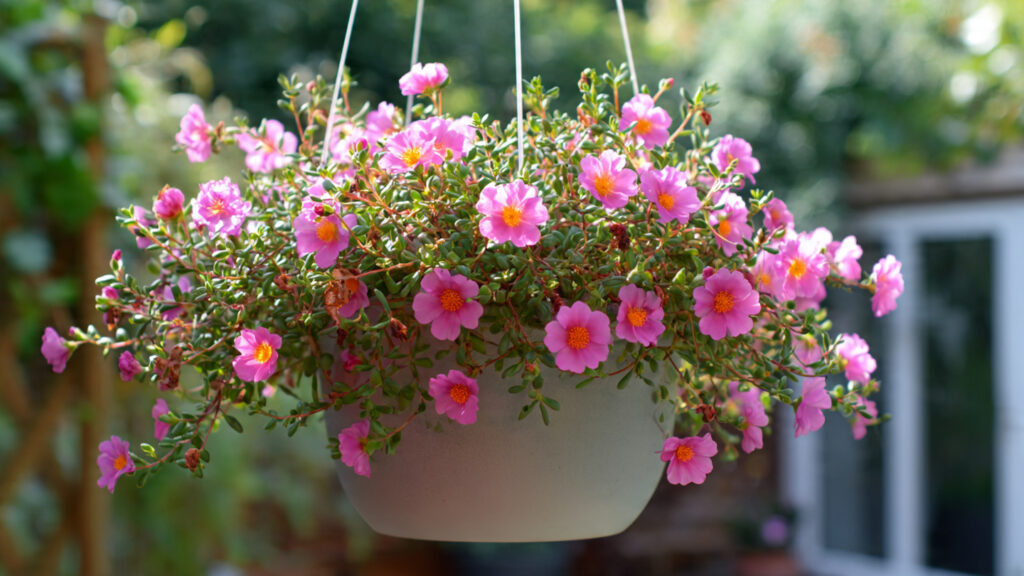
If you’re looking to add a burst of color to your garden, balcony, or terrace, few flowers can rival the charm of Portulaca. Known for its bright, vibrant blooms and resilient nature, Portulaca is the perfect choice for gardeners who want colorful displays with minimal effort. One of the most captivating ways to showcase these flowers is by growing them in hanging pots, creating cascading carpets of vivid blooms that catch every eye.
In this guide, we’ll walk you through everything you need to know to cultivate beautiful Portulaca in hanging pots, from choosing the right varieties to ensuring healthy growth and stunning displays.
Why Choose Portulaca for Hanging Pots?
Portulaca, also known as moss rose, is not only beautiful but also remarkably easy to grow. Here’s why it’s perfect for hanging pots:
- Thrives in Sunlight: Portulaca loves full sun and blooms more profusely with at least 6 hours of direct sunlight daily.
- Drought-Tolerant: These succulents store water in their leaves, so they are ideal for hanging pots where water retention is often a challenge.
- Vibrant and Long-Lasting Blooms: Portulaca flowers come in red, yellow, pink, orange, and white, creating a lively, eye-catching display all summer long.
- Compact and Cascading Growth: Perfect for pots and baskets, Portulaca naturally spills over the edges, creating a cascading waterfall of color.
- Low Maintenance: They require minimal care, making them ideal for both beginner and experienced gardeners.
Step 1: Selecting the Right Hanging Pots
The choice of pots is crucial for healthy growth and vibrant blooms. Consider the following:
- Size: Choose pots at least 8–12 inches in diameter for a fuller display. Smaller pots can be used for single plants, but larger pots allow multiple plants to thrive together.
- Material: Terra cotta pots are excellent for drainage and breathability, but plastic or ceramic pots work too.
- Drainage: Ensure your hanging pot has adequate drainage holes at the bottom. Portulaca doesn’t like waterlogged soil.
💡 Tip: Hanging baskets with built-in coco liners or mesh allow better air circulation and reduce soil spillage.
Step 2: Preparing the Soil
Portulaca prefers well-drained, sandy soil, as heavy soil can cause root rot. Here’s a simple soil mix you can prepare at home:
- 2 parts garden soil
- 1 part coarse sand
- 1 part compost or organic matter
This mix ensures good drainage while providing enough nutrients to support lush foliage and continuous blooms. Avoid using soil that retains too much moisture.
Step 3: Choosing Portulaca Varieties
Portulaca comes in several varieties suitable for hanging pots:
- Portulaca Grandiflora – Classic moss rose with large, bright blooms.
- Portulaca ‘Double Flowered’ – Double petals for a fuller, more luxurious look.
- Portulaca Sundial – Compact plants ideal for smaller hanging baskets.
- Trailing Varieties – Perfect for creating cascading effects in larger pots.
💡 Tip: Mix different colors and varieties for a dynamic, vibrant display.
Step 4: Planting Portulaca in Hanging Pots
Planting Portulaca correctly ensures healthy growth:
- Fill your hanging pot with prepared soil, leaving 1 inch of space at the top.
- If planting seeds: scatter them lightly on the soil surface and cover with a thin layer of soil (about 0.25 inches).
- If using seedlings: dig small holes and plant them carefully, keeping the base of the stem at soil level.
- Space plants about 3–4 inches apart to allow proper airflow and room to grow.
- Water lightly after planting to settle the soil.
💡 Tip: Avoid deep planting; Portulaca prefers shallow root zones and thrives near the soil surface.
Step 5: Watering and Care
Portulaca is drought-resistant, but proper watering promotes optimal flowering:
- Water moderately when the soil feels dry. Overwatering can lead to root rot.
- During extremely hot days, water early in the morning to allow leaves to dry during the day.
- Mulch lightly with sand or gravel to retain soil warmth and reduce moisture evaporation.
💡 Tip: Hanging pots may dry out faster than ground containers, so check soil moisture frequently during peak summer.
Step 6: Sunlight and Temperature
Portulaca thrives in full sunlight. Hanging pots should be placed where they receive 6–8 hours of direct sunlight.
- Morning sun is ideal, while afternoon shade may be helpful in extremely hot climates.
- Portulaca can tolerate temperatures up to 35°C (95°F), but prolonged frost may damage the plant.
Step 7: Fertilization
Though Portulaca can grow in poor soils, occasional feeding boosts flowering:
➡️ How to Grow Malabar Spinach from Cuttings for Fast, Easy Greens
➡️ How to Grow Super Delicious Cabbage at Home Without a Garden
➡️ How to Grow Bean Sprouts at Home in Plastic Bottles Easily (Step‑by‑Step Guide)
➡️ Why is Your Lemon Tree Blooming in the Heart of Winter?
➡️ Why Should Your Garden Have a Dedicated Pollinator Highway?
➡️ Why Do Your Fruit Trees Need a Winter Wash to Thrive in Spring?
➡️ How Can Rice Water Transform Your Fruits into Sweeter Delights?
➡️ Jumpstart Your Winter Garden: Seed Starting Under Lights
- Use a balanced liquid fertilizer every 3–4 weeks.
- Alternatively, compost tea or diluted organic fertilizers work well.
- Avoid excessive nitrogen fertilizers; they promote foliage growth but reduce flowers.
💡 Tip: Fertilize lightly but regularly to ensure continuous blooms throughout the season.
Step 8: Pruning and Maintenance
To keep your hanging pots looking vibrant:
- Remove faded or dead flowers (deadheading) to encourage new blooms.
- Trim excessively long or leggy stems to maintain a compact, cascading appearance.
- Inspect for pests such as aphids or mealybugs and treat naturally with neem oil or soapy water.
💡 Tip: Portulaca rarely suffers from diseases if planted in well-drained soil and exposed to ample sunlight.
Step 9: Creative Hanging Display Ideas
Hanging pots allow for artistic arrangements in your garden:
- Tiered Display – Hang pots at different heights to create a cascading rainbow of colors.
- Balcony Railings – Line your balcony with small hanging pots for a vibrant, eye-catching edge.
- Wall Mounted Planters – Mount pots on walls or trellises for vertical gardening.
- Mixed Plantings – Combine Portulaca with other trailing plants like petunias or lobelia for added texture.
💡 Tip: Use colorful or rustic pots to enhance the aesthetic appeal of your display.
Benefits of Growing Portulaca in Hanging Pots
- Visual Appeal: Cascading blooms create a striking, colorful focal point in any space.
- Space-Saving: Perfect for urban gardening or areas with limited ground space.
- Low Maintenance: Requires minimal watering and care while providing abundant flowers.
- Pollinator Friendly: Attracts bees and butterflies, contributing to a healthy garden ecosystem.
- Season-Long Blooms: With proper care, Portulaca can bloom from spring to autumn, ensuring continuous color.
Final Thoughts
Cultivating beautiful Portulaca in hanging pots is a simple yet rewarding way to bring vibrant color and life to your garden, balcony, or terrace. With minimal effort and care, you can create a stunning display of cascading flowers that will impress everyone who sees it.
By following this guide, you’ll learn how to choose the right pots, prepare soil, select varieties, plant, water, fertilize, and maintain your Portulaca plants for maximum impact. The best part? You don’t need a large garden or expensive equipment—just sunlight, soil, water, and a bit of love.
So, get your hanging pots ready, pick your favorite Portulaca varieties, and start cultivating a vibrant, colorful garden display that will bring joy and beauty to your home. Your cascading carpet of blooms awaits!