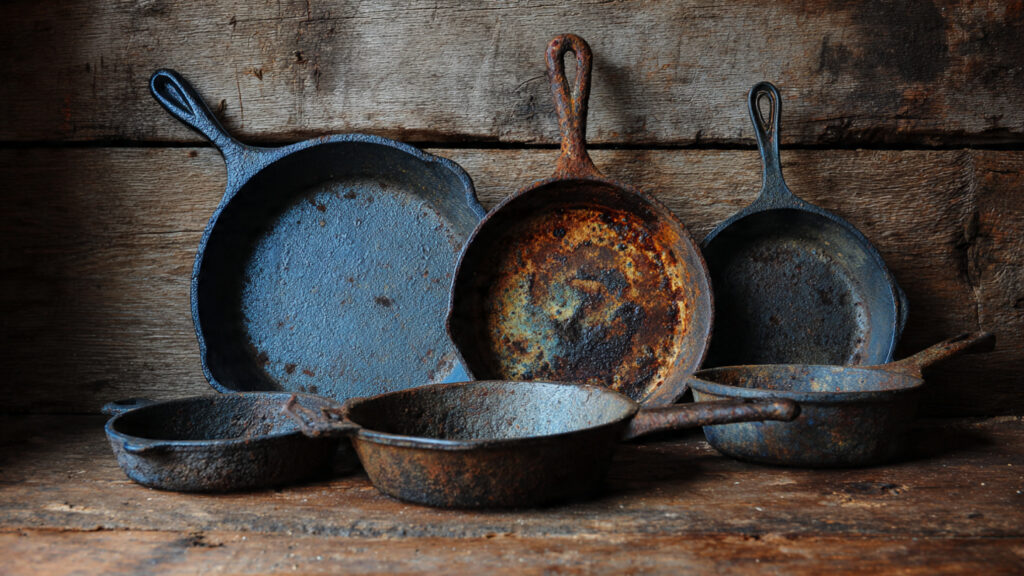
Cast iron cookware is famous for its durability, heat retention, and ability to last for generations. But even the toughest pans can fall victim to rust if they’re stored damp, left unseasoned, or forgotten for too long. Pulling out a skillet covered in orange-brown rust can feel discouraging — but the good news is this: most rusty cast iron can be fully restored.
Whether you’re reviving a flea-market find or rescuing your favorite skillet, here’s a complete step-by-step guide to deep cleaning cast iron and finally removing that stubborn layer of rust.
First: Don’t Panic — Rust Isn’t the End
Cast iron is solid metal. Surface rust may look dramatic, but it usually hasn’t damaged the pan permanently. Unless the pan has deep pitting or structural cracks, it can almost always be restored.
What you’re really doing during a deep clean is:
- Removing rust
- Stripping old, uneven seasoning
- Rebuilding a protective layer
Once reseasoned properly, your pan will look and perform like new.
Step 1: Assess the Rust Level
Before diving in, check the severity.
Light Rust
Small orange spots or thin surface film.
Moderate Rust
Widespread surface rust, rough texture.
Heavy Rust
Thick flakes, deep discoloration, possible pitting.
The cleaning method depends on how serious the rust is.
Step 2: Gather the Right Tools
You’ll need:
- Steel wool or a metal scouring pad
- Coarse salt (optional)
- Dish soap
- Warm water
- Paper towels or clean cloth
- White vinegar (for heavy rust)
- Baking soda (optional)
- High-smoke-point oil (like vegetable, flaxseed, or canola oil)
Unlike daily maintenance, deep cleaning rusty cast iron does involve soap — and that’s completely fine when stripping rust.
Step 3: Scrub Away Surface Rust
Start with dry scrubbing.
Use steel wool to aggressively scrub the rusted areas. Apply firm pressure. You want to remove all visible rust and expose clean metal underneath.
If rust is light:
➡️ How to Grow Malabar Spinach from Cuttings for Fast, Easy Greens
➡️ How to Grow Super Delicious Cabbage at Home Without a Garden
➡️ How to Grow Bean Sprouts at Home in Plastic Bottles Easily (Step‑by‑Step Guide)
➡️ Why is Your Lemon Tree Blooming in the Heart of Winter?
➡️ Why Should Your Garden Have a Dedicated Pollinator Highway?
➡️ Why Do Your Fruit Trees Need a Winter Wash to Thrive in Spring?
➡️ How Can Rice Water Transform Your Fruits into Sweeter Delights?
➡️ Jumpstart Your Winter Garden: Seed Starting Under Lights
- Dry scrub first
- Then wash with warm soapy water
- Rinse thoroughly
If rust is moderate:
- Scrub with steel wool and soapy water
- Continue until the surface feels smooth
Expect your pan to look silver-gray after rust removal — that’s bare iron, and it’s normal.
Step 4: Use a Vinegar Soak for Stubborn Rust
For heavy rust, vinegar is extremely effective.
Vinegar Solution:
- 50% white vinegar
- 50% water
Submerge the pan fully in the solution.
⚠ Important: Do not soak for more than 30–60 minutes at a time.
Vinegar dissolves rust but can also damage iron if left too long. Check every 15–20 minutes. Once rust loosens, remove the pan and scrub immediately with steel wool.
Rinse thoroughly with water afterward.
Step 5: Neutralize and Wash
After scrubbing and soaking:
- Wash the pan with warm soapy water
- Rinse well
- Dry immediately
Never let wet cast iron air-dry. It will flash-rust within minutes.
To fully dry:
- Towel dry
- Then place on a stovetop burner over low heat for several minutes
Heat evaporates hidden moisture.
Step 6: Remove Any Remaining Residue
If rough patches remain:
- Sprinkle coarse salt into the pan
- Scrub with a paper towel
- Rinse and dry again
The goal is a smooth, clean surface with no rust or debris.
At this stage, the pan will look bare and matte gray. That’s exactly what you want before reseasoning.
Step 7: Rebuild the Seasoning Layer
Seasoning is what protects cast iron from rust. It’s created by polymerizing oil onto the surface through high heat.
How to Season Properly:
- Preheat oven to 450–500°F (230–260°C).
- Apply a very thin layer of oil to the entire pan (inside and out).
- Wipe off excess oil — the pan should look almost dry.
- Place upside down in the oven.
- Bake for 1 hour.
- Turn off oven and let pan cool inside.
Repeat this process 2–3 times for a strong protective coating.
The surface should gradually darken to deep brown or black.
Step 8: Maintain to Prevent Future Rust
Once restored, proper care keeps rust from returning.
After Cooking:
- Wash with warm water (mild soap is okay if needed).
- Dry immediately.
- Heat briefly on stove to remove moisture.
- Apply a light oil coat before storing.
Avoid:
- Leaving food soaking overnight
- Storing with moisture
- Dishwashers
- Stacking without protection
Consistent care builds a durable seasoning layer.
Common Mistakes to Avoid
❌ Soaking Too Long in Vinegar
Extended vinegar exposure can damage the iron.
❌ Using Thick Oil Layers During Seasoning
Too much oil creates sticky residue instead of smooth seasoning.
❌ Air Drying
Even slight moisture triggers flash rust.
❌ Giving Up Too Soon
Rust removal requires elbow grease — persistence pays off.
What If There’s Deep Pitting?
If rust has created small pits in the surface:
- Continue scrubbing until rust is fully removed.
- Season multiple times.
- Over time, cooking oils will fill minor imperfections.
Unless the pan is structurally weakened, pitting doesn’t ruin performance.
Is It Safe to Cook After Rust?
Light rust isn’t typically harmful, but it affects flavor and texture. Once deep cleaned and reseasoned properly, your cast iron is completely safe to use.
Proper seasoning creates a natural nonstick surface without synthetic coatings.
Restoring Vintage or Heirloom Cast Iron
Many older pans are extremely high quality. Brands like:
- Griswold
- Wagner
…are prized for their smooth finishes.
If you’ve inherited or found one, restoration can dramatically increase both functionality and value.
When to Consider Electrolysis
For extremely rusted pieces (thick scale, decades of corrosion), some restorers use electrolysis cleaning. This advanced method removes rust using electrical current in a washing soda solution.
It’s highly effective but requires proper setup and safety precautions.
For most household rust cases, manual scrubbing and vinegar treatment are sufficient.
How Long Does Full Restoration Take?
Light rust: 1–2 hours
Moderate rust: 2–4 hours
Heavy rust: A full afternoon
The time investment is worth it. Once restored, cast iron can last decades with minimal upkeep.
The Reward: A Pan That Lasts Generations
Deep cleaning rusty cast iron may seem intimidating, but it’s actually one of the most satisfying kitchen restorations you can do. Watching orange corrosion disappear and a rich black seasoning return feels like bringing something back to life.
Cast iron isn’t delicate. It’s resilient. It just needs proper care.
With thorough rust removal, careful drying, and multiple seasoning layers, your skillet can go from neglected to nearly new — ready to fry eggs, sear steaks, and bake cornbread for years to come.