Garlic is a kitchen staple loved for its pungent flavor, aromatic presence, and numerous health benefits. Growing garlic at home is not only satisfying but also ensures a fresh supply of cloves without relying on store-bought options. While many gardeners plant garlic directly in the ground, you can also grow it efficiently in a box using two substrates and a support stake—a method that’s perfect for small spaces, patios, or urban gardening.
In this article, we’ll explore step-by-step how to cultivate garlic in a box, optimize root and bulb growth, and achieve a bountiful harvest using simple, practical techniques.
Why Grow Garlic in a Box?
Growing garlic in a box offers several advantages:
- Space-saving: Perfect for balconies, small yards, or indoor setups.
- Control over soil quality: Using a box allows you to select and combine ideal substrates for optimal growth.
- Ease of maintenance: Watering, fertilizing, and pest management become simpler in a contained system.
- Enhanced drainage: Proper substrates ensure roots remain healthy and free from rot.
This method is ideal for both beginners and experienced gardeners looking for a straightforward, efficient way to grow garlic.
Choosing the Right Garlic Variety
Before planting, select a garlic variety suitable for your growing environment. Garlic generally comes in two types:
- Hardneck garlic: Produces a stiff central stalk, larger cloves, and is ideal for cooler climates. Varieties include Rocambole and Purple Stripe.
- Softneck garlic: Has flexible stems, stores longer, and thrives in milder climates. Varieties include Artichoke and Silverskin.
For box planting, softneck garlic is often easier to manage due to its compact size, but hardneck garlic can also be grown successfully with support stakes.
Preparing Your Garlic Box
A proper box setup is crucial for successful garlic growth. Here’s how to prepare:
- Box selection: Choose a wooden or plastic box with a minimum depth of 6–8 inches. Ensure it has drainage holes at the bottom.
- Substrates: Use two complementary substrates for optimal growth:
- Base substrate: Well-draining soil or a mix of garden soil and sand (50:50 ratio). This prevents waterlogging and promotes healthy root development.
- Top substrate: Nutrient-rich compost or organic manure. This layer nourishes the developing garlic bulbs and supports strong foliage growth.
- Layering technique: Place the base substrate first, then a layer of compost on top. This creates a gradient of drainage and nutrition that mimics natural soil conditions.
Planting Garlic Cloves
Garlic grows from individual cloves, each capable of producing a new bulb. Follow these steps for optimal planting:
- Separate cloves: Break the garlic bulb into individual cloves, keeping the papery skin intact.
- Positioning: Place cloves upright with the pointed tip facing up.
- Depth and spacing: Plant cloves about 2 inches deep and 3–4 inches apart to allow space for bulb expansion.
- Covering: Gently cover with the top substrate layer and lightly press to ensure good soil contact.
Proper planting depth and spacing are critical for thick, healthy bulbs and robust stems.
Using a Support Stake
A support stake may seem unnecessary for small garlic, but it provides several benefits:
- Upright growth: Prevents tall leaves from drooping, especially for hardneck varieties.
- Air circulation: Keeps foliage upright to reduce fungal or bacterial infections.
- Harvest guidance: Acts as a reference point to monitor growth and maturity.
Insert a small wooden or bamboo stake near the center of each clove or group of cloves. Tie leaves loosely if necessary to provide additional support as they grow taller.
Watering and Maintenance
Garlic in a box requires consistent care to achieve healthy growth:
- Watering: Keep the substrates moist but not soggy. Water 2–3 times per week, adjusting for rainfall and indoor conditions. Avoid overwatering, which can lead to rot.
- Mulching: Apply a thin layer of straw or dry leaves to retain moisture, reduce temperature fluctuations, and prevent weed growth.
- Fertilization: Use a balanced liquid fertilizer every 4–6 weeks, or side-dress with compost for slow-release nutrients.
Monitoring water and nutrition ensures that both substrates work together to promote strong root and bulb development.
Sunlight and Temperature
Garlic thrives in bright sunlight and moderate temperatures:
- Light requirements: Provide 6–8 hours of direct or bright indirect sunlight daily. If indoors, consider using a grow light.
- Temperature: Ideal daytime temperatures range from 60–75°F. Cooler temperatures help hardneck varieties form scapes (flower stalks), which can be removed to enhance bulb growth.
Proper light and temperature control contribute to thicker stems, larger bulbs, and overall healthy garlic plants.
➡️ How to Grow Malabar Spinach from Cuttings for Fast, Easy Greens
➡️ How to Grow Super Delicious Cabbage at Home Without a Garden
➡️ How to Grow Bean Sprouts at Home in Plastic Bottles Easily (Step‑by‑Step Guide)
➡️ Why is Your Lemon Tree Blooming in the Heart of Winter?
➡️ Why Should Your Garden Have a Dedicated Pollinator Highway?
➡️ Why Do Your Fruit Trees Need a Winter Wash to Thrive in Spring?
➡️ How Can Rice Water Transform Your Fruits into Sweeter Delights?
➡️ Jumpstart Your Winter Garden: Seed Starting Under Lights
Pruning and Scape Removal
For hardneck garlic, scape removal is important:
- Identify scapes: These are curling flower stalks that appear in mid-season.
- Cut scapes: Snip them off once they curl but before flowering. Removing scapes redirects energy toward bulb enlargement rather than flower production.
Softneck varieties generally do not produce scapes, so pruning is mainly for removing yellow or damaged leaves.
Common Issues and Troubleshooting
Even in a box, garlic can encounter problems. Here’s how to address common issues:
- Yellowing leaves: Often caused by nitrogen deficiency or overwatering. Fertilize and adjust watering schedule.
- Pests: Aphids and onion maggots can affect garlic. Use neem oil, insecticidal soap, or companion planting (e.g., marigolds) to repel pests.
- Fungal infections: Powdery mildew or white rot can occur in humid conditions. Ensure proper spacing, ventilation, and remove affected leaves.
- Stunted growth: Usually a result of poor soil, lack of nutrients, or insufficient light. Check substrates and adjust fertilizer or sunlight exposure.
Regular observation and proactive care prevent minor issues from becoming major problems.
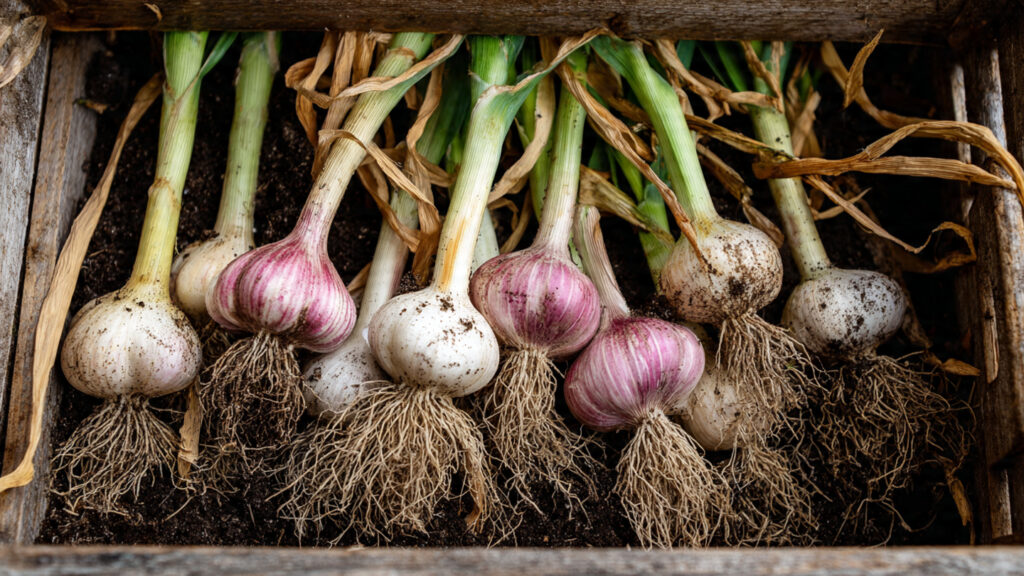
Harvesting Garlic
Garlic is typically ready to harvest 6–8 months after planting, depending on the variety and growing conditions. Signs of readiness include:
- Leaf yellowing: About 50–60% of the leaves turn yellow.
- Bulb size: Gently dig a clove or two to check for well-formed bulbs.
- Timing: Harvest before all leaves die back to avoid splitting bulbs.
Harvesting technique: Gently loosen the soil around the bulbs with a small trowel and lift them carefully to avoid damage.
After harvesting, cure garlic in a warm, dry, well-ventilated area for 2–3 weeks. This process enhances flavor, extends shelf life, and prepares the bulbs for storage.
Benefits of Box-Grown Garlic
Growing garlic in a box using two substrates and a support stake offers several advantages:
- Compact and efficient: Ideal for urban gardeners with limited space.
- Healthy growth: Layered substrates optimize drainage and nutrients.
- Higher yield: Support stakes and proper care lead to robust stems and larger bulbs.
- Ease of maintenance: Easier to monitor water, pests, and soil health in a contained system.
This method provides a reliable, manageable approach to growing garlic anywhere.
Conclusion
Growing garlic in a box is an excellent solution for gardeners seeking convenience, control, and high-quality harvests. By combining two complementary substrates and using a support stake, you create optimal conditions for strong, healthy stems and large, flavorful bulbs.
With proper planting, watering, sunlight, fertilization, and attention to common issues, your garlic plants will thrive throughout the growing season. Whether you are a beginner or an experienced gardener, this box method offers a simple, practical way to enjoy homegrown garlic.
Start your garlic box today, and in a few months, you’ll enjoy fresh, aromatic garlic right from your own home—an achievement that’s both satisfying and delicious.