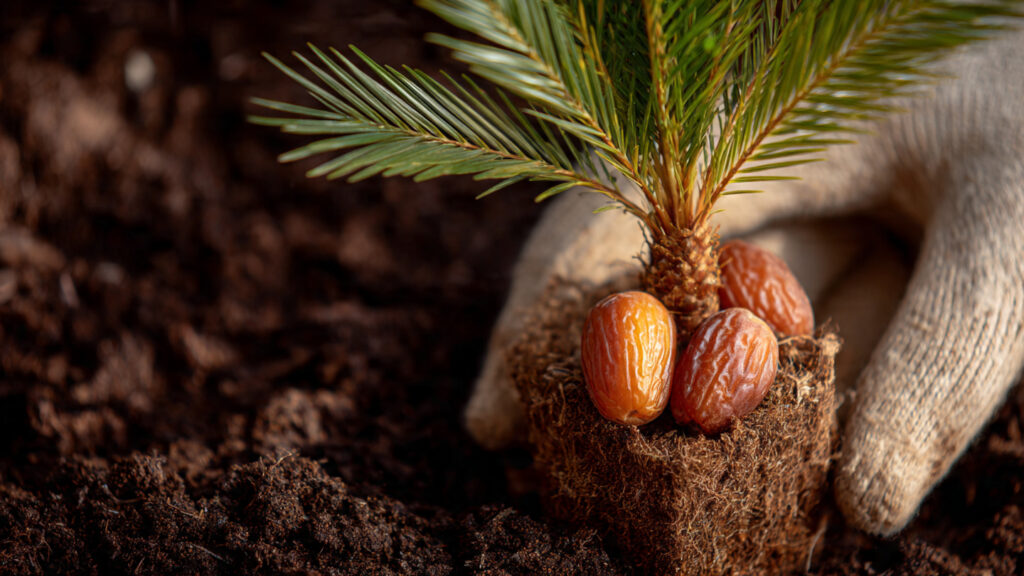
Growing a date palm from fresh seed is one of the most rewarding gardening projects you can try at home. Watching a hard, glossy seed slowly sprout into a graceful palm tree feels almost magical. While it requires patience, the process is surprisingly beginner-friendly if you understand a few key steps.
The most commonly grown species is the Phoenix dactylifera, known for its sweet edible fruit and elegant, feather-like fronds. Even if you don’t live in a desert climate, you can still grow a healthy date palm as a houseplant or patio plant.
Here is your complete beginner’s guide to successfully growing date palm from fresh seed at home.
Understanding Date Palm Basics
Date palms are native to arid regions of the Middle East and North Africa. They thrive in:
- Warm temperatures
- Bright sunlight
- Well-draining soil
- Low humidity
While mature palms can grow very tall outdoors in warm climates, indoor-grown date palms grow much more slowly and are manageable for years.
Keep in mind: growing a palm from seed requires patience. It can take 4–8 years before a seed-grown palm becomes large and established, and fruit production takes even longer — often 8–10 years or more, and only if grown outdoors in ideal conditions.
But even without fruit, date palms make beautiful ornamental plants.
Step 1: Choose Fresh, Viable Seeds
Success starts with fresh seeds.
You can use seeds from:
- Fresh dates purchased at a market
- Fresh dates harvested from a tree
Avoid roasted, processed, or dried dates that have been heat-treated. These seeds will not germinate.
After removing the fruit flesh, wash the seeds thoroughly to remove all sticky residue. Any remaining fruit can encourage mold during germination.
Soak the cleaned seeds in room-temperature water for 24–48 hours. Replace the water once during soaking. This softens the outer coating and helps speed germination.
Step 2: Pre-Germinate the Seeds (Optional but Recommended)
Although you can plant seeds directly into soil, pre-germination increases success rates.
Paper Towel Method
- Dampen a paper towel (not dripping wet).
- Wrap the seeds inside.
- Place the towel in a zip-lock bag.
- Store the bag in a warm place (75–85°F / 24–29°C).
Check weekly to ensure the towel remains moist.
Germination usually occurs within 2–6 weeks. You’ll see a small white root emerging from one end of the seed.
➡️ How to Grow Malabar Spinach from Cuttings for Fast, Easy Greens
➡️ How to Grow Super Delicious Cabbage at Home Without a Garden
➡️ How to Grow Bean Sprouts at Home in Plastic Bottles Easily (Step‑by‑Step Guide)
➡️ Why is Your Lemon Tree Blooming in the Heart of Winter?
➡️ Why Should Your Garden Have a Dedicated Pollinator Highway?
➡️ Why Do Your Fruit Trees Need a Winter Wash to Thrive in Spring?
➡️ How Can Rice Water Transform Your Fruits into Sweeter Delights?
➡️ Jumpstart Your Winter Garden: Seed Starting Under Lights
Once the root reaches about ½–1 inch long, it’s time to plant.
Step 3: Plant the Sprouted Seed
Choose a deep container with drainage holes. Date palms develop long taproots early, so depth is important.
Soil Requirements
Use a well-draining mix such as:
- 50% potting soil
- 25% sand
- 25% perlite
You can also use cactus or palm-specific soil.
Plant the seed:
- Root facing downward
- About 1 inch deep
- Lightly covered with soil
Water thoroughly after planting, but do not leave soil soggy.
Step 4: Provide Proper Light
Date palms need strong light to grow well.
Place your pot:
- Near a south-facing window
- In a bright, sunny spot
- Under grow lights if natural light is limited
Seedlings may tolerate slightly less light at first, but once leaves appear, strong light is essential to prevent weak, stretched growth.
If moving outdoors, gradually acclimate the plant to direct sun to avoid leaf burn.
Step 5: Maintain Ideal Temperature
Warmth is critical during early growth.
Ideal range:
70–95°F (21–35°C)
Avoid cold drafts or temperatures below 50°F (10°C), which can slow or damage young plants.
If you live in a cooler climate, keep the plant indoors during winter.
Step 6: Watering the Right Way
Young date palms prefer slightly moist soil but dislike soggy conditions.
Follow this rule:
- Water when the top 1–2 inches of soil feels dry.
- Ensure excess water drains completely.
Overwatering is the most common mistake beginners make. It can cause root rot and seedling failure.
As the plant matures, it becomes more drought-tolerant.
Step 7: Fertilizing for Healthy Growth
After 2–3 months of growth, begin light feeding.
Use:
- A balanced liquid fertilizer diluted to half strength
- Apply once per month during spring and summer
Do not fertilize during winter when growth slows.
Palms benefit from nutrients like potassium and magnesium, so a palm-specific fertilizer works well once the plant matures.
What to Expect During Early Growth
Date palm seedlings grow differently from many houseplants.
In the beginning:
- A single grass-like blade emerges.
- Leaves may look simple and narrow.
It can take 1–2 years before the classic feather-shaped fronds appear.
This is normal. Don’t worry if the plant doesn’t resemble a typical palm right away.
Repotting Your Date Palm
Date palms grow deep roots before they grow tall.
Repot when:
- Roots begin circling the pot.
- Growth slows significantly.
- Water drains too quickly due to root crowding.
Choose a slightly larger, deep container. Avoid over-potting — too much soil can retain excess moisture.
Repot in spring for best results.
Can You Grow Dates Indoors?
Technically yes — but realistically, fruiting indoors is rare.
Reasons include:
- Palms require full desert sun.
- They need many years to mature.
- Male and female plants are separate (you need both for fruit).
However, in warm climates like parts of India, California, or the Middle East, outdoor-grown palms can produce fruit under the right conditions.
Even without fruit, the ornamental value makes growing them worthwhile.
Common Problems and Solutions
1. Mold During Germination
Cause:
Excess moisture or unclean seeds.
Solution:
Clean seeds thoroughly and avoid over-saturating paper towels.
2. Seed Doesn’t Sprout
Cause:
Old or heat-treated seed.
Solution:
Use fresh, untreated dates.
3. Yellowing Leaves
Cause:
Overwatering or nutrient deficiency.
Solution:
Improve drainage and adjust fertilizing schedule.
4. Slow Growth
Cause:
Insufficient light or cold temperatures.
Solution:
Move plant to brighter, warmer location.
Growing Date Palm Outdoors
If you live in a tropical or subtropical climate:
- Plant in sandy, well-drained soil.
- Choose a full-sun location.
- Space trees well apart (they grow large).
In cooler climates, date palms can be grown in containers and moved indoors during winter.
Patience Is Key
Growing date palm from seed is not a fast project. It’s a long-term commitment.
But that’s part of the beauty.
You’re nurturing a plant that can live for decades — even generations — under the right conditions.
Each new frond represents months of steady growth.
Why Beginners Love Growing Date Palm
- Seeds are easy to obtain.
- Germination is simple.
- The plant is drought-tolerant once established.
- It makes a striking decorative statement.
- It teaches patience and long-term plant care.
Few projects feel as satisfying as transforming a simple seed into a tropical tree.
Final Thoughts
To successfully grow date palm from fresh seed at home:
- Use fresh, untreated seeds.
- Soak and optionally pre-germinate.
- Plant in well-draining soil.
- Provide bright light and warmth.
- Water carefully and avoid overwatering.
- Be patient.
With time and consistent care, your small seed can become a beautiful, arching palm that adds elegance and tropical charm to your home or garden.