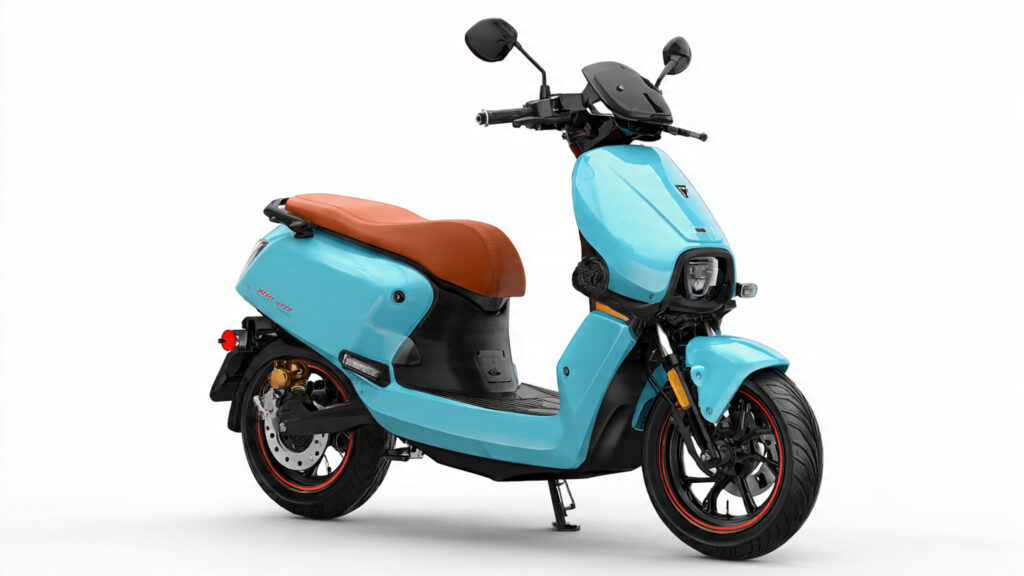
In a bold move that’s sending ripples through India’s electric‑two‑wheeler market, Mahindra — one of the country’s most respected automotive brands — has reportedly launched an electric scooter priced at just ₹75,000. This isn’t just another budget EV; it promises a staggering 230 km driving range and a claimed top speed of 85 km/h, numbers that were once unheard of at this price point. For budget‑conscious riders contemplating the shift from petrol to electric mobility, this launch could well be a game‑changer.
While Mahindra’s mainstream electric lineup predominantly focuses on larger EVs like SUVs and commercial vehicles, the idea of a high‑range, high‑speed electric scooter at a shocking sub‑₹1 lakh price has captured massive attention among daily commuters and first‑time EV buyers alike — especially when many entry‑level electric scooters in India currently cost significantly more for far lower range figures.
Why This Mahindra Electric Scooter Matters
What makes this scooter launch remarkable isn’t just its ultra‑affordable price tag of ₹75,000, but also its claimed performance specs:
- Up to 230 km of range on a single charge — a figure that far surpasses most mainstream electric scooters on the market.
- Top speed of 85 km/h, which is competitive even with mid‑range EV scooters.
- A price that’s accessible to a vast section of Indian commuters who have been hesitant to adopt EVs due to affordability concerns.
This combination — long range, respectable performance, and low cost — is precisely what could accelerate EV adoption across small cities and towns where budget and practicality are paramount considerations.
How It Compares with Other Electric Scooters in India
To put the Mahindra offering in perspective, consider the current electric scooter landscape in India:
- Many popular electric scooters from established brands are priced well above ₹1 lakh, with ranges typically between ~90 km to ~150 km per charge.
- A fairly capable electric scooter might cost ₹90,000 or more but still only deliver ~100 km to 120 km of real‑world range — a fraction of what Mahindra promises.
At its claimed range of 230 km and top speed of 85 km/h, the Mahindra scooter appears to bridge the gap between budget urban commuting and long‑distance usability, potentially outclassing many rivals on value alone.
Design, Build, and Everyday Usability
Though official detailed specifications and imagery are still emerging, indications suggest that Mahindra’s electric scooter has been engineered for practical Indian usage — from busy city streets to inter‑city short‑haul travel. While specifics like battery capacity, charging time, and motor output have not been fully outlined in official statements, the expected architecture would likely include:
- High‑capacity lithium‑ion battery pack — to enable the claimed 230 km range.
- Electric motor capable of 85 km/h top speed — suitable for both city cruising and occasional highway rides.
- Lightweight but durable frame, optimized for daily use and urban traffic conditions.
- Space for under‑seat storage and practical accessories, addressing everyday needs.
If these features hold true in market deliveries, the scooter will represent a blend of affordability and utility rarely seen in this segment — especially from a marquee brand like Mahindra.
What Budget Riders Are Saying
Social media and two‑wheeler forums have been buzzing since the launch news broke, with potential buyers weighing in:
- Young commuters are excited about the possibility of long‑range travel without frequent charging stops.
- Budget riders are comparing this to existing e‑scooters that cost significantly more for less range.
- Many first‑time EV buyers are closely watching for real‑world range figures, charging times, and resale value.
While skepticism remains until official test rides and dealer reviews emerge, the general sentiment among riders is one of optimism and surprise — which is significant in a market where EV adoption has often been slowed by price and range anxieties.
Mahindra’s EV Strategy: Bigger Picture
Mahindra has already made strategic investments in electric mobility, particularly in larger EV platforms and electric SUVs. Their electric SUV models have garnered attention for combining performance with modern tech.
Expanding into affordable electric scooters indicates a broader vision: to offer EV solutions across multiple segments — from urban daily riders to family‑oriented electric SUVs. If done right, this could help Mahindra capture a wide swath of the Indian EV market at a time when consumer interest in electric two‑wheelers is rising rapidly.
Advantages of an Electric Scooter Priced at ₹75,000
Here’s a breakdown of why this product could be disruptive:
1. Unmatched Value Proposition
A high‑range, relatively fast scooter at such a low price could redefine price‑to‑performance expectations in the EV two‑wheeler space.
2. Lower Running Costs
Electric scooters cost far less per kilometre than petrol scooters; a 230 km range means fewer charging stops and lower monthly energy bills, making it ideal for daily commuters.
➡️ How to Grow Malabar Spinach from Cuttings for Fast, Easy Greens
➡️ How to Grow Super Delicious Cabbage at Home Without a Garden
➡️ How to Grow Bean Sprouts at Home in Plastic Bottles Easily (Step‑by‑Step Guide)
➡️ Why is Your Lemon Tree Blooming in the Heart of Winter?
➡️ Why Should Your Garden Have a Dedicated Pollinator Highway?
➡️ Why Do Your Fruit Trees Need a Winter Wash to Thrive in Spring?
➡️ How Can Rice Water Transform Your Fruits into Sweeter Delights?
➡️ Jumpstart Your Winter Garden: Seed Starting Under Lights
3. Eco‑Friendly and Future‑Ready
With India pushing for greener mobility solutions, owning an EV scooter lets riders contribute to reduced emissions and cleaner air, especially in traffic‑congested urban centres.
4. High Practicality for Indian Roads
A top speed of 85 km/h makes this scooter capable of handling city traffic without strain and still offering enough performance for suburban roads.
5. Bridge Between Entry‑Level and High‑End EVs
For many buyers, this price point makes electric mobility accessible without compromising on range or performance — a rare balance that could attract even petrol scooter owners thinking of switching to EV.
Things to Watch Before You Buy
While the specs sound exciting, here are some key aspects riders should verify once the scooter reaches dealerships:
- Real‑world range versus claimed range — often ranges are lower in city driving conditions compared to test claims.
- Charging infrastructure compatibility and charging times — faster charging convenience can make a big difference in usability.
- Warranty and battery support — how Mahindra supports battery health can influence long‑term ownership costs.
- After‑sales service network coverage — essential for maintaining EVs over time.
Consumer reports and reviews from early adopters will play a big role in validating the real‑world performance.
A Turning Point in India’s EV Scooter Market?
If the Mahindra electric scooter truly delivers on its key promises — ₹75,000 price, 230 km range, and 85 km/h top speed — it could revolutionize the budget EV scooter space in India. Budget riders, daily commuters, and eco‑conscious consumers now have a product that might finally address the longstanding concerns of affordability, range anxiety, and practicality — all in one package.
With competition in the electric vehicle segment heating up and more manufacturers racing to offer compelling products, this launch could push the entire industry toward more affordable, high‑performance electric mobility solutions — accelerating India’s transition to cleaner, more efficient transportation.