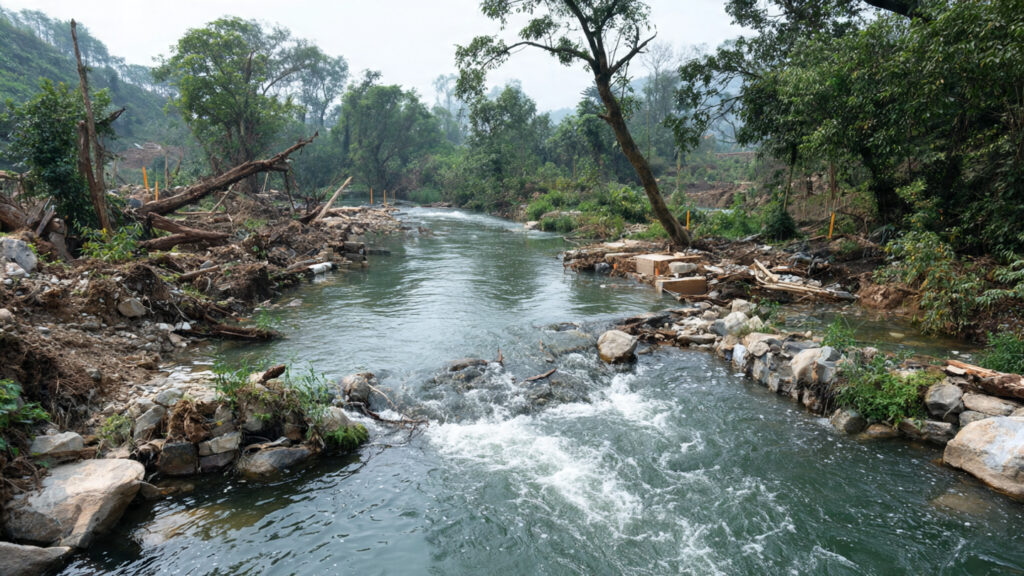
For centuries, rivers have been the lifelines of our planet.
They carry fresh water through forests, farmlands, cities, and wetlands. They feed wildlife, support fisheries, recharge groundwater, and connect ecosystems from mountains to oceans.
But over time, many of the world’s rivers have been quietly broken apart.
Not by pollution alone — but by barriers.
Today, a remarkable global movement is changing that story. More than 300,000 river obstacles have now been removed worldwide, reopening blocked streams, restoring fish migration routes, and breathing life back into freshwater ecosystems.
This is one of the most hopeful environmental success stories unfolding right now — and it’s transforming rivers across the globe.
What Are River Obstacles, and Why Do They Matter?
When people think of river barriers, large dams often come to mind.
But rivers are also blocked by thousands of smaller structures, including:
- Old unused dams
- Culverts under roads
- Weirs and floodgates
- Small hydroelectric barriers
- Concrete channel diversions
- Collapsed or abandoned infrastructure
Many of these obstacles were built decades ago for mills, irrigation, or industry. Over time, they became outdated or abandoned, yet they remained in place, disrupting natural river flow.
Even small barriers can have enormous ecological consequences.
A river is not just water moving downhill — it is a living system that depends on connection.
Rivers Are Meant to Flow Freely
Healthy rivers function like ecological highways.
They allow:
- Fish to migrate upstream to spawn
- Nutrients to travel through watersheds
- Sediment to shape habitats
- Wildlife to access wetlands and floodplains
- Water to flow naturally during floods and droughts
When barriers interrupt that flow, the river becomes fragmented.
It’s like cutting a forest into tiny isolated patches — species struggle, habitats shrink, and biodiversity declines.
➡️ How to Grow Malabar Spinach from Cuttings for Fast, Easy Greens
➡️ How to Grow Super Delicious Cabbage at Home Without a Garden
➡️ How to Grow Bean Sprouts at Home in Plastic Bottles Easily (Step‑by‑Step Guide)
➡️ Why is Your Lemon Tree Blooming in the Heart of Winter?
➡️ Why Should Your Garden Have a Dedicated Pollinator Highway?
➡️ Why Do Your Fruit Trees Need a Winter Wash to Thrive in Spring?
➡️ How Can Rice Water Transform Your Fruits into Sweeter Delights?
➡️ Jumpstart Your Winter Garden: Seed Starting Under Lights
Restoring river connectivity is one of the fastest ways to bring freshwater ecosystems back to life.
The Global Milestone: Over 300,000 Barriers Removed
The removal of more than 300,000 river obstacles represents a major turning point in conservation.
Across North America, Europe, Asia, and beyond, governments, scientists, local communities, and environmental organizations have worked together to dismantle barriers and reopen waterways.
This effort includes both:
- Major dam removals
- Thousands of smaller projects targeting culverts and weirs
The scale of restoration is unprecedented.
Each removed barrier may seem small, but together they create massive ecological impact — reconnecting entire river networks.
Reviving Fish Migration: A Freshwater Comeback
One of the most immediate benefits of barrier removal is the return of fish migration.
Many fish species depend on long-distance movement to survive, including:
- Salmon
- Trout
- Eels
- Sturgeon
- River herring
- Freshwater lamprey
These fish travel upstream to spawn, often returning to the same river where they were born.
But when dams block their path, populations collapse.
By removing barriers, rivers become accessible again, and fish can return to historic breeding grounds.
In many restored rivers, scientists have witnessed fish returning within months — sometimes for the first time in generations.
It’s not just migration.
It’s resurrection.
Restoring Freshwater Biodiversity Beyond Fish
Fish are only part of the freshwater story.
Rivers support an incredible range of life, including:
- Mussels and freshwater clams
- Amphibians like frogs and salamanders
- Aquatic insects that feed birds and bats
- Otters, beavers, and river dolphins
- Riparian plants and wetland forests
When rivers are fragmented, these species suffer.
Barrier removal helps rebuild entire food webs.
Healthy rivers become thriving ecosystems again, supporting wildlife both in and around the water.
Cleaner Water and Healthier Habitats
River obstacles often create stagnant pools upstream.
These slow-moving waters can lead to:
- Warmer temperatures
- Lower oxygen levels
- Algae blooms
- Increased sediment buildup
For cold-water species like salmon and trout, warmer water can be deadly.
When barriers are removed, natural flow returns.
This improves:
- Water quality
- Oxygen levels
- Temperature balance
- Habitat diversity
Instead of one stagnant stretch, the river regains its natural rhythm — riffles, pools, bends, and floodplains.
A living river is a dynamic river.
Communities Benefit Too
River restoration is not only good for wildlife.
People benefit directly from healthier waterways.
Barrier removal can reduce risks such as:
- Sudden dam failures
- Flooding caused by blocked channels
- Maintenance costs for aging infrastructure
Restored rivers also support:
- Recreational fishing
- Tourism and kayaking
- Cleaner drinking water sources
- Stronger local economies
In many regions, removing outdated dams has become both an ecological and economic win.
A free-flowing river is often safer and more sustainable than an aging barrier.
Why Are So Many Barriers Being Removed Now?
The surge in river obstacle removals is driven by several global shifts:
1. Aging Infrastructure
Thousands of dams built in the 1800s and early 1900s are now crumbling, unsafe, or no longer useful.
2. Stronger Environmental Awareness
Freshwater ecosystems are among the most threatened on Earth, and restoration is now a priority.
3. Better Science and Mapping
Modern tools allow researchers to identify which barriers cause the most harm.
4. Community-Led Conservation
Local groups are pushing for healthier rivers, often leading successful restoration campaigns.
5. Climate Change Adaptation
Connected rivers are more resilient to droughts, floods, and warming temperatures.
River restoration is becoming a key part of climate-smart conservation.
Small Barriers, Big Results
One of the most inspiring lessons from this movement is that you don’t always need massive projects to make a difference.
Removing a single small culvert can reconnect miles of habitat.
Restoring one stream can revive entire populations of fish and insects.
Sometimes, the simplest actions create the biggest ecological ripples.
Barrier removal is proof that nature responds quickly when given the chance.
A New Era of River Recovery
For decades, the narrative around rivers was one of loss:
- Declining fish stocks
- Polluted waterways
- Vanishing wetlands
- Fragmented habitats
But now, a new story is emerging.
Across the world, rivers are being reconnected.
Fish are returning.
Freshwater life is recovering.
Communities are rediscovering the value of living waterways.
The removal of more than 300,000 river obstacles is not just a statistic — it is a symbol of hope.
It shows that restoration is possible.
And that healing the planet doesn’t always require building something new.
Sometimes, it begins with removing what no longer belongs.
Final Thoughts: Letting Rivers Run Free Again
Rivers are the arteries of Earth.
When they flow freely, life flourishes.
The global effort to remove river barriers is one of the most important ecological restorations of our time — reconnecting streams, reviving fish migration, and restoring freshwater biodiversity on a massive scale.
As this movement continues, the future of rivers looks brighter than it has in generations.
And with every obstacle removed, the water remembers its path.