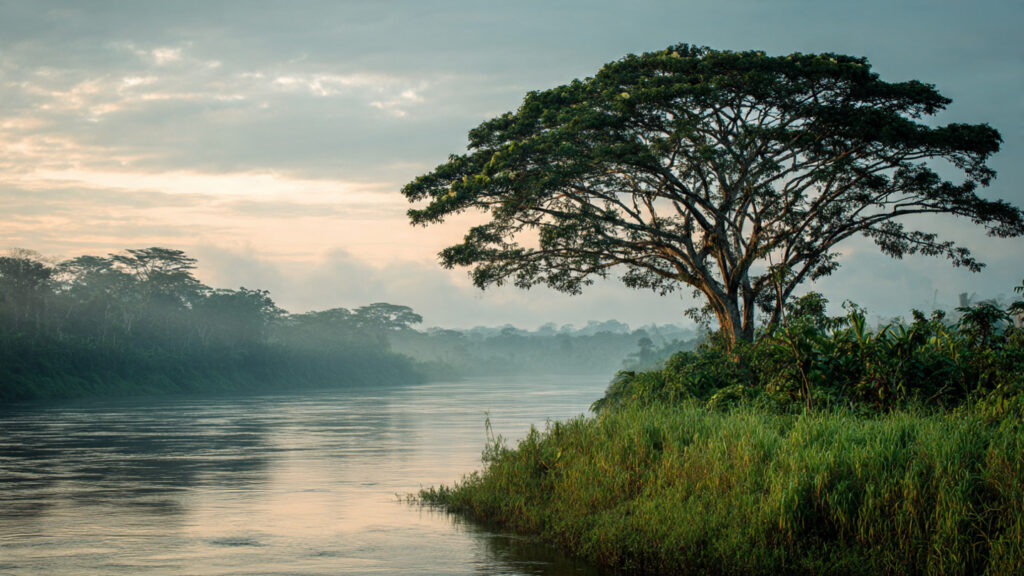
Deep within the heart of South America lies one of Earth’s greatest natural wonders: the Amazon rainforest. Often called the “lungs of the planet,” this vast green expanse produces oxygen, stores carbon, shelters millions of species, and plays a crucial role in regulating the world’s climate.
Now, a remarkable milestone is drawing global attention: over 700,000 indigenous trees protected in the Amazon are helping regulate rainfall, stabilize climate systems, and preserve biodiversity on an extraordinary scale.
This achievement is more than a conservation success story—it is a living example of how nature, when protected, becomes humanity’s strongest ally against climate change.
Let’s explore why these trees matter so much and how indigenous-led protection is shaping a healthier future for the planet.
The Amazon: A Global Climate Engine
The Amazon rainforest covers nearly 5.5 million square kilometers, spanning nine countries. It is home to the largest tropical forest ecosystem on Earth.
But the Amazon is not just a forest—it is a powerful environmental engine that influences weather patterns far beyond South America.
The rainforest:
- Generates massive amounts of rainfall
- Absorbs billions of tons of carbon dioxide
- Supports an unmatched diversity of life
- Helps cool the planet through evaporation and shade
Every tree in the Amazon plays a role in this intricate ecological network, and protecting hundreds of thousands of indigenous trees strengthens that network immensely.
Why Indigenous Trees Are So Important
Indigenous trees are native species that have grown in the Amazon for thousands of years. Unlike monoculture plantations or imported species, these trees are perfectly adapted to the rainforest’s soil, climate, and wildlife.
These trees provide:
- Natural habitat for animals and insects
- Food sources for birds, monkeys, and mammals
- Strong root systems that prevent soil erosion
- Balanced ecosystem interactions
Protecting indigenous trees is not just about planting more greenery—it is about preserving the Amazon’s original ecological identity.
Regulating Rainfall: The Amazon’s “Flying Rivers”
One of the Amazon’s most astonishing contributions to Earth is its ability to create rainfall.
Trees release water vapor through a process called transpiration. Each mature tree can release hundreds of liters of moisture into the atmosphere daily.
When millions of trees do this together, the Amazon forms what scientists call “flying rivers”—airborne streams of moisture that travel across the continent.
These flying rivers:
➡️ How to Grow Malabar Spinach from Cuttings for Fast, Easy Greens
➡️ How to Grow Super Delicious Cabbage at Home Without a Garden
➡️ How to Grow Bean Sprouts at Home in Plastic Bottles Easily (Step‑by‑Step Guide)
➡️ Why is Your Lemon Tree Blooming in the Heart of Winter?
➡️ Why Should Your Garden Have a Dedicated Pollinator Highway?
➡️ Why Do Your Fruit Trees Need a Winter Wash to Thrive in Spring?
➡️ How Can Rice Water Transform Your Fruits into Sweeter Delights?
➡️ Jumpstart Your Winter Garden: Seed Starting Under Lights
- Bring rain to Brazil’s farmland
- Influence rainfall in Argentina and Paraguay
- Affect weather systems as far as North America
By protecting over 700,000 trees, indigenous communities are safeguarding this vital rainfall cycle, ensuring that ecosystems and agriculture continue to thrive.
Without these trees, drought conditions could spread rapidly, affecting food supplies and water security.
Stabilizing the Climate: Trees as Carbon Guardians
Climate change is driven largely by excess greenhouse gases in the atmosphere, especially carbon dioxide.
Trees are among the most effective natural carbon absorbers on Earth.
Through photosynthesis, trees:
- Take in carbon dioxide
- Store carbon in their trunks, roots, and leaves
- Release oxygen back into the atmosphere
The Amazon rainforest alone stores approximately 100 billion tons of carbon.
Protecting 700,000 indigenous trees means protecting a massive carbon storage system that prevents emissions from entering the atmosphere.
If these trees were destroyed, the carbon stored inside them would be released, accelerating global warming.
Thus, conservation is not just environmental—it is climate defense.
Preserving Biodiversity: A Living Treasure Chest
The Amazon is the most biodiverse place on Earth.
It is home to:
- Over 40,000 plant species
- More than 1,300 bird species
- Thousands of fish, amphibians, and reptiles
- Countless insects and microorganisms
Many of these species exist nowhere else.
Indigenous trees are central to this biodiversity because they form habitats that countless organisms depend on.
For example:
- Jaguars rely on dense forest cover
- Macaws depend on fruit-bearing trees
- Frogs thrive in moist tree canopies
- Pollinators support flowering plant reproduction
When indigenous trees are protected, entire ecosystems remain intact.
This is why preserving these trees is not just about saving plants—it’s about saving life itself.
Indigenous Communities: The True Guardians of the Amazon
Perhaps the most inspiring part of this story is the role of indigenous peoples.
Indigenous communities have lived in harmony with the Amazon for generations. Their knowledge of the land is deep, spiritual, and practical.
Studies consistently show that forests managed by indigenous groups experience significantly less deforestation than unprotected areas.
Indigenous protection efforts often include:
- Monitoring illegal logging
- Preventing land grabbing
- Sustainable harvesting practices
- Reforestation with native species
- Community-led conservation programs
These communities are not just residents—they are guardians of one of Earth’s most critical ecosystems.
Protecting indigenous trees also means protecting indigenous rights, culture, and leadership.
A Powerful Response to Deforestation
The Amazon faces constant threats, including:
- Illegal logging
- Mining operations
- Agricultural expansion
- Wildfires
- Infrastructure development
Every year, large areas of rainforest are cleared, weakening the Amazon’s ability to regulate climate.
The protection of 700,000 trees is a strong counterforce against this destruction.
It represents:
- Restoration of damaged landscapes
- Expansion of protected forest zones
- Commitment to sustainable futures
Each tree preserved is a step away from ecological collapse and a step toward regeneration.
Why This Matters to the Entire World
Some people may think the Amazon is far away and irrelevant to their daily lives.
But the truth is: what happens in the Amazon affects everyone.
The Amazon influences:
- Global rainfall patterns
- Carbon levels in the atmosphere
- Oxygen production
- Climate stability
- Biodiversity and medicine discovery
Many modern medicines originate from rainforest plants, and countless species remain undiscovered.
Protecting indigenous trees is a global investment in survival, health, and climate balance.
Hope for the Future: Nature Can Recover
In an age filled with climate anxiety, stories like this remind us that progress is possible.
Protecting 700,000 indigenous trees shows that:
- Conservation works
- Indigenous leadership is powerful
- Forest ecosystems can heal
- Climate solutions exist in nature
The Amazon still has the capacity to regenerate, but only if humanity chooses protection over destruction.
This milestone proves that safeguarding forests is not an impossible dream—it is happening right now.
Conclusion: 700,000 Trees, One Planet Saved Step by Step
Over 700,000 indigenous trees protected in the Amazon are doing far more than standing tall in the rainforest.
They are:
- Regulating rainfall across continents
- Stabilizing Earth’s climate systems
- Preserving irreplaceable biodiversity
- Supporting indigenous guardianship
- Offering hope in the fight against climate change
Each tree is a symbol of resilience and responsibility.
In protecting them, we are not only saving the Amazon—we are protecting the future of life on Earth.
Because when the Amazon thrives, the world breathes easier.