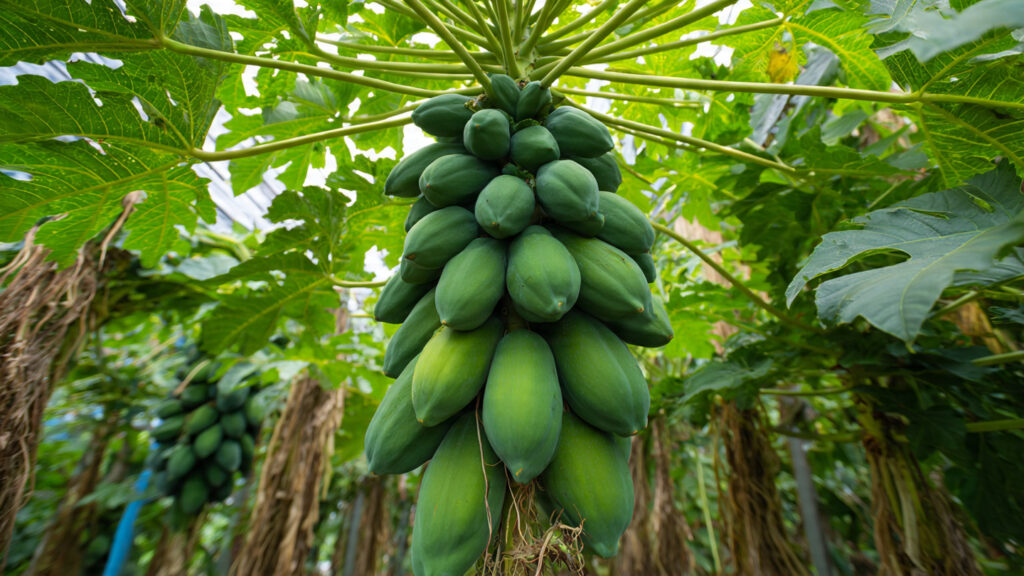
Papaya is one of the most rewarding tropical fruits to grow at home. Its sweet, juicy fruit and rapid growth make it a favorite for home gardeners. But what if you could grow papaya trees faster and enjoy fruit sooner? Enter air layering, a propagation technique that can accelerate growth and lead to earlier fruiting.
Air layering might sound complicated, but it’s actually a simple, effective method to clone healthy papaya trees. By understanding the process and following the right steps, you can increase your chances of success and enjoy a bountiful harvest in less time.
Why Choose Air Layering for Papaya?
Before diving into the how-to, let’s explore why air layering is particularly beneficial for papaya:
1. Faster Growth
Papaya trees grown from seeds can take 6–12 months to mature before fruiting. Air-layered papayas already have a developed root system, so they grow faster and establish quickly in the soil.
2. Early Fruiting
Since air-layered papayas start with mature tissue, they tend to flower and fruit earlier than seed-grown trees.
3. Genetic Consistency
Air layering produces clones of the parent tree. This means your new plants will retain the same desirable fruit qualities—size, taste, and sweetness—as the mother plant.
4. High Survival Rate
Compared to transplanting seedlings, air-layered plants have a higher survival rate because they already have a root system when moved to soil.
Understanding Air Layering
Air layering is a method of encouraging roots to form on a branch while it is still attached to the parent plant. Once roots develop, the branch can be cut and planted separately. For papaya, this method works wonderfully because the tree has soft stems and responds quickly to root induction.
Materials You’ll Need
Before starting, gather these supplies:
- Sharp pruning knife or blade
- Polyethylene plastic sheet or plastic bag
- Moist sphagnum moss or garden soil
- Twine or rubber bands
- Rooting hormone (optional, but speeds up rooting)
- Aluminum foil (optional, to protect from sunlight)
Having these ready makes the process smooth and increases your chances of success.
Step-by-Step Guide to Papaya Air Layering
Step 1: Choose the Right Branch
- Select a healthy, semi-mature branch on the papaya tree.
- Avoid old, woody branches—they root slowly.
- Ideally, pick a branch that is pencil-thick, disease-free, and has no signs of damage.
Remember, a strong, healthy branch gives your new plant the best chance for fast growth.
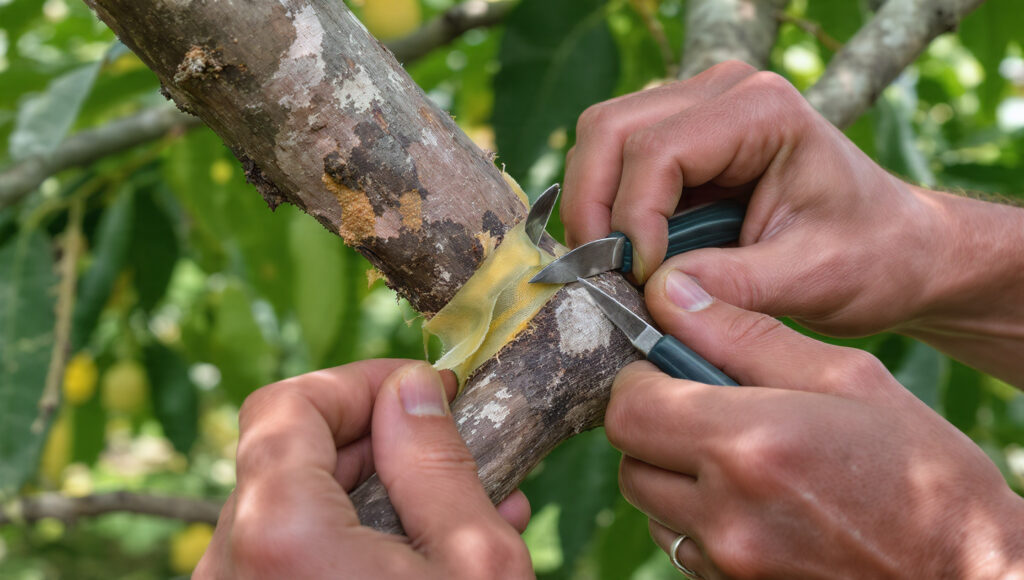
Step 2: Make a Circular Cut
- About 6–12 inches from the tip, make a circular cut around the branch, approximately 1–2 inches wide.
- Remove the bark carefully down to the inner wood (cambium layer).
- Make sure the cut is clean and smooth—ragged cuts reduce rooting success.
This step is crucial because it stops downward flow of nutrients and encourages roots to form at the wound site.
Step 3: Apply Rooting Hormone (Optional)
- Applying a rooting hormone at the cut area can stimulate faster root growth.
- Powder or gel forms work well—simply coat the exposed area evenly.
This step is optional but recommended for faster results.
Step 4: Wrap with Moist Moss or Soil
- Take sphagnum moss or well-moist soil and wrap it around the wounded area.
- The layer should be thick enough to retain moisture but not so thick that it’s heavy.
Sphagnum moss is excellent because it holds water while allowing air circulation.
Step 5: Cover with Plastic Sheet
- Wrap the moss or soil layer with a clear plastic sheet.
- Seal both ends with twine or rubber bands to prevent moisture loss.
- Optionally, cover the plastic with aluminum foil to protect roots from direct sunlight.
A sealed environment maintains humidity, which is critical for root formation.
➡️ How to Grow Malabar Spinach from Cuttings for Fast, Easy Greens
➡️ How to Grow Super Delicious Cabbage at Home Without a Garden
➡️ How to Grow Bean Sprouts at Home in Plastic Bottles Easily (Step‑by‑Step Guide)
➡️ Why is Your Lemon Tree Blooming in the Heart of Winter?
➡️ Why Should Your Garden Have a Dedicated Pollinator Highway?
➡️ Why Do Your Fruit Trees Need a Winter Wash to Thrive in Spring?
➡️ How Can Rice Water Transform Your Fruits into Sweeter Delights?
➡️ Jumpstart Your Winter Garden: Seed Starting Under Lights
Step 6: Keep It Moist and Monitor
- Check the air layer every 7–10 days.
- If the moss begins to dry, gently add water to keep it damp.
- Avoid overwatering, as stagnant moisture can cause rotting.
Patience is key here. Papaya usually forms roots within 4–6 weeks, depending on climate and branch maturity.
Step 7: Transplanting the Rooted Branch
- Once roots are visible through the plastic, carefully cut the branch below the root ball.
- Prepare a planting hole in well-draining soil. Papaya prefers loamy, rich soil with good organic matter.
- Plant the rooted branch, water thoroughly, and provide partial shade for a few days to help it adjust.
Within weeks, your air-layered papaya will start establishing itself as a new tree.
Tips for Success in 2026 Gardening
To maximize your air layering success, keep these modern gardening tips in mind:
1. Choose the Right Season
- Early spring or the start of the rainy season is ideal.
- Warmer temperatures accelerate root formation.
2. Use Organic Nutrients
- Adding compost or organic fertilizer around the base encourages strong growth.
3. Monitor for Pests
- Soft papaya branches can attract insects. Regularly inspect the air layer and newly planted tree.
4. Select High-Yield Varieties
- Use parent plants known for fast fruiting and disease resistance.
5. Keep Humidity Steady
- Modern gardeners often use clear plastic or humidity domes to maintain optimal moisture levels.
Common Mistakes to Avoid
Even though air layering is simple, beginners often make mistakes:
- Choosing weak or diseased branches: Only healthy branches produce strong roots.
- Not maintaining moisture: Dry moss or soil can halt root formation.
- Cutting too early: Removing the branch before roots are visible reduces survival rates.
- Neglecting sunlight: Roots need warmth but should not be exposed to harsh direct sunlight.
Avoid these mistakes, and your papaya propagation will thrive.
Advantages of Air-Layered Papaya Over Seedlings
| Feature | Seed-Grown Papaya | Air-Layered Papaya |
|---|---|---|
| Root Development | Slower | Faster |
| Time to Fruiting | 12–18 months | 6–10 months |
| Fruit Quality | Can vary | Identical to parent |
| Survival Rate | Moderate | High |
Clearly, air layering offers a shortcut to healthier, earlier-fruiting trees.
Final Thoughts: Grow Papaya Faster and Smarter
Air layering is one of the most effective ways to propagate papaya trees for faster growth and early fruiting. By carefully selecting a branch, creating a clean cut, wrapping it with moisture-retaining moss or soil, and monitoring conditions, you can create new trees that are strong, productive, and genetically identical to your favorite variety.
Whether you’re a seasoned gardener or a beginner looking to enjoy fresh, home-grown papayas sooner, air layering is a game-changer. Not only will you save time compared to seed-grown trees, but you’ll also experience the satisfaction of nurturing a new plant from a branch that’s already rooted in your garden.
Start your papaya air layering project today, and in just a few months, you could be harvesting sweet, tropical fruit right from your own backyard.