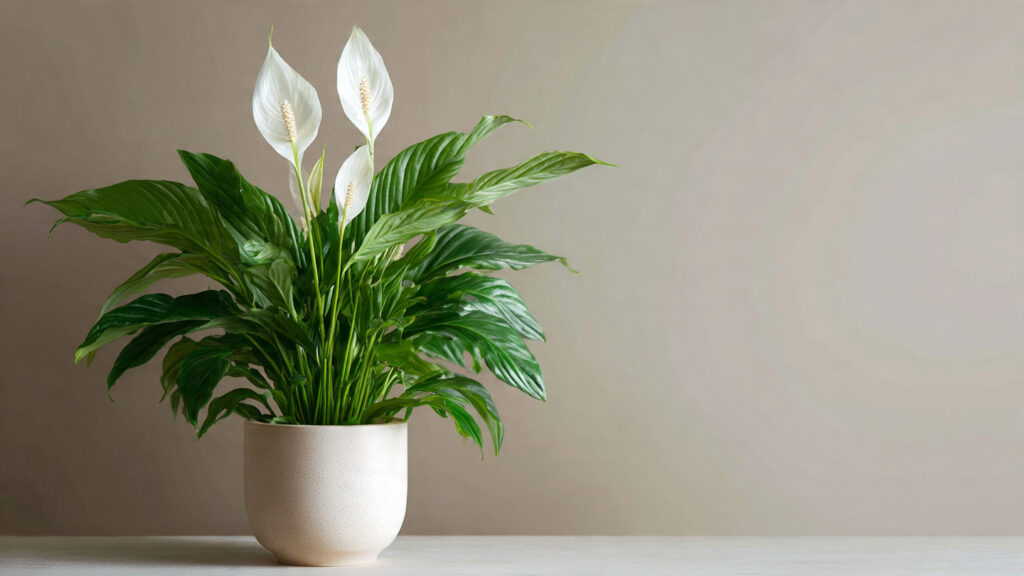
Peace lilies (Spathiphyllum spp.) are among the most popular indoor plants due to their glossy green leaves, elegant white blooms, and air-purifying qualities. They’re relatively low-maintenance, but like all houseplants, they have a natural growth cycle. Over time, peace lilies can outgrow their pots, which can impact their health, slow growth, and reduce flowering.
Repotting is a crucial step to keep your peace lily thriving. In this guide, we’ll explore how to tell when your peace lily needs a bigger pot, how to repot it safely, and tips for a successful transition so your plant continues to flourish indoors.
Signs Your Peace Lily Needs a Bigger Pot
Knowing when to repot your peace lily is essential. Plants left in a small pot for too long can become root-bound, which restricts nutrient uptake and affects overall growth. Here are the key indicators that it’s time to repot:
- Roots Growing Out of Drainage Holes
When roots start emerging from the bottom of the pot, it’s a clear sign that your plant has outgrown its container. - Soil Dries Too Quickly
If you notice the soil drying out within a day or two of watering, the roots may have taken up most of the space, leaving little room for soil to retain moisture. - Slowed Growth
Peace lilies that stop producing new leaves or bloom less frequently might be constrained by a small pot. - Top-Heavy or Tipping Over
A pot that no longer supports the plant properly is a warning sign. Peace lilies with dense foliage may tip over if the root system is restricted. - Yellowing Leaves or Wilting
While yellowing can indicate overwatering or underwatering, persistent yellowing often occurs when roots are cramped and can’t access enough nutrients.
Recognizing these signs early prevents stress and keeps your peace lily healthy and productive.
Choosing the Right Pot for Your Peace Lily
When repotting, selecting the correct container is just as important as soil quality.
Pot Size:
- Choose a pot that is 1–2 inches larger in diameter than the current container. A too-large pot can retain excess moisture, causing root rot.
- Ensure the pot is deep enough to accommodate the root system comfortably.
Material Considerations:
- Plastic pots: Lightweight, retain moisture longer, and are easy to move.
- Terracotta pots: Porous, excellent for preventing overwatering, but dry out faster.
- Ceramic pots with drainage holes: Provide stability and aesthetic appeal.
Drainage is critical. A peace lily’s roots dislike sitting in water, so a pot with a drainage hole is non-negotiable.
Preparing Soil for Repotting
Peace lilies thrive in well-draining, nutrient-rich soil. You can purchase a commercial indoor potting mix or make your own.
Recommended soil mix:
- 2 parts potting soil
- 1 part perlite or sand (for drainage)
- 1 part peat moss or coconut coir (to retain moisture)
This combination ensures the soil remains aerated while retaining sufficient moisture for healthy root growth. Adding a handful of slow-release fertilizer can give your plant an initial nutrient boost.
How to Repot Your Peace Lily: Step by Step
Repotting a peace lily is straightforward if done carefully. Follow these steps:
Step 1: Remove the Plant from Its Current Pot
- Gently tilt the pot and tap the sides to loosen the soil.
- Support the base of the plant and carefully lift it out.
Step 2: Examine the Roots
- Check for signs of root rot (brown, mushy roots) and prune them with clean scissors.
- Trim any excessively long or circling roots to encourage outward growth in the new pot.
Step 3: Add Fresh Soil to the New Pot
- Place a layer of fresh potting mix at the bottom of the new container.
- Position the peace lily in the center, ensuring the crown sits slightly above the soil line.
Step 4: Fill Around the Roots
- Add soil around the roots, pressing gently to eliminate air pockets.
- Avoid compacting the soil too much; roots need space to breathe.
Step 5: Water Thoroughly
- Water the newly potted peace lily to help the soil settle and hydrate the roots.
- Ensure excess water drains out from the bottom.
Step 6: Post-Repotting Care
- Keep the plant in indirect sunlight for a few days while it acclimates.
- Avoid fertilizing for 2–3 weeks; the fresh soil will provide enough nutrients initially.
Tips for a Successful Repot
To ensure your peace lily adjusts well to its new home:
- Choose the Right Time
The best time to repot is spring or early summer, when the plant is actively growing. Avoid repotting during dormancy. - Be Gentle with Roots
Peace lilies can be sensitive to root disturbance. Handle the plant carefully and prune only when necessary. - Maintain Proper Humidity
After repotting, mist the leaves lightly to reduce transplant shock. Peace lilies thrive in moderate humidity. - Monitor Watering
Newly repotted plants may need more frequent but careful watering. Check soil moisture regularly without overwatering.
Avoiding Common Repotting Mistakes
Even experienced gardeners sometimes make mistakes. Here’s what to avoid:
- Using a pot that’s too large: Excess soil retains water and can lead to root rot.
- Overwatering immediately: Let the soil settle naturally; water moderately.
- Pruning too many roots: Only remove damaged roots; healthy roots are essential for recovery.
- Planting too deep: The crown should sit slightly above soil level; burying it can cause crown rot.
When to Repot Again
Peace lilies generally need repotting every 1–2 years, depending on growth. Signs to watch for include roots circling the container, slow growth, or leaves yellowing. Regular monitoring ensures your plant continues to thrive.
➡️ How to Grow Malabar Spinach from Cuttings for Fast, Easy Greens
➡️ How to Grow Super Delicious Cabbage at Home Without a Garden
➡️ How to Grow Bean Sprouts at Home in Plastic Bottles Easily (Step‑by‑Step Guide)
➡️ Why is Your Lemon Tree Blooming in the Heart of Winter?
➡️ Why Should Your Garden Have a Dedicated Pollinator Highway?
➡️ Why Do Your Fruit Trees Need a Winter Wash to Thrive in Spring?
➡️ How Can Rice Water Transform Your Fruits into Sweeter Delights?
➡️ Jumpstart Your Winter Garden: Seed Starting Under Lights
Additional Care After Repotting
After repotting, support your peace lily’s health with these care tips:
- Indirect sunlight: Avoid direct sunlight, which can scorch leaves.
- Humidity: Maintain moderate indoor humidity.
- Fertilization: Begin a regular feeding schedule after 2–3 weeks. Use a balanced houseplant fertilizer every 6–8 weeks.
- Pruning: Remove any yellow or damaged leaves to redirect energy to healthy growth.
With proper care, your peace lily will quickly adapt to its new pot and continue producing lush green foliage and elegant blooms.
Conclusion
Repotting is a crucial step in maintaining a healthy, vibrant peace lily. By recognizing the signs that your plant has outgrown its pot, choosing the right container, using a nutrient-rich soil mix, and carefully following proper repotting steps, you can ensure your plant thrives indoors.
Remember to monitor your peace lily after repotting, maintain moderate watering and humidity, and provide indirect sunlight for the best results. With a little attention, your peace lily will reward you with lush leaves, beautiful white flowers, and long-lasting health, making your indoor space brighter and more inviting.
Repotting may seem intimidating, but with the right approach, it’s a simple and rewarding process that keeps your beloved peace lily at its best for years to come.