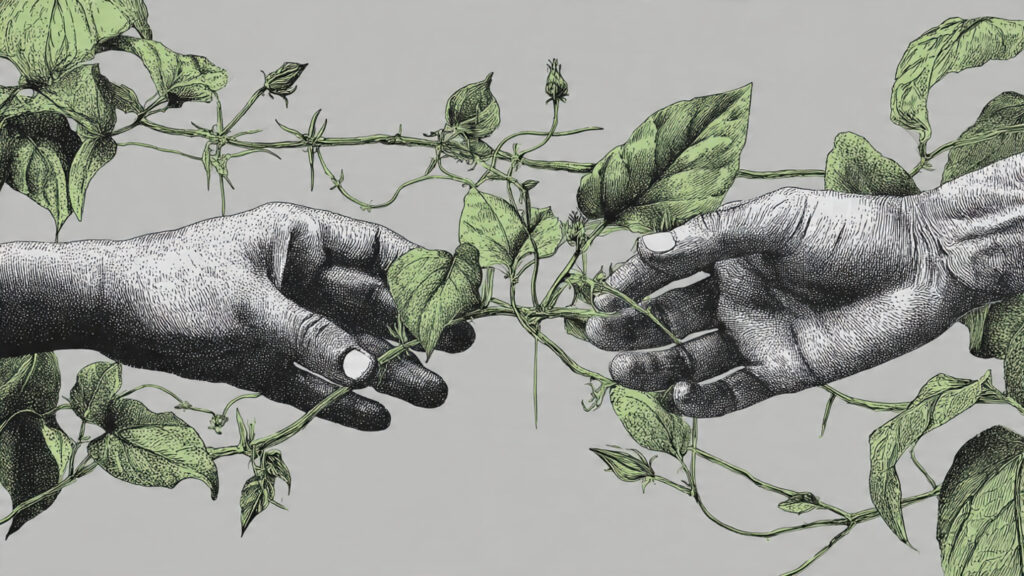
Walk through a dense garden and you’ll notice something subtle but powerful: leaves brushing leaves, stems leaning into one another, vines twining around nearby supports. It may look accidental, but science suggests something remarkable is happening during these moments of contact.
Plants can “talk” to each other when they touch—and that physical interaction can actually make them stronger.
While plants don’t communicate with voices or words, they do exchange information through chemical signals, electrical impulses, and physical contact. Research in plant biology has revealed that touch itself can trigger defensive responses, growth changes, and increased resilience.
Let’s explore how this silent communication works—and why it matters in your garden.
The Science of Plant Touch
Plants respond to touch through a process called thigmomorphogenesis. This complex term describes how physical stimulation—like wind, brushing, or contact with neighboring plants—changes plant growth patterns.
When a plant is touched repeatedly, it may:
- Grow shorter and sturdier
- Develop thicker stems
- Strengthen its internal support tissues
- Increase defensive chemicals
These changes are not random. They are survival strategies.
Researchers have observed that even gentle, repeated brushing can trigger measurable changes in plant structure within days.
How Plants Detect Touch
Plants lack nerves, but they have sensitive mechanoreceptors in their cells. These receptors detect pressure or movement and send signals through electrical impulses and hormone pathways.
One of the key hormones involved is jasmonic acid, which plays a major role in plant defense. When triggered by touch, jasmonic acid can activate protective responses—even before an actual threat appears.
This means plants may “prepare” for stress simply because something brushed against them.
Communication Through Physical Contact
Touch doesn’t just affect one plant—it can influence nearby plants too.
When leaves rub together or roots intertwine underground, plants may exchange chemical signals that:
- Warn of herbivore threats
- Trigger defensive chemistry
- Adjust growth to reduce competition
- Coordinate resource use
This communication isn’t conscious, but it’s incredibly effective.
For example, climbing plants such as Pisum sativum use touch to locate supports. When their tendrils detect contact, they rapidly coil around nearby structures.
➡️ How to Grow Malabar Spinach from Cuttings for Fast, Easy Greens
➡️ How to Grow Super Delicious Cabbage at Home Without a Garden
➡️ How to Grow Bean Sprouts at Home in Plastic Bottles Easily (Step‑by‑Step Guide)
➡️ Why is Your Lemon Tree Blooming in the Heart of Winter?
➡️ Why Should Your Garden Have a Dedicated Pollinator Highway?
➡️ Why Do Your Fruit Trees Need a Winter Wash to Thrive in Spring?
➡️ How Can Rice Water Transform Your Fruits into Sweeter Delights?
➡️ Jumpstart Your Winter Garden: Seed Starting Under Lights
Similarly, the sensitive plant Mimosa pudica visibly folds its leaves when touched—a dramatic but protective response to potential danger.
These are visible examples, but many subtler responses occur in ordinary garden plants every day.
Plants Strengthen When They Touch
Gardeners often notice that plants grown outdoors are sturdier than those grown indoors under perfectly still conditions.
Why?
Wind, rain, and contact with neighboring plants gently stress the plant’s tissues. In response, the plant strengthens its stems and root systems.
This is similar to how muscles strengthen with exercise.
In crowded plantings, frequent leaf-to-leaf contact may stimulate similar reinforcement. Plants that regularly experience light physical stress often develop:
- Thicker cell walls
- Improved anchoring roots
- Increased structural stability
In contrast, plants grown in completely protected environments may become leggy and weak.
Root-Level Conversations
Much of plant communication happens underground.
Roots can physically touch and also connect through fungal networks known as mycorrhizae. While touch is only part of this interaction, proximity enhances signal exchange.
Through root contact and shared fungal pathways, plants may:
- Transfer nutrients
- Send stress signals
- Coordinate defense responses
Although this communication is chemical rather than verbal, the effect is collaborative resilience.
Warning Signals After Damage
When a plant is chewed by insects, it releases volatile organic compounds (VOCs) into the air.
Nearby plants detect these airborne signals and may activate defensive genes—even before they are attacked.
If plants are physically close enough to touch, signal transmission may occur even faster through direct contact or root interactions.
In agricultural studies, crops planted closely together sometimes show coordinated defense responses after one plant is damaged.
This form of “touch-enhanced awareness” strengthens entire plant communities.
The Role of Crowding
Not all touch is beneficial.
If plants are overcrowded, excessive contact can increase humidity and reduce airflow, leading to fungal disease.
However, moderate contact appears to stimulate beneficial stress responses.
The key is balance.
Plants spaced naturally—close enough to interact but not suffocated—often perform better than isolated specimens.
Vine Plants and Touch Sensitivity
Climbing species demonstrate the clearest example of touch-driven communication.
In addition to garden peas, plants like Cucumis sativus use tendrils to sense and grasp supports. When contact is detected, rapid cellular growth changes occur on one side of the tendril, causing it to curl.
This reaction is not random—it is precisely controlled by touch-sensitive cells.
Without touch, these plants cannot climb properly. Contact shapes their entire growth pattern.
Forest Lessons: Strength in Community
In forests, trees grow in dense stands where branches frequently brush together.
Studies suggest that repeated mechanical contact may limit excessive vertical growth and encourage stronger trunk development.
Trees that grow alone in open fields often develop broader crowns but may be more vulnerable to wind damage compared to those grown in groups.
Community contact shapes structure.
This principle applies on a smaller scale in gardens too.
What This Means for Gardeners
Understanding that plants respond positively to touch can influence how you garden.
1. Don’t Overprotect Seedlings
A completely still indoor environment can create weak stems. Gently brushing seedlings with your hand daily can encourage sturdier growth.
2. Provide Light Air Movement
Using a small fan indoors mimics natural wind stress, strengthening stems.
3. Avoid Extreme Isolation
Spacing plants appropriately—rather than isolating each one—allows mild interaction that can stimulate resilience.
4. Encourage Biodiversity
Mixed plantings create more dynamic interactions, including chemical and physical communication.
Stress Can Be Beneficial
Plants thrive under manageable stress.
Mild stress signals prepare plants for tougher conditions. Touch is one of those mild stressors that activates protective pathways without causing harm.
This phenomenon is sometimes called “priming.” A primed plant reacts faster and more effectively to future stress.
Touch primes plants.
The Invisible Network of Signals
Beyond touch, plants also communicate through:
- Chemical exudates in soil
- Airborne scent compounds
- Shared fungal networks
- Electrical signaling within tissues
Touch simply adds another layer to this complex communication system.
When plants grow in proximity, these signals overlap and reinforce each other, creating a more resilient ecosystem.
Are Plants Really “Talking”?
The word “talk” is metaphorical.
Plants do not have thoughts or language in the human sense. But they exchange information and respond adaptively to environmental cues—including touch.
In biological terms, communication simply means transmitting signals that alter behavior.
By that definition, plants absolutely communicate.
A New Way to See Your Garden
The next time you notice leaves brushing together or vines tangling gently, consider what may be happening beneath the surface.
Those small interactions could be:
- Strengthening stems
- Activating defenses
- Coordinating growth
- Increasing resilience
What appears silent is actually dynamic.
Gardens are not just collections of individual plants. They are interconnected systems constantly exchanging signals.
Final Thoughts
Plants can “talk” to each other when they touch—not with words, but through biochemical and mechanical signals that shape growth and survival.
Touch stimulates structural strength. It activates defense pathways. It primes plants for stress. It encourages adaptation.
From the coiling tendrils of garden peas to the sensitive leaves of Mimosa pudica, the evidence is clear: physical contact matters.
For gardeners, this insight is empowering. You don’t need to isolate plants or shield them from every breeze. Mild interaction and gentle stress can build stronger, more resilient growth.
In the quiet brushing of leaves, a silent conversation unfolds—one that helps plants stand taller, adapt faster, and thrive together.