Tomatoes are one of the most widely grown and consumed crops in the world. From fresh market varieties stacked in grocery stores to processing tomatoes used in sauces and canned products, demand remains consistently high. Yet tomato farming faces persistent challenges: labor shortages, rising costs, unpredictable weather, and the delicate nature of the fruit itself.
Harvesting tomatoes is particularly labor-intensive. Workers must determine ripeness, avoid damaging the plant, and handle fruit gently to prevent bruising. A tomato picked too early lacks flavor; one picked too late may be too soft for transport. Timing is everything.
Now, a new generation of agricultural robots is emerging—machines designed to “think before they pick.” These intelligent systems use advanced sensors, artificial intelligence, and robotics to assess each tomato before harvesting it. If widely adopted, such technology could transform tomato farming as we know it.
The Challenge of Harvesting Tomatoes
Tomatoes are fragile. Unlike grains or root crops, they must often be harvested by hand to preserve quality. In many regions, growers rely on seasonal labor to pick ripe fruit at precisely the right moment.
But modern agriculture is facing several obstacles:
- Labor shortages and rising wages
- Strict harvest timing windows
- Quality standards from retailers
- Climate variability affecting ripening
Missing the ideal harvest window can reduce market value or increase waste. Human pickers, while skilled, can only process so many plants per hour. Fatigue, inconsistent judgment, and time pressure may affect quality.
This is where robotics enters the field.
What Does “Think Before They Pick” Mean?
Traditional harvesting machines are programmed to perform repetitive actions. In contrast, intelligent harvesting robots use artificial intelligence and computer vision to evaluate fruit individually.
Before picking a tomato, these robots can:
- Analyze color to determine ripeness
- Measure size and shape
- Detect defects or disease
- Evaluate firmness using gentle pressure sensors
- Assess plant structure to avoid damage
Instead of blindly harvesting everything in reach, these robots make decisions based on data.
In essence, they “think” before acting.
The Role of Artificial Intelligence
At the heart of these systems is AI. Advanced machine learning models allow robots to interpret visual data from cameras and sensors.
For example, using deep learning algorithms, robots can distinguish between:
- Slightly green tomatoes
- Fully ripe red tomatoes
- Overripe fruit
- Tomatoes hidden behind leaves
One well-known robotics company exploring AI-driven harvesting systems is Harvest CROO Robotics, which has developed harvesting technologies aimed at labor-intensive crops. While originally focused on strawberries, similar AI principles are being applied to tomato harvesting.
AI allows robots to improve over time. With each harvest, systems gather more data, refining their accuracy and decision-making capabilities.
➡️ How to Grow Malabar Spinach from Cuttings for Fast, Easy Greens
➡️ How to Grow Super Delicious Cabbage at Home Without a Garden
➡️ How to Grow Bean Sprouts at Home in Plastic Bottles Easily (Step‑by‑Step Guide)
➡️ Why is Your Lemon Tree Blooming in the Heart of Winter?
➡️ Why Should Your Garden Have a Dedicated Pollinator Highway?
➡️ Why Do Your Fruit Trees Need a Winter Wash to Thrive in Spring?
➡️ How Can Rice Water Transform Your Fruits into Sweeter Delights?
➡️ Jumpstart Your Winter Garden: Seed Starting Under Lights
How These Robots Work in the Field
A typical intelligent tomato-harvesting robot includes:
- High-resolution cameras to scan plants.
- 3D imaging systems to map plant structure.
- Robotic arms with soft grippers to gently pick fruit.
- Onboard processors to analyze data in real time.
When the robot moves down a row of plants, it scans clusters of tomatoes. The AI system identifies ripe fruit, calculates the best picking angle, and instructs the robotic arm to harvest without disturbing neighboring tomatoes.
Soft grippers are crucial. Tomatoes bruise easily, so robotic hands are often made of flexible materials designed to mimic human touch.
Increased Efficiency and Consistency
One of the biggest advantages of intelligent harvesting robots is consistency.
Unlike humans, robots:
- Don’t tire
- Maintain uniform standards
- Operate for extended hours
- Work in controlled greenhouse environments
In large-scale greenhouse operations, robots can operate day and night under artificial lighting.
This consistency may reduce crop waste and improve overall quality control. Retailers demand uniform size, color, and firmness. AI-driven robots can help meet those standards more reliably.
Addressing Labor Shortages
Many farming regions face severe labor shortages, particularly for seasonal harvesting work. Recruiting and retaining skilled pickers has become increasingly difficult and expensive.
Robotic harvesting systems offer a potential solution by:
- Reducing reliance on seasonal labor
- Lowering long-term operational costs
- Ensuring harvests occur even during labor disruptions
Rather than replacing all workers, these robots may shift human roles toward supervision, maintenance, and data management.
Farmers could focus more on crop strategy and less on urgent harvest logistics.
Precision Agriculture and Data Collection
Beyond harvesting, intelligent robots collect valuable data.
As they scan fields, they can gather information on:
- Yield patterns
- Plant health
- Disease presence
- Ripening timelines
This data helps farmers make informed decisions about irrigation, fertilization, and pest management.
In controlled greenhouse systems—like those used in high-tech tomato operations—data-driven agriculture is already common. For example, innovative greenhouse technologies have been widely implemented in countries like Netherlands, known for advanced horticultural systems.
Integrating intelligent robots into such environments could enhance precision even further.
Reducing Waste
Food waste is a global issue. Tomatoes that are picked too early or too late may be discarded.
By selecting only optimally ripe fruit, AI-powered robots could:
- Minimize premature harvesting
- Reduce spoilage during transport
- Improve shelf life
This could have significant economic and environmental benefits.
Better timing also improves flavor—an important factor for consumers increasingly concerned about taste and quality.
Challenges and Limitations
Despite their promise, intelligent harvesting robots face several hurdles.
1. High Initial Costs
Robotic systems require significant investment. Small-scale farmers may find it difficult to justify the expense.
2. Complex Field Conditions
Outdoor tomato fields present unpredictable challenges:
- Uneven terrain
- Changing weather
- Variable lighting
- Dense foliage
Greenhouse environments are easier for robots to navigate than open fields.
3. Technical Maintenance
Advanced robotics require skilled technicians for maintenance and troubleshooting.
As technology matures, costs are likely to decrease, and systems will become more adaptable.
Impact on Small vs. Large Farms
Large commercial farms are likely to adopt robotic harvesting first. They can spread the cost over extensive acreage and benefit from economies of scale.
However, smaller farms may benefit in the long run as technology becomes more affordable and modular.
Future systems could include:
- Shared robotic services
- Rental-based models
- Cooperative ownership
As innovation continues, accessibility may expand.
The Human Element
Some critics worry about automation replacing agricultural workers. However, history shows that technological advances often shift rather than eliminate jobs.
Robotics may create new roles in:
- System monitoring
- Software management
- Data analysis
- Technical maintenance
Farm work may become more technologically oriented, blending agriculture with engineering and data science.
A Glimpse Into the Future
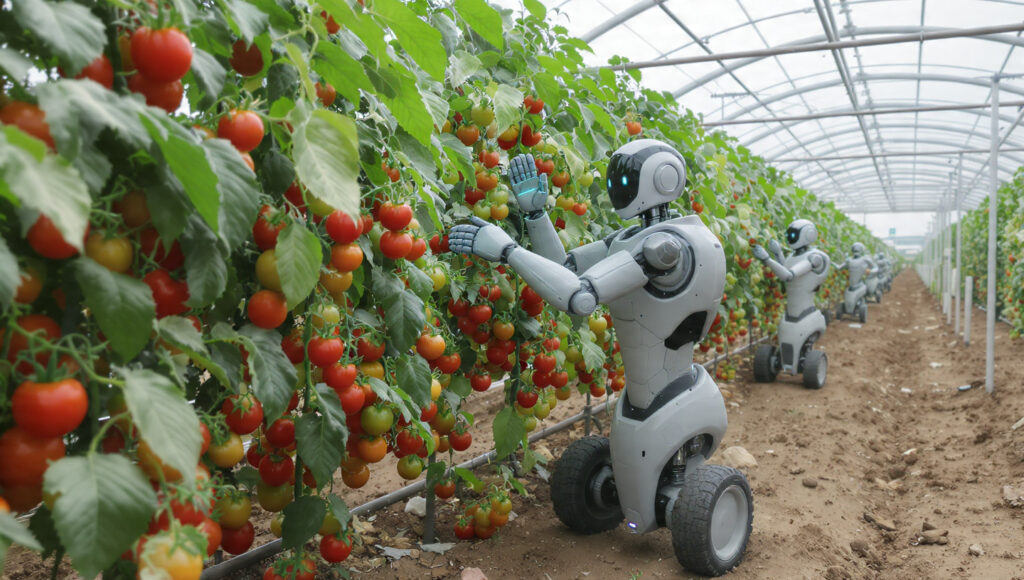
Imagine a tomato greenhouse where robots move quietly between rows, scanning plants with precision. Each tomato is assessed individually. Perfectly ripe fruit is harvested gently, while others are left to mature.
Meanwhile, farmers monitor operations through digital dashboards, tracking yield data and plant health in real time.
This isn’t science fiction—it’s a glimpse of what modern agricultural robotics aims to achieve.
As global food demand rises and climate pressures increase, efficiency and sustainability become critical. Intelligent harvesting robots represent one piece of that solution.
Conclusion
Robots that “think before they pick” have the potential to reshape tomato farming in profound ways. By combining artificial intelligence, computer vision, and gentle mechanical design, these systems promise greater precision, consistency, and efficiency.
They may reduce labor pressures, lower waste, and enhance crop quality. While challenges remain—particularly cost and technical complexity—the trajectory of innovation suggests that smart harvesting technology will play a growing role in agriculture.
Tomatoes may still grow on vines under the sun or in greenhouses, but the hands that harvest them could increasingly belong to machines capable of thinking before they act.