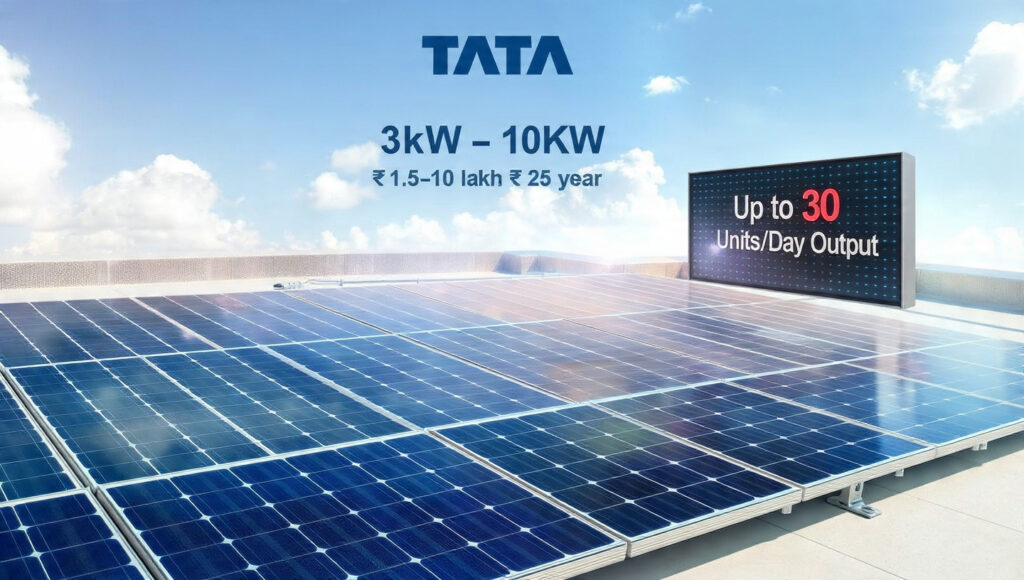
In 2026, rooftop solar continues its rapid rise across India — and Tata Power Solar remains one of the most trusted brands powering households and businesses into a sustainable future. With system capacities ranging from 3 kW to 10 kW, accessible pricing, and industry‑leading warranties, Tata solar panel systems are becoming a smart investment for Indian consumers. They promise high energy output, strong warranty coverage, and long‑term financial and environmental benefits.
This article dives deep into everything you need to know about Tata solar systems in 2026 — including prices, expected output, warranty details, savings, and why they’re worth considering.
Why Tata Solar Panels Are in High Demand in 2026
When it comes to rooftop solar in India, brand trust matters — especially for a technology meant to last decades. Tata Power Solar has decades of experience and a nationwide service network, which gives buyers confidence that their investment will perform reliably for years.
Here are a few reasons Tata systems remain popular:
- Strong brand credibility with decades of solar experience.
- Robust manufacturing and quality control standards.
- Wide range of system sizes to suit various household and business needs.
- Excellent long‑term warranties on panels and performance.
Whether you’re a homeowner planning to cut electricity bills or a business aiming for energy independence, Tata solar solutions offer reliable performance and peace of mind.
Tata Solar Panel System Sizes: Which One Is Right For You?
Tata’s rooftop solar systems in 2026 come in various sizes, with 3 kW to 10 kW being the most popular for residential and small commercial use.
Here’s how the different sizes compare:
| System Size | Best For | Estimated Daily Output |
|---|---|---|
| 3 kW | Small households, basic appliances | 12–15 units/day |
| 5 kW | Medium‑sized families, multiple devices | 20–22 units/day |
| 7 kW | Large homes, offices, shops | ~28–30 units/day |
| 10 kW | Big homes, apartment buildings | Up to ~30 units/day* |
*Actual output may vary depending on sunlight, shading, roof orientation, and location.
A 10 kW system, for example, can generate up to ~30 units of electricity per day under optimal conditions — enough to meet most or all of a typical household’s daily consumption, dramatically reducing electricity bills.
Tata Solar Panel Prices in 2026 (Estimated)
One of the most common questions buyers ask is how much a solar system will cost. Based on current projections for 2026, Tata solar panel systems are expected to fall in the following price ranges:
| System Capacity | Estimated Price Range (₹) |
|---|---|
| 3 kW | ₹1.5 L – ₹2.2 L |
| 5 kW | ₹2.8 L – ₹3.5 L |
| 7 kW | ₹4.0 L – ₹5.0 L |
| 10 kW | ₹5.5 L – ₹6.0 L |
These prices typically include the solar panels, inverter, mounting structure, wiring, and standard installation — making it a complete rooftop solution.
Good news: Government subsidies under central and state schemes can significantly lower the effective cost — especially for residential rooftop systems.
Government Subsidies: Making Solar More Affordable
The Indian government supports rooftop solar adoption through subsidies that reduce upfront costs. Under typical subsidy structures:
- Up to 40% subsidy is available for systems up to 3 kW.
- For systems above 3 kW (up to 10 kW), 40% on the first 3 kW and ~20% on the remaining capacity is common.
These incentives are processed via DISCOMs (distribution companies), helping homeowners get meaningful savings on installation.
Power Generation: Up to ~30 Units/Day and Rapid Savings
One of the most attractive benefits of rooftop solar is how quickly it generates value. A properly installed Tata system can produce consistent electricity for decades with minimal maintenance.
➡️ How to Grow Malabar Spinach from Cuttings for Fast, Easy Greens
➡️ How to Grow Super Delicious Cabbage at Home Without a Garden
➡️ How to Grow Bean Sprouts at Home in Plastic Bottles Easily (Step‑by‑Step Guide)
➡️ Why is Your Lemon Tree Blooming in the Heart of Winter?
➡️ Why Should Your Garden Have a Dedicated Pollinator Highway?
➡️ Why Do Your Fruit Trees Need a Winter Wash to Thrive in Spring?
➡️ How Can Rice Water Transform Your Fruits into Sweeter Delights?
➡️ Jumpstart Your Winter Garden: Seed Starting Under Lights
Typical Daily Output
On a sunny day, Tata systems can deliver:
- 3 kW: ~12–15 units/day
- 5 kW: ~20–22 units/day
- 7 kW: ~28–30 units/day
- 10 kW: Up to ~30 units/day (and possibly more in ideal conditions)
This output can offset a large portion of your grid electricity usage — meaning lower bills, more energy independence, and long‑term financial savings.
Warranty & Long‑Term Reliability Explained
One of Tata’s biggest selling points is its industry‑leading warranty coverage — especially on panel performance.
Typical Warranty Package
- 25‑year performance warranty: Guarantees a specified efficiency level (often ~80–85%) even after 25 years.
- 10–12 years product warranty (depending on panel model).
- 5–10 years inverter warranty (can often be extended).
These warranty terms mean your solar panels are expected to generate electricity effectively for decades, making solar a low‑risk, long‑term investment.
Types of Tata Solar Systems You Can Choose
Tata offers different solar system configurations to suit varied needs:
On‑Grid Solar System
- Most affordable and common choice.
- Connects to the grid and supports net metering, allowing you to export excess power.
Off‑Grid Solar System
- Includes batteries for backup power, ideal in areas with unreliable electricity.
- Costs more but offers energy independence.
Hybrid Solar System
- Combines grid connection and battery backup.
- Offers the best of both worlds — net metering and stable supply.
Choosing the right system depends on your power needs, budget, and preference for backup power.
Installation Space & Roof Requirements
Before installing solar panels, you should evaluate your roof space:
- 3 kW: ~250–300 sq ft
- 5 kW: ~400–500 sq ft
- 10 kW: ~900–1,000 sq ft
Tata panels are designed with relatively high efficiency, so they perform well even on moderate roof spaces — a big advantage for urban homes with limited rooftop area.
Return on Investment & Savings
Solar is not just eco‑friendly — it’s financially smart too. Here’s how savings add up:
- A 5 kW system can generate ~600–750 units/month.
- At ₹8 per unit, that’s ~₹4,800–₹6,000 saved monthly.
- Many systems pay back the initial investment in 4–6 years.
- Over 25 years, total savings can reach ₹10–15 lakh or more depending on tariffs and usage.
Once the investment is recovered, the electricity generated is essentially free — a huge long‑term benefit.
Environmental Benefits: Solar = Cleaner Future
Installing solar isn’t just about savings — it’s also about sustainability. A 10 kW solar system can reduce carbon emissions by nearly 10–12 tons per year, equivalent to planting hundreds of trees.
By adopting solar, homeowners and businesses play a part in India’s clean energy transition and reduce reliance on fossil fuels — a win for both the planet and future generations.
Final Thoughts: Is Tata Solar Worth It in 2026?
With rising electricity costs, improved solar technology, and strong government incentives, investing in Tata solar panels in 2026 makes solid sense. The combination of solid pricing (₹1.5–₹6 lakh for 3–10 kW systems), 25‑year warranty, strong daily output (up to ~30 units), and long‑term savings makes it an attractive option for Indian consumers.
Whether you’re upgrading your home, building new property, or looking to reduce monthly bills sustainably, Tata solar systems offer a balanced blend of performance, reliability, and future‑proof value.