In 2026, outdoor living is no longer just a luxury—it’s an essential extension of our homes. Modern garden design has evolved beyond mere aesthetics, blending functionality, sustainability, and technology to create spaces that are both beautiful and practical. Whether you have a small urban terrace or a sprawling backyard, understanding the principles of outdoor living and modern garden design can transform your property into a personal sanctuary.
Embracing Outdoor Living in 2026
Outdoor living has become a lifestyle trend, with homeowners seeking spaces that support relaxation, entertainment, and wellness. The key to creating a successful outdoor environment is integrating comfort with natural beauty. From cozy seating areas to fully equipped outdoor kitchens, modern outdoor spaces are designed for year-round enjoyment.
Designing for Comfort and Function
One of the primary goals of outdoor living is comfort. Soft furnishings, weather-resistant materials, and shade structures like pergolas or retractable awnings allow you to enjoy your garden in any season. Outdoor heaters, fire pits, and even infrared lighting systems now make it possible to extend the usability of your garden well into the cooler months.
Functionality is equally important. In modern design, outdoor spaces often serve multiple purposes: a dining area, a relaxation zone, and a space for social gatherings. Movable furniture, modular decking, and multi-use garden structures allow homeowners to adapt their outdoor environment as needed.
Technology in Outdoor Spaces
Smart technology is revolutionizing garden design. Automated irrigation systems, app-controlled lighting, and weather sensors ensure your garden remains healthy and inviting without constant manual effort. Even outdoor speakers and Wi-Fi-enabled entertainment systems make it possible to enjoy music, movies, or podcasts in the fresh air, blending indoor conveniences with outdoor freedom.
Principles of Modern Garden Design
Modern garden design emphasizes simplicity, clean lines, and harmonious integration with the surrounding architecture. Unlike traditional gardens, which often rely on ornate features and formal layouts, modern gardens focus on minimalism, functionality, and the interplay between natural and built elements.
Minimalism and Structure
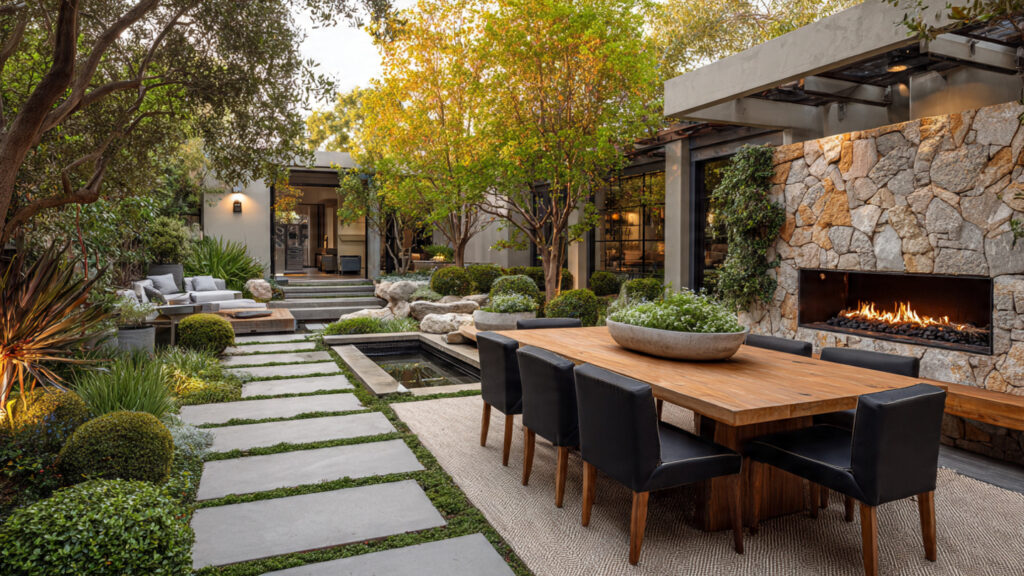
A modern garden often features geometric shapes, straight lines, and well-defined areas. Concrete, natural stone, and treated wood are popular materials for pathways, patios, and retaining walls. The careful placement of furniture, plantings, and lighting creates a sense of order while maintaining a relaxed, organic feel.
Sustainable Landscaping
Sustainability is a crucial consideration in 2026. Modern gardens are designed to reduce water usage, support biodiversity, and minimize maintenance. Native plants, drought-resistant species, and edible gardens not only look beautiful but also serve ecological purposes. Rainwater harvesting systems and permeable paving are now standard practices for environmentally conscious homeowners.
Color and Planting Design
Color palettes in modern gardens tend to be muted, relying on shades of green, gray, and natural wood tones. However, strategically placed flowering plants, ornamental grasses, and textured foliage add vibrancy and contrast. Layering plants in vertical gardens or raised beds creates depth and visual interest, while maintaining a clean, uncluttered look.
Outdoor Lighting
Lighting transforms a garden at night, highlighting architectural features, pathways, and key plantings. In modern design, LED strips, solar-powered lanterns, and smart lighting systems allow precise control over ambiance. Subtle lighting ensures the garden remains safe, functional, and visually appealing after dark.
Creating Zones for Different Activities
Modern gardens are no longer just “green spaces”—they are outdoor rooms designed for specific activities. Defining zones helps to create order and enhance usability. Typical zones include:
- Dining Area: Outdoor kitchens and dining tables create the perfect setting for al fresco meals. Built-in grills, pizza ovens, and mini-bars are increasingly common in modern gardens.
- Relaxation Zone: Comfortable seating, hammocks, or daybeds provide a retreat for reading, meditation, or napping. Incorporating water features like fountains or small ponds adds a soothing auditory element.
- Entertainment Space: Fire pits, projectors, or outdoor games make your garden a hub for social gatherings. Weatherproof sound systems and Wi-Fi coverage ensure seamless entertainment.
- Play Area: For families, dedicated zones for children’s play—whether a sandbox, climbing structures, or a mini sports court—can blend safety with style.
The Role of Water Features
Water features remain a hallmark of modern garden design, providing both visual appeal and sensory relaxation. Fountains, reflecting pools, and small waterfalls create movement and serenity in the garden. In 2026, energy-efficient pumps and recirculating systems make water features more sustainable, while naturalistic designs integrate seamlessly with plantings.
Outdoor Kitchens and Dining
One of the most significant trends in modern outdoor living is the fully equipped outdoor kitchen. These spaces now rival indoor kitchens, featuring grills, sinks, refrigerators, and storage. Weather-resistant cabinetry and durable countertops ensure longevity, while integrated lighting and sound systems make cooking and entertaining a pleasure. Paired with comfortable dining furniture, outdoor kitchens allow families to enjoy meals and socialize in the fresh air.
Smart and Sustainable Garden Maintenance
Modern gardens require less hands-on maintenance thanks to technology and sustainable design practices. Automated irrigation systems adjust watering based on soil moisture and weather forecasts, conserving water while keeping plants healthy. Smart sensors can monitor plant health, lighting, and temperature, alerting homeowners to any issues before they become problems. Composting systems and eco-friendly fertilizers further reduce the environmental footprint of your garden.
Blending Indoor and Outdoor Spaces
The line between indoor and outdoor living continues to blur. Large sliding doors, retractable walls, and continuous flooring materials allow for seamless transitions. Outdoor living rooms, complete with weatherproof sofas, rugs, and lighting, extend the comfort of indoor spaces into the garden. This integration is especially beneficial for entertaining or simply enjoying the natural environment from the comfort of home.
➡️ How to Grow Malabar Spinach from Cuttings for Fast, Easy Greens
➡️ How to Grow Super Delicious Cabbage at Home Without a Garden
➡️ How to Grow Bean Sprouts at Home in Plastic Bottles Easily (Step‑by‑Step Guide)
➡️ Why is Your Lemon Tree Blooming in the Heart of Winter?
➡️ Why Should Your Garden Have a Dedicated Pollinator Highway?
➡️ Why Do Your Fruit Trees Need a Winter Wash to Thrive in Spring?
➡️ How Can Rice Water Transform Your Fruits into Sweeter Delights?
➡️ Jumpstart Your Winter Garden: Seed Starting Under Lights
Trends to Watch in 2026
Several trends define modern garden design in 2026:
- Biophilic Design: Incorporating natural elements such as plants, water, and natural light to enhance well-being.
- Vertical Gardens: Utilizing walls and fences for plantings to maximize space in urban settings.
- Outdoor Wellness Spaces: Meditation decks, yoga platforms, and spa areas are becoming increasingly popular.
- Eco-Friendly Materials: Recycled and sustainable materials are now a design standard rather than a niche choice.
- Integrated Smart Systems: Outdoor lighting, irrigation, and climate control are fully integrated with home automation systems.
Final Thoughts
Outdoor living and modern garden design in 2026 emphasize comfort, sustainability, and style. By thoughtfully designing zones, incorporating smart technology, and prioritizing eco-friendly practices, homeowners can create outdoor spaces that are both functional and visually stunning. The modern garden is no longer just a backdrop for the home—it is a living, breathing extension of your lifestyle.
Whether you’re renovating an existing backyard or designing a new outdoor oasis from scratch, embracing the principles of modern design will ensure your garden remains a source of enjoyment, relaxation, and inspiration for years to come.