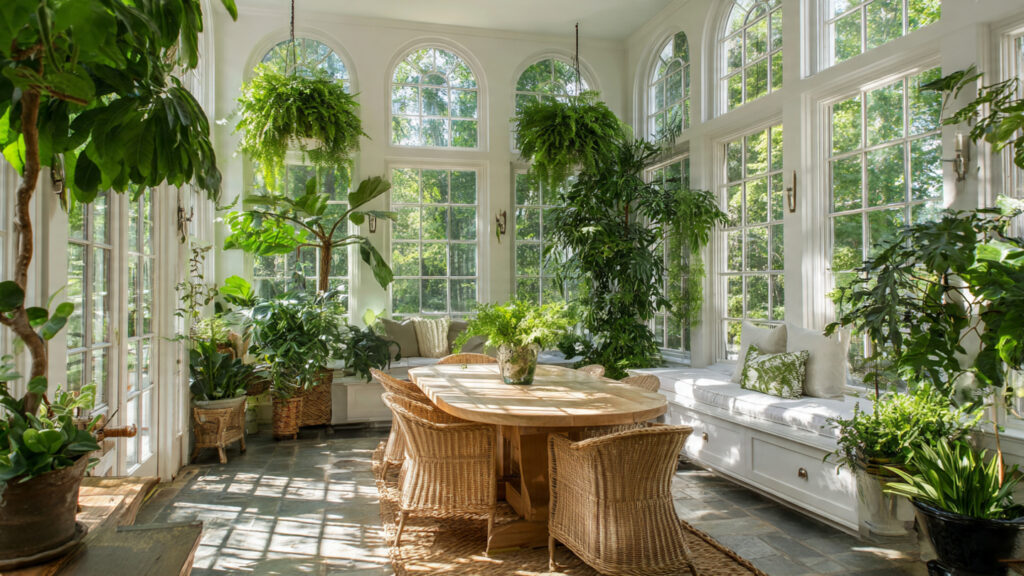
A sunroom is one of the most uplifting spaces in a home. Flooded with natural light and often surrounded by windows, it bridges the indoors and outdoors in a way few other rooms can. But sunlight alone doesn’t create that dreamy, open, refreshing atmosphere. The right plants transform a sunroom from simply bright to truly vibrant and airy.
Choosing plants for a sunroom requires balance. You want species that thrive in strong light, complement the openness of the space, and enhance the feeling of freshness rather than crowding it. Height, leaf shape, texture, and color all play important roles.
If you’re aiming for a bright and breezy environment, here are the top plants that can help you achieve it — along with practical design tips for making the most of them.
1. Fiddle Leaf Fig: The Architectural Statement
Few plants make a bold yet elegant statement like the Ficus lyrata. Its large, violin-shaped leaves add structure without overwhelming the space.
Why It Works
- Loves bright, indirect light (perfect for sunrooms).
- Tall growth draws the eye upward, enhancing openness.
- Glossy leaves reflect light beautifully.
Styling Tip
Place it in a woven or light-colored planter in a corner to anchor the room while maintaining an airy feel.
2. Bird of Paradise: Tropical Brightness
If you want your sunroom to feel like a mini indoor retreat, the Strelitzia reginae is ideal.
Why It Works
- Large, upright leaves create movement and drama.
- Thrives in bright light.
- Adds height without visual heaviness.
Its bold leaves allow sunlight to filter through, creating soft shadows that enhance the space’s natural glow.
3. Areca Palm: Soft and Feathery Texture
For instant lightness, nothing beats the feathery fronds of the Dypsis lutescens.
Why It Works
- Airy, arching leaves soften hard lines.
- Bright green color amplifies freshness.
- Tolerates strong indirect sunlight.
Palms naturally evoke openness and relaxation. Their fine leaf texture contrasts beautifully with large-leaf plants.
4. Swiss Cheese Plant: Sculptural Elegance
The iconic Monstera deliciosa adds personality without clutter.
Why It Works
- Natural leaf holes allow light to pass through.
- Thrives in bright, filtered light.
- Large leaves provide visual interest without blocking brightness.
Keep it pruned and supported with a moss pole to maintain a refined look.
5. Peace Lily: Clean and Luminous
The Spathiphyllum brings subtle elegance to a sunroom.
Why It Works
- Glossy leaves reflect sunlight.
- White blooms brighten the room naturally.
- Thrives in bright indirect light.
Place peace lilies on side tables or plant stands to add height variation.
6. Rubber Plant: Glossy and Modern
The Ficus elastica is perfect for modern sunrooms.
Why It Works
- Thick, shiny leaves amplify light.
- Upright growth keeps the room feeling structured.
- Tolerates strong light conditions.
Choose lighter green varieties to maintain an airy aesthetic.
➡️ How to Grow Malabar Spinach from Cuttings for Fast, Easy Greens
➡️ How to Grow Super Delicious Cabbage at Home Without a Garden
➡️ How to Grow Bean Sprouts at Home in Plastic Bottles Easily (Step‑by‑Step Guide)
➡️ Why is Your Lemon Tree Blooming in the Heart of Winter?
➡️ Why Should Your Garden Have a Dedicated Pollinator Highway?
➡️ Why Do Your Fruit Trees Need a Winter Wash to Thrive in Spring?
➡️ How Can Rice Water Transform Your Fruits into Sweeter Delights?
➡️ Jumpstart Your Winter Garden: Seed Starting Under Lights
7. String of Pearls: Floating Greenery
For hanging displays, the Curio rowleyanus creates movement and softness.
Why It Works
- Cascading strands create vertical flow.
- Doesn’t block light.
- Thrives in bright sun.
Hang near windows for a whimsical, floating effect.
8. Aloe Vera: Sun-Loving Minimalism
The succulent Aloe vera thrives in sunny spaces.
Why It Works
- Clean, architectural form.
- Requires minimal watering.
- Light green tone enhances brightness.
Group multiple aloe plants in simple ceramic pots for a clean, minimalist display.
9. Boston Fern: Classic Airiness
The delicate fronds of the Nephrolepis exaltata instantly soften a space.
Why It Works
- Feathery foliage enhances light diffusion.
- Adds volume without heaviness.
- Thrives in bright, indirect sunrooms.
Use elevated stands or hanging baskets for layered height.
10. Pothos: Effortless Flow
The versatile Epipremnum aureum is perfect for trailing along shelves.
Why It Works
- Heart-shaped leaves create softness.
- Light variegation brightens corners.
- Adapts easily to bright conditions.
Let vines trail naturally to create movement and continuity.
Design Tips for an Airy Sunroom
Plants alone don’t create the atmosphere — arrangement matters just as much.
1. Use Light-Colored Planters
White, beige, terracotta, or woven baskets reflect sunlight and keep the room feeling open.
2. Vary Heights
Combine tall plants (like fiddle leaf figs), medium-height plants (peace lilies), and trailing plants (pothos or string of pearls). Vertical layering makes the space dynamic without crowding it.
3. Avoid Overcrowding
An airy sunroom needs breathing room. Leave space between plants so light can flow freely.
4. Embrace Negative Space
Don’t fill every corner. A few statement plants often look better than many small ones packed tightly.
5. Rotate Plants
Sunrooms receive intense light. Rotating plants ensures even growth and prevents leaning.
Choosing Plants Based on Sunroom Exposure
Not all sunrooms receive the same type of light.
- South-facing sunrooms: Ideal for succulents, bird of paradise, aloe, and rubber plants.
- East-facing sunrooms: Great for ferns, peace lilies, and monstera.
- West-facing sunrooms: Choose heat-tolerant plants like palms and ficus.
- North-facing sunrooms: Use adaptable plants like pothos and peace lilies.
Understanding light patterns helps prevent leggy growth or leaf scorch.
Common Mistakes to Avoid
Even bright sunrooms can create plant stress if care isn’t adjusted.
- Overwatering due to increased evaporation.
- Placing shade-loving plants in direct sun.
- Ignoring humidity needs (especially for ferns and palms).
- Using dark pots that absorb excess heat.
Monitor leaf health regularly. Yellowing or crisp edges often signal light or watering imbalance.
Creating a Cohesive Atmosphere
To achieve a truly bright and airy feel:
- Stick to a consistent color palette.
- Focus on green tones with occasional white blooms.
- Use natural materials like wood and rattan.
- Let sunlight remain the star of the space.
Plants should enhance light — not compete with it.
Final Thoughts
A sunroom offers the perfect opportunity to bring lush greenery indoors without sacrificing brightness. By selecting plants that thrive in strong natural light and arranging them thoughtfully, you can create a space that feels open, refreshing, and alive.
From the bold structure of a fiddle leaf fig to the delicate movement of a Boston fern, each plant contributes to the overall atmosphere. Balance height, texture, and placement carefully, and your sunroom will feel less like a plant collection and more like a harmonious, light-filled retreat.
With the right greenery, your sunroom can become the most uplifting and inviting space in your home — a place where sunlight and nature blend seamlessly into everyday living.