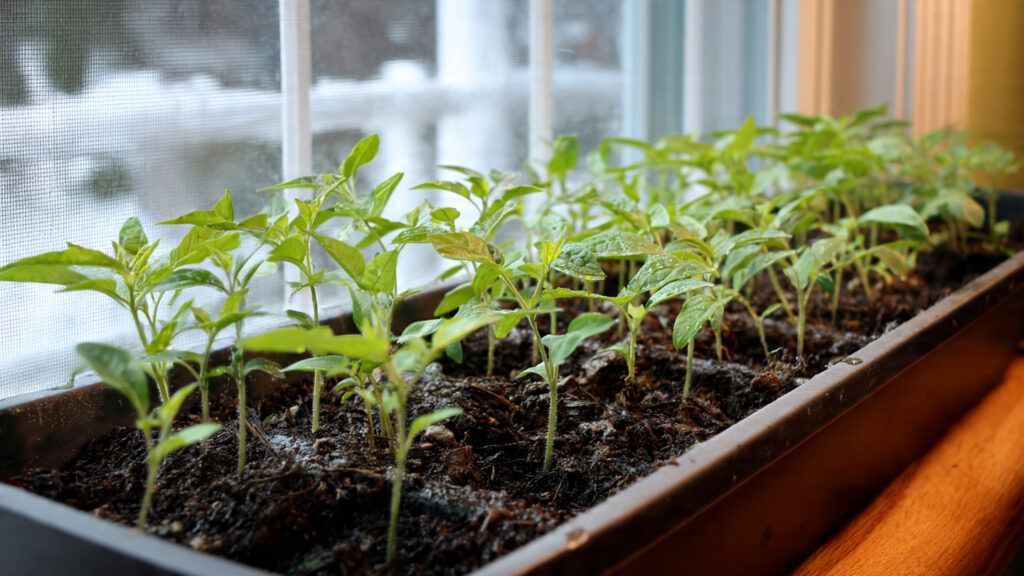
You plant your seeds with care. You water them gently. Within days, tiny green shoots emerge from the soil. At first, everything looks perfect. But soon you notice something strange: your seedlings are leaning sharply toward the window.
If your young plants look like they’re stretching sideways instead of standing upright, don’t panic. This is one of the most common issues in indoor gardening—and it has a simple explanation.
The reason your seedlings are leaning toward the window is light.
More specifically, they are responding to light in a completely natural and fascinating way. Let’s explore why this happens, what it means for your plants, and how you can fix or prevent it.
The Science Behind the Lean: Phototropism
Plants have an incredible ability to sense and respond to light. This process is called phototropism—a plant’s growth response to light direction.
When light enters from one side (such as a window), plant hormones called auxins shift to the shaded side of the stem. These hormones stimulate cell elongation on that side, causing the stem to bend toward the light source.
In simple terms:
- Light comes from one direction.
- The plant grows more on the darker side.
- The stem bends toward the light.
Your seedlings aren’t malfunctioning—they’re adapting.
This is actually a survival strategy. In nature, leaning toward light helps plants access the sunlight they need for photosynthesis.
Why It’s More Noticeable Indoors
Outdoors, sunlight moves across the sky and reaches plants from multiple angles throughout the day. But indoors, especially near a single window, light is:
- Directional
- Limited
- Often weaker
If your seedlings are sitting on a windowsill, they may only receive light from one side. As a result, they grow unevenly and begin leaning.
The problem becomes more pronounced if:
- The window faces north or receives limited sunlight.
- It’s winter and daylight hours are short.
- Nearby buildings block direct sun.
Indoor light is typically much weaker than outdoor sunlight, even on a bright day.
Leaning vs. Leggy Seedlings
It’s important to distinguish between two related but slightly different issues:
1. Leaning
This happens when seedlings bend toward a light source but still have relatively thick stems.
➡️ How to Grow Malabar Spinach from Cuttings for Fast, Easy Greens
➡️ How to Grow Super Delicious Cabbage at Home Without a Garden
➡️ How to Grow Bean Sprouts at Home in Plastic Bottles Easily (Step‑by‑Step Guide)
➡️ Why is Your Lemon Tree Blooming in the Heart of Winter?
➡️ Why Should Your Garden Have a Dedicated Pollinator Highway?
➡️ Why Do Your Fruit Trees Need a Winter Wash to Thrive in Spring?
➡️ How Can Rice Water Transform Your Fruits into Sweeter Delights?
➡️ Jumpstart Your Winter Garden: Seed Starting Under Lights
2. Leggy Growth
This occurs when seedlings stretch upward excessively, becoming tall, thin, and weak due to insufficient light intensity.
Often, leaning and legginess happen together. If your seedlings are both tall and floppy, they likely need more light.
Signs Your Seedlings Need More Light
Watch for these warning signs:
- Thin, spindly stems
- Pale green or yellowish leaves
- Long gaps between leaf sets
- Seedlings falling over easily
- Extreme leaning
Healthy seedlings should look compact, upright, and vibrant green.
Why Early Growth Matters
Seedling stage is critical. During this time, plants establish:
- Stem strength
- Root systems
- Leaf structure
- Overall shape
If seedlings stretch too much early on, they may struggle later. Weak stems can:
- Break easily
- Fail to support mature leaves
- Produce lower yields
Correcting light issues early ensures stronger plants later.
How to Fix Leaning Seedlings
The good news is that leaning seedlings can often be corrected with simple adjustments.
1. Rotate the Containers Daily
The easiest solution is rotating your pots 90–180 degrees each day.
This allows plants to receive light more evenly and prevents them from permanently bending in one direction.
Make rotation part of your daily watering routine.
2. Increase Light Exposure
If possible, move seedlings to:
- A brighter window
- A south-facing window (in the Northern Hemisphere)
- A less obstructed area
However, window light alone is often insufficient for strong seedling growth.
3. Use Grow Lights
For consistent results, artificial grow lights are highly effective.
Place grow lights:
- 2–4 inches above seedlings
- Directly overhead (not from the side)
- On for 12–16 hours per day
Overhead lighting encourages straight, upright growth.
LED grow lights are energy-efficient and ideal for indoor gardeners.
4. Lower the Light Source
If using grow lights and seedlings are still stretching, the light may be too far away.
Light intensity decreases quickly with distance. Keep lights close—but not so close that leaves overheat.
5. Provide Gentle Air Movement
A small fan on low setting helps strengthen stems.
Air movement mimics natural outdoor conditions, encouraging seedlings to:
- Develop thicker stems
- Stand more upright
- Resist bending
Just ensure airflow is gentle, not harsh.
6. Support and Bury Leggy Seedlings
If seedlings have already grown tall and weak, you can often salvage them.
For plants like tomatoes and peppers, transplant them deeper into soil, burying part of the stem. Many plants will grow additional roots along buried stems.
This creates stronger support and improved stability.
Preventing the Problem from the Start
Prevention is always easier than correction.
To avoid leaning seedlings:
- Start seeds under grow lights rather than window light alone.
- Position lights directly above plants.
- Keep light sources close and consistent.
- Avoid overcrowding seedlings.
When seedlings compete for light, they stretch even more.
Understanding Light Quality and Duration
Not all light is equal. Seedlings need sufficient intensity—not just brightness to your eyes.
Indoor lighting often appears bright but lacks the strength plants require for photosynthesis.
Seedlings typically need:
- 12–16 hours of bright light daily
- Consistent exposure
- Even distribution
Without enough intensity, leaning becomes almost inevitable.
Is Leaning Ever Normal?
A slight lean is completely normal and natural.
Plants are dynamic organisms. Even in perfect conditions, you may notice minor directional growth.
Concern arises only when:
- Leaning is extreme
- Stems are weak
- Plants collapse
Mild adjustment is usually enough to correct moderate leaning.
When Leaning Becomes a Bigger Issue
If seedlings fall over entirely, you may need to:
- Stake them temporarily
- Add soil around the base
- Improve lighting immediately
Ignoring severe legginess can lead to poor transplant success later.
The Bigger Lesson: Light Is Everything
When growing plants indoors, light is the most important factor. More than fertilizer. More than fancy soil.
Without adequate light:
- Growth weakens
- Stems stretch
- Plants become unstable
Most seedling problems trace back to insufficient or poorly positioned light.
Understanding this early saves frustration later.
Final Thoughts
If your seedlings are leaning toward the window, they’re simply following their natural instinct to seek light. It’s not a disease, not a failure, and not something to feel discouraged about.
It’s a signal.
Your plants are telling you they need stronger, more direct, or more evenly distributed light.
With simple adjustments—rotating pots, increasing brightness, or installing grow lights—you can guide your seedlings back to strong, upright growth.
In gardening, plants communicate through their posture, color, and shape. When you learn to read those signals, you become a more confident and capable grower.
So the next time your seedlings lean toward the window, smile—they’re just reaching for the sun.