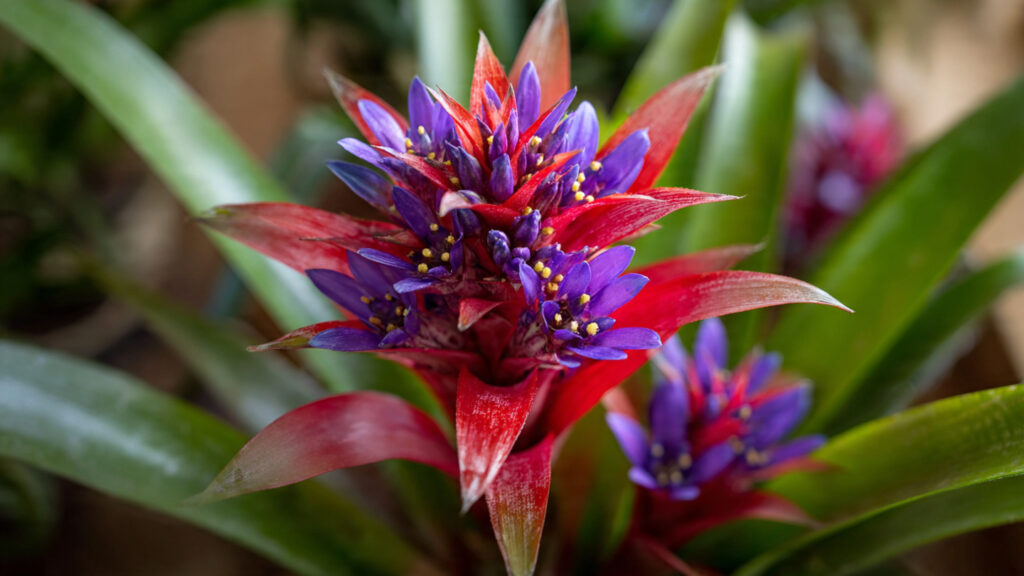
If you’ve ever grown a bromeliad, you probably remember the moment it bloomed. That dramatic spike of color rising from the center, the long-lasting bracts glowing in red, pink, orange, or yellow—it feels almost exotic, like a tropical firework in your living room. Then, months later, the bloom fades… and nothing happens again.
You water it. You rotate it toward the light. You even whisper encouragement. Still, no second flower.
So what’s going on?
The truth is simple but surprising: most bromeliads bloom only once in their lifetime. But that doesn’t mean your plant journey is over. In fact, it’s just beginning.
Let’s explore why bromeliads flower once, what happens afterward, and how you can encourage more blooms—through the next generation of plants.
Understanding the Bromeliad Life Cycle
Bromeliads belong to the plant family Bromeliaceae, which includes over 3,000 species. Popular houseplant varieties include Guzmania, Vriesea, Aechmea fasciata, and Neoregelia.
What makes bromeliads unique is their monocarpic nature. “Monocarpic” means a plant flowers once, sets offspring, and then slowly declines.
Here’s how it works:
- The plant grows vegetatively for several years.
- It reaches maturity.
- It produces a single flower spike.
- After flowering, the mother plant gradually dies.
- Before dying, it produces baby plants (called “pups”).
That single bloom isn’t a failure—it’s the plant completing its biological mission.
Why Do Bromeliads Bloom Only Once?
The one-time bloom is part of their evolutionary strategy.
In nature, many bromeliads grow attached to trees in tropical forests. These epiphytic plants don’t rely on soil. Instead, they collect water and nutrients in their central cup. Because growing conditions can be unpredictable, bromeliads invest heavily in one large, energy-intensive flowering event.
Once flowering is complete, the mother plant shifts all its remaining energy into producing pups. It’s essentially passing the torch to the next generation.
So when your bromeliad stops blooming, it’s not sick. It’s simply following its life cycle.
How Long Does the Bloom Last?
The good news? Bromeliad blooms last a long time.
Unlike many flowering houseplants that bloom for just a week or two, bromeliad bracts can remain colorful for 3 to 6 months. In some cases, even longer.
➡️ How to Grow Malabar Spinach from Cuttings for Fast, Easy Greens
➡️ How to Grow Super Delicious Cabbage at Home Without a Garden
➡️ How to Grow Bean Sprouts at Home in Plastic Bottles Easily (Step‑by‑Step Guide)
➡️ Why is Your Lemon Tree Blooming in the Heart of Winter?
➡️ Why Should Your Garden Have a Dedicated Pollinator Highway?
➡️ Why Do Your Fruit Trees Need a Winter Wash to Thrive in Spring?
➡️ How Can Rice Water Transform Your Fruits into Sweeter Delights?
➡️ Jumpstart Your Winter Garden: Seed Starting Under Lights
It’s worth noting that the bright “flower” you see is usually a modified leaf called a bract. The true flowers are small and short-lived, often emerging between those colorful bracts.
When the bracts begin to fade and turn brown, the blooming phase is over—but that doesn’t mean you should throw the plant away.
What Happens After Blooming?
After flowering:
- The mother plant slowly declines.
- Leaves may begin to brown from the base.
- Growth slows dramatically.
- Pups start forming at the base.
This process can take several months to over a year. The mother plant doesn’t die immediately. It gradually transfers nutrients to its offsets.
This is the key to future blooms.
What Are Bromeliad Pups?
Pups are small offshoots that grow from the base of the mother plant. They are genetically identical clones.
Most bromeliads produce 1–5 pups, though some varieties produce more.
These pups are your pathway to more flowers.
Once separated and grown to maturity, each pup can bloom once in its lifetime. That means one plant can turn into multiple blooming plants over time.
How to Encourage More Flowers (The Right Way)
You cannot make the same bromeliad bloom twice. But you can successfully grow its pups to flowering size. Here’s how.
1. Wait Until Pups Are Big Enough
Don’t rush separation.
Wait until pups are at least one-third to one-half the size of the mother plant. This ensures they have enough energy reserves to survive independently.
2. Remove Pups Carefully
Use a clean, sharp knife to cut the pup away at the base. Some pups can be gently twisted off if mature enough.
Allow the cut area to dry for a day before planting to prevent rot.
3. Use the Right Growing Medium
Bromeliads need excellent drainage. Use:
- Orchid mix
- Bark-based mix
- A blend of peat and perlite
Never use heavy garden soil.
4. Provide Bright, Indirect Light
Bromeliads need bright light to bloom again. Too little light is the most common reason pups fail to flower.
Place them near a bright window, but avoid harsh direct afternoon sun.
5. Maintain Proper Watering
Keep the central cup filled with fresh water. Flush it weekly to prevent stagnation.
Water the growing medium lightly—never allow it to stay soggy.
6. Increase Humidity
These are tropical plants. They appreciate:
- Regular misting
- Pebble trays
- Grouping with other plants
Humidity encourages strong growth, which leads to flowering maturity.
Can You Force a Bromeliad to Bloom?
If your pup has reached maturity (usually 2–3 years old) but hasn’t flowered, you can trigger blooming using ethylene gas.
This method mimics natural ripening signals.
The Apple Trick
- Place the bromeliad and a ripe apple inside a clear plastic bag.
- Seal loosely.
- Leave for 7–10 days.
Apples release ethylene gas, which can stimulate blooming in mature bromeliads.
After removal, flowering may begin within 6–14 weeks.
Important: Only try this on healthy, mature plants.
Why Your Bromeliad Might Not Produce Pups
If no pups appear, consider these factors:
- Insufficient light
- Overwatering leading to rot
- Poor drainage
- Extreme cold
- Lack of nutrients
Healthy post-bloom care increases pup production.
Common Mistakes to Avoid
1. Throwing the plant away too soon
The mother plant may look tired but can produce pups for months.
2. Overwatering the soil
Bromeliads rot easily.
3. Ignoring light requirements
Low light equals no flowers.
4. Using heavy potting mix
Roots need air circulation.
How Long Until a Pup Blooms?
Patience is essential.
Most bromeliad pups take 2 to 3 years to reach flowering size. Faster-growing varieties may bloom sooner under ideal conditions.
Think of it as a slow tropical investment.
Indoor vs Outdoor Blooming
If you live in a warm climate, bromeliads can thrive outdoors year-round. In tropical or subtropical regions, natural humidity and light often produce stronger blooms.
Indoors, light is usually the limiting factor. South- or east-facing windows work best.
If natural light is low, a grow light can dramatically improve flowering success.
Signs Your Pup Is Ready to Bloom
Look for:
- Tight, symmetrical rosette
- Mature size comparable to the original plant
- Slower leaf growth
- Slight color intensification in the center
These are signs the plant is preparing to flower.
The Beauty of the Bromeliad Cycle
At first, learning that your bromeliad blooms only once may feel disappointing. But once you understand the cycle, it becomes fascinating.
You’re not growing one flower—you’re cultivating generations.
Each pup carries the genetic memory of the original bloom. With proper care, your single store-bought bromeliad can turn into an entire collection over time.
Final Thoughts
Your bromeliad blooms once because that’s how nature designed it. It invests all its energy into one spectacular flowering event, then produces pups to continue the lineage.
You cannot make the same plant bloom again. But you can:
- Nurture its pups
- Provide bright, indirect light
- Maintain proper watering
- Encourage maturity
- Use ethylene triggers if needed
With patience and the right care, your home can experience bromeliad blooms again and again—just from the next generation.