Companion planting has been practiced for centuries, long before modern agriculture formalized the science of plant relationships. Gardeners observed that certain plants seem to help each other thrive—by improving soil health, repelling pests, or enhancing overall growth. One simple yet highly effective example is planting chives around the base of peach trees.
At first glance, it may seem like an odd pairing. What could a small, grassy herb possibly do for a fruit tree? Surprisingly, quite a lot. Planting chives around the base of your peach trees can improve pest resistance, reduce disease pressure, enhance soil health, and even support better fruit production.
Let’s explore why this natural partnership works so well.
1. Natural Pest Deterrent
One of the biggest threats to peach trees is insect pests. Aphids, borers, beetles, and other insects are attracted to tender leaves and developing fruit.
Chives belong to the allium family, which also includes garlic and onions. Alliums produce sulfur-containing compounds responsible for their strong aroma. This scent isn’t just noticeable to humans—it’s highly effective at confusing or repelling certain pests.
When planted around the base of peach trees, chives may help deter:
- Aphids
- Japanese beetles
- Some moth species
- Other sap-sucking insects
While chives won’t eliminate every pest problem, they create an additional layer of defense. In organic gardening systems, this natural pest management approach is especially valuable.
2. Potential Disease Suppression
Peach trees are vulnerable to fungal diseases such as peach leaf curl and brown rot. Although chives aren’t a cure for these diseases, alliums are known to have mild antifungal properties.
Some gardeners brew diluted chive or garlic sprays to apply to fruit trees as a preventative measure. Even without spraying, growing chives nearby may contribute to a slightly less favorable environment for certain pathogens.
Improved airflow and biodiversity around the tree also help reduce fungal pressure.
3. Improved Biodiversity Around the Tree
A monoculture—growing only one plant species in an area—can attract pests and create imbalances in the ecosystem.
By planting chives at the base of your peach tree, you introduce plant diversity. This attracts beneficial insects such as:
- Pollinators
- Predatory beetles
- Parasitic wasps
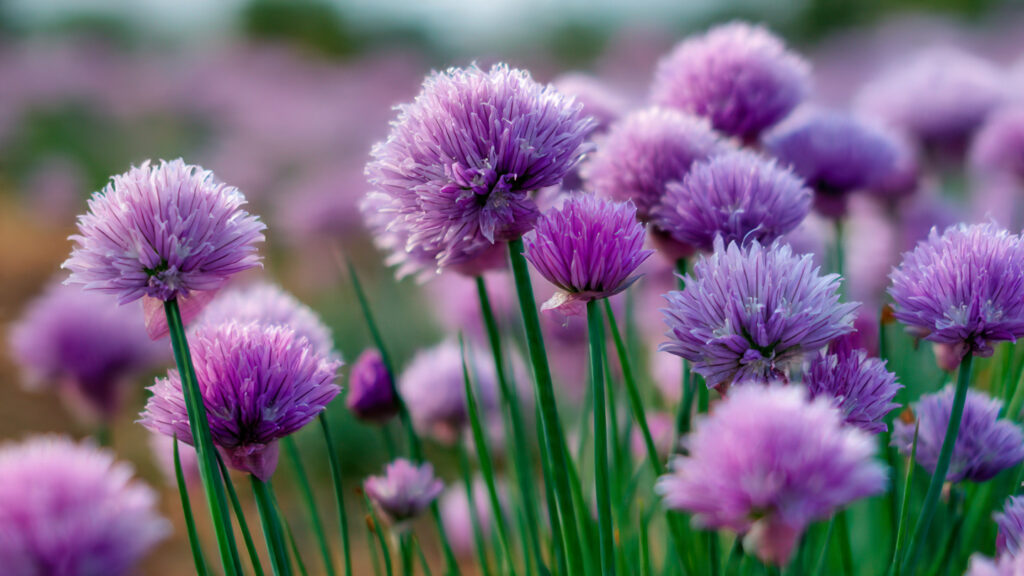
Chives produce attractive purple flowers in spring and early summer. These blooms provide nectar for bees and other pollinators, which are essential for fruit set in peach trees.
A healthy pollinator population increases the likelihood of successful fruit production.
4. Space Efficiency in Small Gardens
Many home gardeners have limited space. The area beneath fruit trees is often underutilized, left bare or covered only with mulch.
➡️ How to Grow Malabar Spinach from Cuttings for Fast, Easy Greens
➡️ How to Grow Super Delicious Cabbage at Home Without a Garden
➡️ How to Grow Bean Sprouts at Home in Plastic Bottles Easily (Step‑by‑Step Guide)
➡️ Why is Your Lemon Tree Blooming in the Heart of Winter?
➡️ Why Should Your Garden Have a Dedicated Pollinator Highway?
➡️ Why Do Your Fruit Trees Need a Winter Wash to Thrive in Spring?
➡️ How Can Rice Water Transform Your Fruits into Sweeter Delights?
➡️ Jumpstart Your Winter Garden: Seed Starting Under Lights
Chives grow compactly and don’t compete aggressively with tree roots. Their shallow root systems coexist well with deeper tree roots.
This makes them an ideal understory plant—adding productivity without overcrowding the tree.
You gain both fresh herbs and improved tree health in the same space.
5. Low Maintenance Companion
Chives are hardy, perennial herbs that require minimal care. Once established, they return year after year with little effort.
They tolerate:
- Partial shade
- Varying soil types
- Mild drought conditions
Peach trees also appreciate well-drained soil and regular watering, so their needs align well.
Because chives are not invasive and remain clump-forming, they are easy to manage around the tree base.
6. Natural Ground Cover Benefits
Bare soil around fruit trees can lead to:
- Moisture loss
- Weed growth
- Soil erosion
- Compaction
Chives act as a light ground cover. While they don’t form a dense mat, they reduce open soil exposure.
This helps:
- Retain moisture
- Suppress weeds
- Protect soil from heavy rain impact
Healthier soil supports stronger root systems for your peach tree.
7. Encouraging Stronger Tree Growth
Healthy peach trees require balanced nutrition and minimal stress.
When pests and disease pressure are reduced, the tree can allocate more energy toward:
- Root development
- Leaf growth
- Flower production
- Fruit development
Chives contribute indirectly by supporting the tree’s overall environment.
Additionally, as chives die back seasonally, their decaying foliage adds small amounts of organic matter to the soil.
8. Breaking Pest Life Cycles
Some pests lay eggs near the base of fruit trees or overwinter in surrounding soil.
The scent of alliums may interfere with pest navigation and egg-laying behavior. While research is ongoing, many experienced gardeners report fewer infestations when alliums are grown nearby.
Companion planting isn’t magic—but it can be part of an integrated pest management strategy.
9. Minimal Root Competition
A common concern with companion planting is root competition.
Peach trees develop deep and wide-reaching root systems. Chives, on the other hand, have relatively shallow and compact roots.
This difference allows them to coexist without significant competition for nutrients or water.
However, it’s still wise to avoid planting too densely around the trunk. Leave a small gap to prevent moisture buildup directly against the bark.
10. Enhancing Orchard Aesthetics
Beyond practical benefits, planting chives around peach trees enhances visual appeal.
The contrast between:
- The tree’s spreading branches
- The soft green chive leaves
- The purple blossoms
Creates a layered, attractive orchard design.
In small home orchards, aesthetic value matters just as much as productivity.
How to Plant Chives Around Peach Trees
To get the best results:
- Plant chives 6–12 inches away from the tree trunk.
- Space clumps evenly in a circle around the base.
- Mulch lightly between plants if needed.
- Water regularly during establishment.
Avoid piling mulch or soil directly against the tree trunk, as this can encourage rot.
Chives can be grown from seed, but dividing established clumps is faster.
When to Plant
The best time to plant chives is in early spring or fall.
This allows roots to establish before extreme heat or cold.
If planting during active peach tree growth, ensure adequate watering to reduce stress on both plants.
Additional Companion Options
Chives aren’t the only helpful companion for peach trees. Other beneficial plants include:
- Garlic
- Nasturtiums
- Marigolds
- Comfrey
However, chives are particularly easy to manage and less likely to become invasive.
What Chives Won’t Do
It’s important to set realistic expectations.
Chives will not:
- Completely eliminate pests
- Cure serious fungal infections
- Replace proper pruning or fertilization
They work best as part of a broader orchard care plan that includes:
- Proper pruning
- Good airflow
- Regular monitoring
- Healthy soil management
Companion planting supports—but does not replace—good horticultural practices.
A Sustainable Gardening Strategy
Planting chives around peach trees reflects a broader philosophy of working with nature rather than against it.
Instead of relying solely on chemical sprays or synthetic interventions, companion planting:
- Enhances biodiversity
- Encourages beneficial insects
- Strengthens plant resilience
- Reduces input costs
It’s a small step that aligns with sustainable gardening principles.
Final Thoughts
Planting chives around the base of your peach trees is a simple, low-cost strategy with multiple potential benefits. From deterring pests and supporting pollinators to improving soil health and aesthetics, this companion pairing makes practical sense.
While it’s not a miracle solution, it adds another layer of resilience to your orchard.
In gardening, small thoughtful actions often lead to long-term rewards. By introducing chives beneath your peach trees, you create a more balanced, productive, and naturally protected growing environment.
Sometimes the best improvements come not from adding more chemicals—but from adding the right plants.