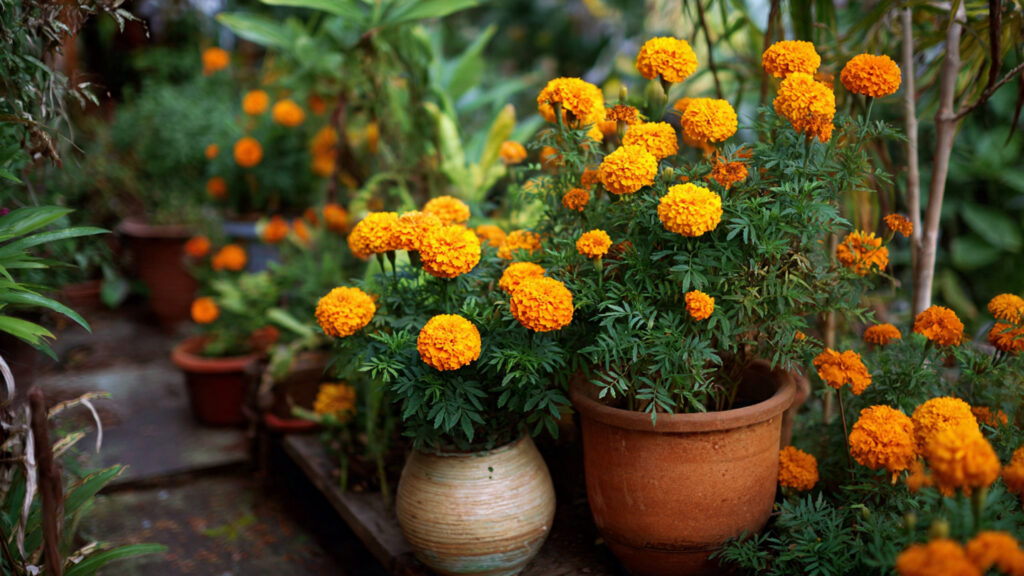
Marigolds are among the most reliable, vibrant, and beneficial flowers you can grow in containers. Known for their bright orange, yellow, and golden blooms, marigolds are more than just decorative plants — they are powerful natural pest deterrents. Whether you have a balcony, patio, terrace, or small backyard, growing marigolds in pots is an easy and effective way to promote a healthier, pest-free garden.
Popular species such as Tagetes erecta (African marigold) and Tagetes patula (French marigold) are especially valued for both ornamental beauty and pest control properties. This guide will walk you through everything you need to know to grow marigolds successfully in pots while naturally protecting your garden.
Why Grow Marigolds in Pots?
Marigolds are widely recognized for their natural pest-repelling abilities. They release a distinctive scent and produce compounds in their roots that help deter harmful insects and nematodes in soil.
Growing them in pots offers several advantages:
- Easy mobility to position near vulnerable plants
- Better soil control
- Reduced risk of soil-borne diseases
- Ideal for small spaces
- Easier maintenance
Container gardening also allows you to strategically place marigolds near vegetables, herbs, or flowering plants that commonly suffer from pest attacks.
Choosing the Right Marigold Variety
Different marigold varieties serve slightly different purposes.
African Marigolds (Tagetes erecta)
- Taller growth (up to 3 feet)
- Large, bold blooms
- Ideal for statement pots and borders
French Marigolds (Tagetes patula)
- Compact and bushy
- Excellent for companion planting
- Particularly effective against soil nematodes
For container growing, French marigolds are often preferred due to their manageable size and strong pest-repelling characteristics.
Selecting the Perfect Pot
Marigolds adapt well to container life, but proper pot selection is essential.
Ideal Pot Features:
- 8–12 inches deep
- Drainage holes at the bottom
- Lightweight but stable material
Terracotta pots work well because they allow excess moisture to evaporate, reducing the risk of root rot. Plastic containers are also suitable if drainage is sufficient.
Avoid overly large pots, as excess soil can retain too much moisture.
Preparing the Right Soil Mix
Marigolds prefer well-draining soil. Waterlogged roots can quickly lead to fungal issues.
Recommended Soil Mix:
- 1 part garden soil
- 1 part compost
- 1 part sand or perlite
This mixture ensures good drainage while providing enough nutrients for steady flowering.
Avoid heavy clay soil in containers, as it compacts easily.
Planting Marigolds in Pots
You can grow marigolds from seeds or nursery seedlings.
From Seeds:
- Fill the pot with prepared soil mix.
- Sow seeds about ½ inch deep.
- Water lightly.
- Germination occurs within 5–10 days.
From Seedlings:
- Dig a small hole in the soil.
- Place the seedling at the same depth as its nursery container.
- Firm soil gently around the roots.
- Water thoroughly after planting.
Keep the pot in a bright location immediately after planting.
➡️ How to Grow Malabar Spinach from Cuttings for Fast, Easy Greens
➡️ How to Grow Super Delicious Cabbage at Home Without a Garden
➡️ How to Grow Bean Sprouts at Home in Plastic Bottles Easily (Step‑by‑Step Guide)
➡️ Why is Your Lemon Tree Blooming in the Heart of Winter?
➡️ Why Should Your Garden Have a Dedicated Pollinator Highway?
➡️ Why Do Your Fruit Trees Need a Winter Wash to Thrive in Spring?
➡️ How Can Rice Water Transform Your Fruits into Sweeter Delights?
➡️ Jumpstart Your Winter Garden: Seed Starting Under Lights
Providing the Right Sunlight
Marigolds thrive in full sun.
Sunlight Requirements:
- 6–8 hours of direct sunlight daily
- Bright, open space for best flowering
Insufficient sunlight leads to fewer blooms and leggy growth. If growing on a balcony, place pots where they receive maximum daylight.
Watering Correctly
Marigolds are moderately drought-tolerant but bloom best with consistent moisture.
Watering Tips:
- Water when the top inch of soil feels dry
- Avoid waterlogging
- Ensure proper drainage
During hot weather, daily watering may be necessary. In cooler conditions, reduce frequency.
Always water at the base rather than overhead to prevent fungal problems.
Fertilizing for Continuous Blooms
Marigolds are not heavy feeders, but light fertilization promotes abundant flowering.
Feeding Schedule:
- Apply balanced liquid fertilizer every 3–4 weeks
- Avoid excessive nitrogen, which promotes leaves over flowers
Too much fertilizer can reduce bloom production, so moderation is key.
Natural Pest Control Benefits
Marigolds are famous for pest management. They help repel:
- Aphids
- Whiteflies
- Mosquitoes
- Nematodes
- Tomato hornworms
Their strong scent confuses and deters many insects. When placed near vegetable pots — such as tomatoes, peppers, or beans — they act as protective companions.
French marigolds are particularly known for reducing harmful nematodes in soil.
However, marigolds are not a magical cure for all pests. They work best as part of a broader organic gardening strategy.
Companion Planting in Pots
Marigolds pair well with many container plants.
Good Companion Plants:
- Tomatoes
- Basil
- Peppers
- Eggplant
- Cucumbers
Place marigold pots alongside vegetable containers to create a natural barrier.
They also attract beneficial insects like ladybugs and pollinators, improving overall garden health.
Deadheading for More Flowers
Deadheading is essential for continuous blooming.
How to Deadhead:
- Remove faded flowers regularly
- Pinch or cut just above the leaf node
This encourages the plant to produce new buds instead of focusing on seed production.
Regular pruning also keeps the plant compact and bushy.
Preventing Common Problems
Although hardy, marigolds can occasionally face issues.
1. Yellow Leaves
Often caused by:
- Overwatering
- Poor drainage
- Nutrient imbalance
Ensure soil drains properly.
2. Powdery Mildew
May appear in humid conditions. Improve air circulation and avoid overhead watering.
3. Leggy Growth
Indicates insufficient sunlight. Move pots to a brighter location.
Regular monitoring ensures early intervention.
Seasonal Care
Marigolds are warm-season annuals.
Best Growing Season:
- Spring to early winter
In cooler climates, they may decline after frost. In warm regions, they can bloom almost year-round.
Remove plants at the end of the season and refresh potting soil before replanting.
Saving Seeds for Next Season
Marigolds produce abundant seeds.
To Save Seeds:
- Allow some flowers to dry on the plant.
- Collect dried flower heads.
- Remove and store seeds in a dry, cool place.
This makes marigolds a cost-effective addition to your garden.
Long-Term Pot Maintenance
To maintain healthy marigolds in containers:
- Refresh soil each growing season
- Clean pots before replanting
- Rotate positions occasionally for even sunlight exposure
Container-grown marigolds typically require less weeding and maintenance compared to ground planting.
Benefits Beyond Pest Control
Growing marigolds in pots provides more than pest protection:
- Brightens outdoor spaces
- Attracts pollinators
- Improves biodiversity
- Easy for beginners
- Low maintenance
Their cheerful blooms instantly enhance patios, balconies, and entrances.
Final Thoughts
Growing marigolds in pots is a simple and natural way to promote a pest-free garden. With the right soil, adequate sunlight, moderate watering, and occasional feeding, marigolds will reward you with vibrant blooms and valuable protective benefits.
Whether you choose tall African marigolds for dramatic displays or compact French marigolds for companion planting, these versatile flowers thrive beautifully in containers.