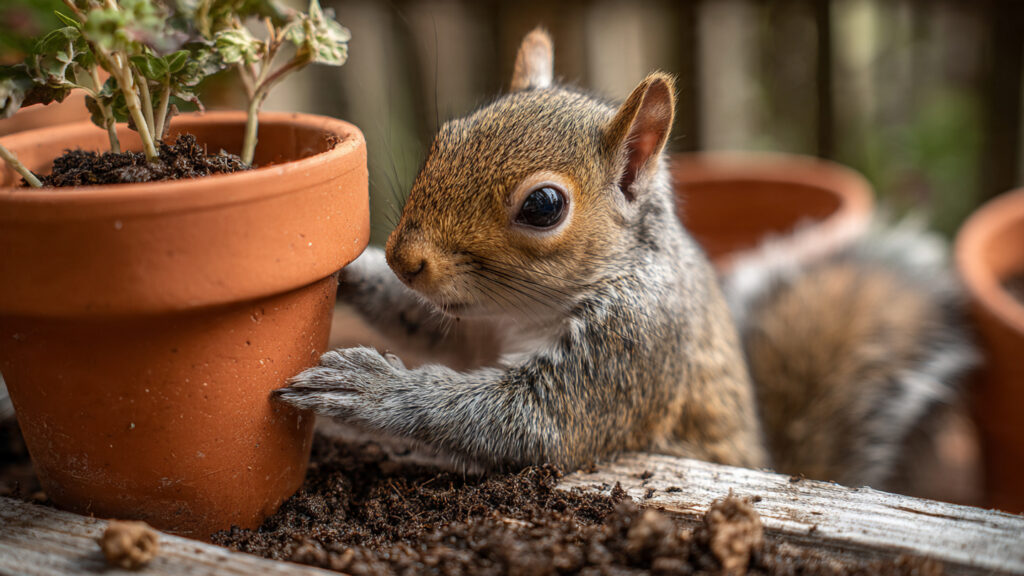
You step outside to admire your flowers—only to find freshly dug soil scattered across the patio. Your carefully planted seedlings are uprooted. Bulbs have vanished overnight. The culprit? Squirrels.
While squirrels can be charming to watch in parks and trees, they become frustrating visitors when they treat your flower pots like personal treasure chests. If you’re tired of replanting the same pot over and over, you’re not alone.
The good news: you can stop squirrels from digging in your flower pots without harming them. The key is understanding why they dig and using smart, humane deterrents that actually work.
Let’s break it down.
Why Do Squirrels Dig in Flower Pots?
Before solving the problem, it helps to understand squirrel behavior.
Squirrels dig primarily for three reasons:
1. Burying Food
Squirrels are natural hoarders. They bury nuts and seeds to eat later. Loose potting soil is perfect for hiding snacks.
2. Searching for Hidden Food
They may smell bulbs, compost, or organic fertilizer and start digging to investigate.
3. Nesting or Play
Soft soil is easier to dig than compacted ground, making pots irresistible for curious squirrels.
Species like the Eastern Gray Squirrel and the Fox Squirrel are especially known for this behavior in urban and suburban areas.
Understanding their motivation helps you choose the right deterrent.
1. Cover the Soil Surface
The most effective way to stop digging is to physically block access to the soil.
Use Hardware Cloth or Wire Mesh
Cut a piece of hardware cloth to fit the top of your pot. Leave space for the plant stems to grow through. This creates a barrier squirrels can’t dig through.
You can hide the mesh under decorative mulch so it doesn’t look industrial.
Add Decorative Rocks
Place medium to large stones on top of the soil surface. Avoid tiny pebbles—squirrels can easily move those.
➡️ How to Grow Malabar Spinach from Cuttings for Fast, Easy Greens
➡️ How to Grow Super Delicious Cabbage at Home Without a Garden
➡️ How to Grow Bean Sprouts at Home in Plastic Bottles Easily (Step‑by‑Step Guide)
➡️ Why is Your Lemon Tree Blooming in the Heart of Winter?
➡️ Why Should Your Garden Have a Dedicated Pollinator Highway?
➡️ Why Do Your Fruit Trees Need a Winter Wash to Thrive in Spring?
➡️ How Can Rice Water Transform Your Fruits into Sweeter Delights?
➡️ Jumpstart Your Winter Garden: Seed Starting Under Lights
Rocks create a solid barrier and add visual appeal.
2. Use Mulch That Discourages Digging
Certain mulches are uncomfortable for squirrels.
Pinecones
Spread pinecones over the soil surface. Their sharp edges discourage digging.
Bark Chips
Chunky bark mulch makes digging more difficult and less appealing.
Gravel Layer
A thin layer of coarse gravel can reduce interest, especially when combined with other deterrents.
3. Try Natural Scent Repellents
Squirrels rely heavily on smell. You can use that to your advantage.
Cayenne Pepper
Sprinkle cayenne pepper lightly over the soil. The scent and mild irritation discourage digging.
Reapply after rain.
Garlic Spray
Blend garlic with water and spray the soil surface. The strong odor deters many squirrels.
Vinegar
Soak cotton balls in vinegar and place them around pots (not directly on roots). The smell can keep squirrels away temporarily.
Note: Avoid pouring vinegar directly into soil—it can harm plants.
4. Use Commercial Repellents
Several garden-safe repellents are designed specifically to deter squirrels and other small mammals.
Look for products labeled as safe for pets and plants. Many use capsaicin (pepper extract) as the active ingredient.
Reapplication is usually necessary after rain.
5. Install Physical Barriers Around Pots
If squirrels are persistent, consider structural solutions.
Raised Plant Stands
Elevate pots off the ground using stands. Squirrels prefer easy access.
Netting
Wrap pots loosely in garden netting, especially during bulb planting season.
Mini Fencing
Create a small decorative fence around your container garden to make access less convenient.
6. Rethink What You’re Planting
Certain plants are more likely to attract digging.
Bulbs Are Prime Targets
Tulips and crocuses are especially attractive. Consider planting less appealing bulbs like daffodils, which squirrels typically avoid.
Avoid Fish-Based Fertilizers
Organic fertilizers with strong scents may attract animals. Switch to low-odor options if digging is frequent.
7. Motion and Sound Deterrents
Squirrels prefer calm environments.
Motion-Activated Sprinklers
These startle squirrels without harming them.
Wind Chimes
Light noise can make an area less appealing.
Reflective Objects
Old CDs or reflective tape can create visual disturbance.
These methods work best when combined with other strategies.
8. Provide an Alternative Digging Area
Sometimes the best defense is redirection.
Create a designated digging zone away from your pots. Fill a small area with loose soil or sand.
You can even bury a few peanuts there to encourage squirrels to focus on that space instead of your flowers.
This approach works particularly well in yards with frequent squirrel activity.
9. Keep the Area Clean
Remove fallen birdseed and nuts from around pots. Bird feeders often attract squirrels, increasing garden traffic.
If you use feeders, consider squirrel-resistant models placed far from your container plants.
10. Protect Newly Planted Pots
Fresh soil is especially tempting.
For the first 2–3 weeks after planting:
- Use mesh covers
- Add heavy mulch
- Increase scent deterrents
Once soil settles and roots establish, digging often decreases.
What NOT to Do
Avoid harmful methods. Many people search for quick fixes, but certain approaches are unsafe or illegal in some areas.
Do not:
- Use poison
- Use glue traps
- Pour chemicals into soil
- Harm wildlife
Squirrels are part of the ecosystem. The goal is deterrence—not damage.
Why Squirrels Target Containers More Than Garden Beds
Flower pots are especially vulnerable because:
- Soil is softer and easier to dig
- Space is confined, making buried food easy to retrieve
- Pots are often placed in accessible patios or balconies
In contrast, compacted garden soil is harder to disturb.
Seasonal Patterns of Digging
Digging increases during:
- Fall (food storage season)
- Early spring (searching for buried nuts)
- Bulb planting season
Understanding timing allows you to prepare in advance.
Long-Term Strategy: Layered Defense
The most successful approach combines multiple methods.
For example:
- Hardware cloth under mulch
- Cayenne pepper as scent deterrent
- Raised stands for elevation
Layered protection reduces the chance of squirrels overcoming a single barrier.
Are Squirrels Ever Beneficial?
Interestingly, squirrels help forests regenerate by burying seeds and forgetting some of them.
In natural ecosystems, this behavior supports tree growth.
But in flower pots, that same instinct becomes a nuisance.
Quick Fix Checklist
If you want immediate results:
- Cover soil with wire mesh.
- Add heavy stones or pinecones.
- Sprinkle cayenne pepper weekly.
- Elevate pots if possible.
- Remove nearby food sources.
This combination stops most digging quickly.
Final Thoughts
Squirrels dig in flower pots because they’re following instinct—not because they’re targeting your plants personally.
By understanding their behavior and applying humane deterrents, you can protect your containers without harming wildlife.
Start with physical barriers, reinforce with scent repellents, and adjust seasonally. In most cases, consistent prevention works better than reacting after damage happens.
With a few smart changes, your flower pots can stay intact—and your gardening frustration can finally come to an end.