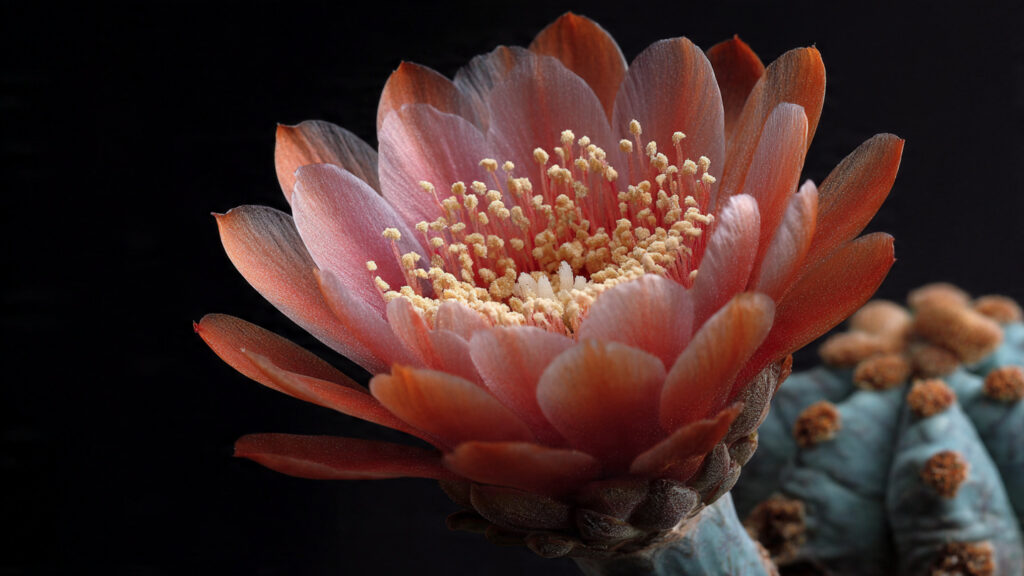
Few events in the plant world spark as much fascination as the rare “century bloom.” Stories of a cactus that flowers only once every hundred years have captured gardeners’ imaginations for generations. But what truly makes a plant bloom and seed just once in its lifetime? Is it really a century-long wait — or is there more to the story?
While the legend often surrounds desert cacti, the plant most commonly associated with the “century bloom” is actually Agave americana — a succulent native to Mexico and the southwestern United States. Though frequently mistaken for a cactus, it belongs to the agave family. The myth, however, has roots in a real and fascinating biological strategy known as monocarpy.
Let’s explore what drives this dramatic once-in-a-lifetime bloom and what makes it so extraordinary.
The Myth of the Hundred-Year Bloom
The name “century plant” suggests that the plant blooms only once every 100 years. In reality, most specimens flower after 10 to 30 years, depending on climate and growing conditions.
Still, that long vegetative phase makes the bloom feel legendary. For decades, the plant grows quietly — building energy, strengthening roots, and forming a massive rosette of thick, pointed leaves. Then, almost suddenly, it sends up a towering flower stalk that can reach 20 to 30 feet tall.
Within weeks, what once looked like a grounded desert plant transforms into a vertical spectacle.
But what makes it bloom just once?
Understanding Monocarpy: The Biological Strategy
The key lies in monocarpy — a life strategy where a plant flowers, sets seed, and then dies.
Unlike perennials that bloom year after year, monocarpic plants invest all their stored energy into one grand reproductive effort. After flowering and producing seeds, the main plant declines and eventually perishes.
This strategy might seem extreme, but it serves an evolutionary purpose.
By accumulating energy over many years, the plant ensures that when it finally flowers, it produces:
- A massive, highly visible bloom
- Thousands of flowers
- Abundant seeds
This increases the likelihood of successful reproduction, especially in harsh desert environments.
Energy Storage: The Long Preparation
For decades, the plant focuses on energy storage rather than flowering.
Its thick leaves act as reservoirs, storing water and nutrients. Its roots anchor deeply into arid soil, absorbing limited moisture efficiently.
Because desert environments can be unpredictable, waiting to flower allows the plant to:
➡️ How to Grow Malabar Spinach from Cuttings for Fast, Easy Greens
➡️ How to Grow Super Delicious Cabbage at Home Without a Garden
➡️ How to Grow Bean Sprouts at Home in Plastic Bottles Easily (Step‑by‑Step Guide)
➡️ Why is Your Lemon Tree Blooming in the Heart of Winter?
➡️ Why Should Your Garden Have a Dedicated Pollinator Highway?
➡️ Why Do Your Fruit Trees Need a Winter Wash to Thrive in Spring?
➡️ How Can Rice Water Transform Your Fruits into Sweeter Delights?
➡️ Jumpstart Your Winter Garden: Seed Starting Under Lights
- Survive drought cycles
- Avoid poor flowering years
- Maximize seed output when conditions align
When environmental cues signal favorable conditions — often linked to maturity and sufficient energy reserves — the plant triggers its dramatic bloom.
The Spectacular Flower Spike
The flowering event is nothing short of astonishing.
The central stalk emerges rapidly, sometimes growing several inches per day. Branches form along the stalk, each carrying clusters of tubular flowers.
These blooms attract pollinators such as bats, birds, and insects. In its native habitat, bats are particularly important pollinators, visiting at night to feed on nectar.
The height of the stalk improves visibility across vast landscapes, increasing pollination success.
Why Die After Blooming?
After flowering, the plant’s energy reserves are depleted. Since it invests nearly everything into seed production, little remains for survival.
The dying process may take months, but the plant gradually declines.
However, the story doesn’t always end there.
Many agave species produce “pups” — small offshoots at the base — during their lifetime. These clones continue growing even after the main plant dies.
In this way, the genetic line survives both through seeds and vegetative reproduction.
Environmental Triggers and Timing
The bloom doesn’t follow a strict calendar. Instead, it depends on:
- Plant maturity
- Stored energy levels
- Climate conditions
- Day length and temperature
Warmer climates often accelerate maturity. In cooler regions, blooming may take longer.
Stress factors can also influence timing. In some cases, environmental stress pushes the plant toward reproduction sooner than expected.
Misidentification and Cactus Confusion
Many people believe the century bloom refers to a cactus. While certain cacti also exhibit rare or infrequent flowering, the iconic “century plant” is an agave, not a cactus.
True cacti belong to the family Cactaceae, whereas agaves belong to Asparagaceae. Despite similar desert adaptations — such as thick leaves and drought tolerance — they are botanically distinct.
That said, some true cacti can also bloom dramatically after long periods of vegetative growth, especially in challenging environments.
The Ecological Importance of Rare Bloomers
In desert ecosystems, synchronized blooming events can be vital.
When multiple plants bloom around the same time:
- Pollinators receive abundant nectar sources.
- Cross-pollination increases genetic diversity.
- Seed dispersal opportunities expand.
This strategy strengthens the ecosystem as a whole.
The towering flower spikes also provide temporary habitat and food for wildlife.
The Emotional and Cultural Impact
Because blooming is rare and often unpredictable, it becomes a celebrated event.
Communities gather to witness it. Gardens announce it. Social media fills with images of towering stalks.
The once-in-a-lifetime bloom symbolizes:
- Patience
- Resilience
- The power of preparation
- Dramatic transformation
For gardeners, it’s a reminder that nature operates on its own timeline.
Can You Encourage It to Bloom?
Unlike annual flowers that respond to fertilizer and pruning, monocarpic plants bloom according to internal maturity signals.
However, healthy growing conditions can support proper development:
- Well-draining soil
- Full sun exposure
- Minimal overwatering
- Avoiding root disturbance
Still, the bloom happens when the plant is ready — not when the gardener decides.
What Happens After Seeding?
Once seeds mature, they disperse naturally through wind and gravity.
In cultivation, gardeners may collect seeds for propagation.
After the main plant dies:
- Remove the spent stalk.
- Allow pups to grow.
- Replant offsets if desired.
The cycle continues through new generations.
Other Monocarpic Plants
Agave is not alone in this strategy.
Other monocarpic plants include:
- Certain bamboo species
- Some bromeliads
- Certain palm species
Each follows a similar life pattern: extended growth followed by one massive reproductive event.
Why the “Century” Myth Endures
The dramatic nature of the bloom — combined with its long waiting period — makes it feel mythical.
Because many people never witness it personally, stories exaggerate the timeline.
Even if it blooms after 20 years instead of 100, the rarity still feels monumental compared to typical garden plants that flower annually.
Lessons from the Once-in-a-Lifetime Bloom
The rare cactus or agave that blooms only once teaches powerful lessons:
- Growth takes time.
- Preparation matters.
- Energy invested wisely leads to dramatic results.
- Even endings create new beginnings.
The plant’s death is not failure — it is fulfillment of its biological mission.
Final Thoughts
What makes this rare cactus — more accurately, the century plant Agave americana — bloom and seed just once is a remarkable evolutionary strategy rooted in monocarpy. Years of energy storage culminate in one breathtaking flowering event designed to maximize reproductive success in challenging environments.
Though the “once every century” label is more legend than literal truth, the bloom remains extraordinary. Its towering stalk, abundant flowers, and dramatic life cycle remind us that nature often favors patience and bold, singular moments of transformation.