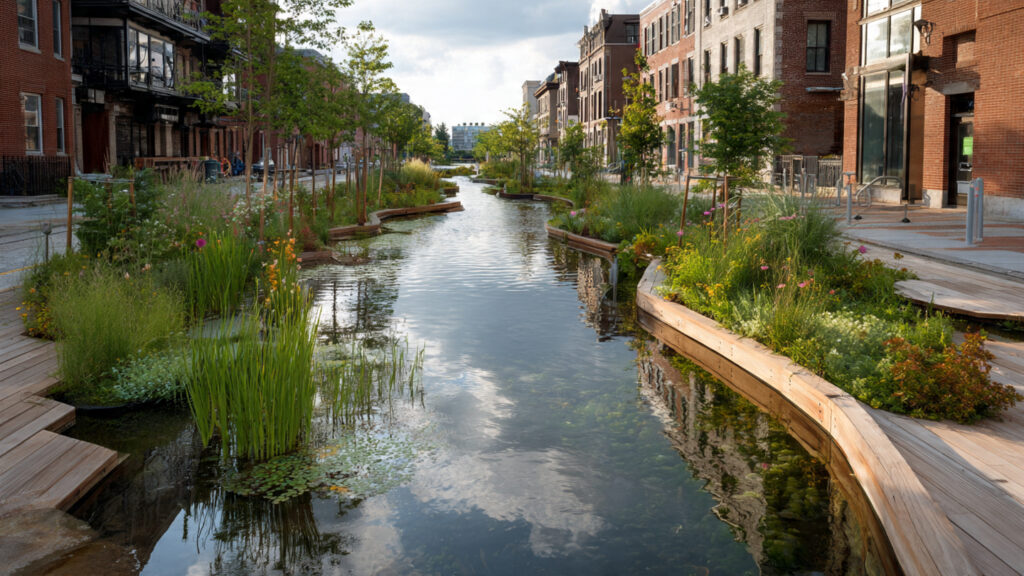
Across the world’s flood-prone cities, a quiet green revolution is taking place. Streets once overwhelmed by stormwater are now lined with shallow, plant-filled depressions. Parking lots and sidewalks are bordered by native grasses and flowering shrubs. What may look like simple landscaping is actually powerful infrastructure.
More than eight million rain gardens have been built in vulnerable urban areas—and together, they are transforming how cities manage water.
These living systems absorb runoff, reduce flooding, prevent costly damage, and restore ecological balance. They represent a shift from gray infrastructure—like pipes and concrete—to green infrastructure rooted in natural processes.
Let’s explore how rain gardens work, why they matter, and how millions of them are quietly protecting cities every day.
What Is a Rain Garden?
A rain garden is a shallow, planted basin designed to collect and absorb stormwater runoff from roofs, streets, driveways, and sidewalks.
Instead of sending rainwater straight into storm drains, rain gardens allow it to:
- Slow down
- Soak into the ground
- Filter through soil
- Recharge groundwater
- Support plant life
Unlike decorative flower beds, rain gardens are carefully engineered with:
- Deep-rooted native plants
- Specially designed soil mixtures
- Proper drainage layers
- Strategic placement near runoff sources
They function as miniature wetlands embedded within city landscapes.
Why Flood-Prone Cities Need Rain Gardens
Urban flooding has become more frequent due to:
- Expanding concrete surfaces
- Aging stormwater systems
- Increased rainfall intensity
- Climate variability
Traditional drainage systems often struggle to handle heavy downpours. When stormwater overwhelms pipes, streets flood and basements fill with water.
Rain gardens reduce pressure on these systems by capturing water at the source.
Each rain garden may seem small—but multiplied by millions, the impact is enormous.
How Rain Gardens Prevent Flood Damage
Rain gardens prevent flooding in several ways:
1. Absorption
Their engineered soil allows rapid infiltration. Instead of pooling on streets, water enters the ground.
2. Temporary Storage
The basin holds water temporarily during storms, releasing it slowly into surrounding soil.
➡️ How to Grow Malabar Spinach from Cuttings for Fast, Easy Greens
➡️ How to Grow Super Delicious Cabbage at Home Without a Garden
➡️ How to Grow Bean Sprouts at Home in Plastic Bottles Easily (Step‑by‑Step Guide)
➡️ Why is Your Lemon Tree Blooming in the Heart of Winter?
➡️ Why Should Your Garden Have a Dedicated Pollinator Highway?
➡️ Why Do Your Fruit Trees Need a Winter Wash to Thrive in Spring?
➡️ How Can Rice Water Transform Your Fruits into Sweeter Delights?
➡️ Jumpstart Your Winter Garden: Seed Starting Under Lights
3. Reduced Runoff Volume
By intercepting rain where it falls, less water enters storm drains.
4. Peak Flow Reduction
Rain gardens flatten the spike in runoff that typically occurs during intense storms.
When thousands of rain gardens are distributed across neighborhoods, they collectively prevent billions of gallons of water from overwhelming drainage systems.
A Shift Toward Green Infrastructure
Cities are increasingly embracing green infrastructure—solutions that work with nature rather than against it.
Rain gardens are part of a broader movement that includes:
- Green roofs
- Permeable pavements
- Bioswales
- Urban tree planting
- Restored wetlands
This approach recognizes that natural systems are effective water managers.
Instead of expanding expensive underground pipes, cities are investing in plant-based solutions that provide multiple benefits.
Restoring Urban Ecosystems
Beyond flood prevention, rain gardens revive ecological functions long lost in paved environments.
They support:
- Pollinators
- Native birds
- Beneficial insects
- Soil microorganisms
Deep-rooted native plants improve soil structure and increase biodiversity. Over time, formerly sterile spaces become vibrant microhabitats.
Even small rain gardens contribute to ecological corridors, connecting fragmented urban green spaces.
Filtering Pollution
Stormwater runoff often carries pollutants such as:
- Oil and grease
- Heavy metals
- Fertilizer residues
- Pesticides
- Road salt
When rainwater flows across pavement, it picks up contaminants before entering waterways.
Rain gardens act as natural filters. As water moves through soil and plant roots, pollutants are trapped, broken down, or absorbed.
This improves water quality in rivers, lakes, and coastal ecosystems.
Economic Benefits for Cities
Flood damage is costly. Repairs to roads, homes, and infrastructure can reach millions of dollars per storm event.
Rain gardens reduce:
- Basement flooding
- Road erosion
- Sewer overflows
- Infrastructure strain
They are often less expensive to install than major pipe upgrades and require minimal long-term maintenance when properly designed.
In many cities, homeowners receive incentives or rebates to install rain gardens on private property—creating a distributed, community-wide defense system.
A Scalable Solution
The beauty of rain gardens lies in their scalability.
They can be:
- Installed in front yards
- Integrated into school campuses
- Planted along city streets
- Built in parking lot islands
- Designed into public parks
Each individual garden may capture hundreds to thousands of gallons per storm. Multiply that by millions, and the cumulative absorption becomes transformative.
Climate Resilience in Action
Climate change has intensified rainfall patterns in many regions. Heavier storms increase the risk of flash flooding.
Rain gardens provide adaptive capacity.
Unlike rigid infrastructure, they:
- Adjust to changing rainfall
- Improve soil health over time
- Increase infiltration as roots mature
- Enhance local cooling through evapotranspiration
By restoring natural water cycles, rain gardens help cities adapt to future climate extremes.
Community Engagement and Education
Rain gardens also foster environmental awareness.
Community-led installation projects teach residents about:
- Watershed protection
- Native plant selection
- Soil health
- Sustainable landscaping
When residents participate in building rain gardens, they gain a deeper understanding of how water moves through their neighborhoods.
This cultural shift—from viewing stormwater as waste to recognizing it as a resource—is critical for long-term sustainability.
Design Matters
Effective rain gardens require thoughtful design.
Key elements include:
- Proper sizing relative to drainage area
- Soil engineered for fast infiltration
- Native plants with deep roots
- Overflow outlets for extreme storms
- Placement away from building foundations
Poorly designed systems may fail to drain properly or become compacted. But well-designed rain gardens can function effectively for decades.
The Power of Native Plants
Native species are essential for rain garden success.
They typically:
- Tolerate both flooding and drought
- Develop deep root systems
- Require minimal fertilizer
- Support local wildlife
Deep roots create channels in the soil, enhancing infiltration and preventing compaction.
Over time, these roots can extend several feet underground—dramatically improving water absorption capacity.
Small Gardens, Big Impact
One rain garden may not stop a citywide flood. But distributed solutions add up.
Imagine:
- Thousands of rooftops directing water into garden basins
- Streets lined with planted depressions
- Schools capturing runoff from large surfaces
- Businesses integrating bioswales into parking areas
Together, these systems form a decentralized network that works continuously, quietly, and naturally.
This is resilience built at the neighborhood level.
Challenges and Future Expansion
Despite their success, rain gardens face challenges:
- Limited public awareness
- Maintenance misconceptions
- Space constraints in dense urban areas
- Funding limitations
However, as cities increasingly prioritize sustainability, rain garden programs continue to expand.
Urban planners now incorporate them into zoning regulations and new developments, ensuring that stormwater management is integrated from the start.
A Model for Sustainable Cities
Rain gardens represent more than landscaping—they symbolize a new philosophy.
Instead of fighting water with concrete barriers, cities are inviting it back into the landscape.
By mimicking natural hydrology, rain gardens:
- Absorb excess rainfall
- Protect infrastructure
- Enhance biodiversity
- Improve water quality
- Build climate resilience
Over eight million rain gardens stand as proof that small, nature-based solutions can collectively reshape urban environments.
Final Thoughts
Flood-prone cities once relied solely on pipes and drains to move water away as quickly as possible. Today, millions of rain gardens are proving there is a better way.
By slowing, absorbing, and filtering stormwater, these living systems prevent damage while restoring ecological balance.
They show that resilience doesn’t always require massive concrete projects. Sometimes, it begins with soil, plants, and thoughtful design.
In the quiet basins scattered across neighborhoods, rainwater sinks into the earth instead of flooding streets. Ecosystems reawaken. Communities adapt.