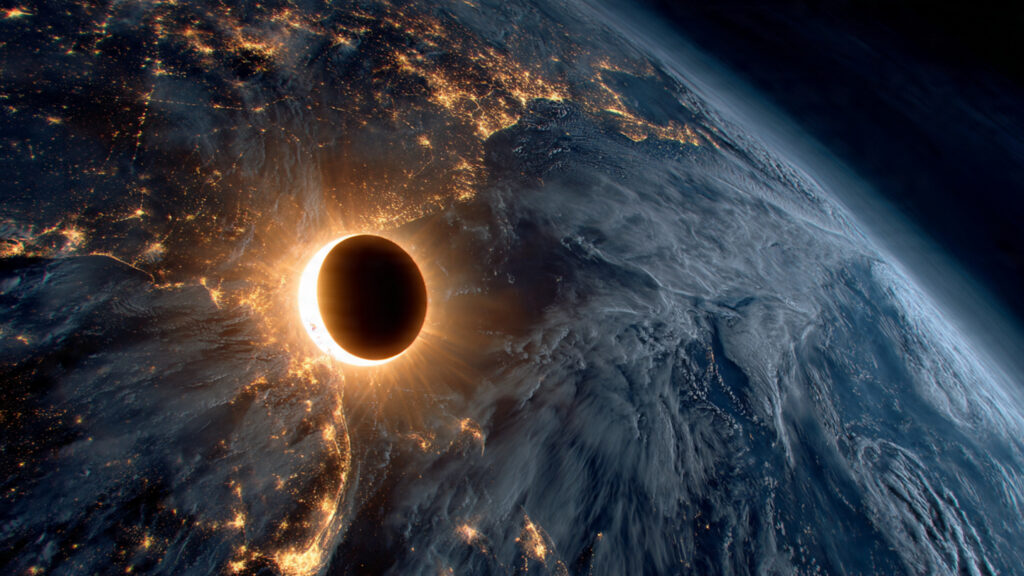
Solar eclipses have captivated humanity for centuries, inspiring awe, mythology, and scientific discovery. Among these celestial events, the longest solar eclipse of the century promises to be a once-in-a-lifetime spectacle. With careful planning, you can witness this cosmic wonder safely and fully understand how minutes of darkness and visibility maps determine where and when to observe it. In this guide, we explore the official date of the eclipse, its duration, and how to interpret visibility maps for optimal viewing.
1. What is a Solar Eclipse?
A solar eclipse occurs when the Moon passes directly between the Earth and the Sun, casting a shadow on parts of the Earth and temporarily blocking sunlight. Solar eclipses can be classified into three main types:
- Total solar eclipse: The Moon completely covers the Sun, revealing the Sun’s corona.
- Partial solar eclipse: Only part of the Sun is obscured by the Moon.
- Annular solar eclipse: The Moon covers the Sun’s center, leaving a ring-like appearance called the “ring of fire.”
The longest solar eclipse of the century is a total solar eclipse, which provides the most dramatic viewing experience with several minutes of total darkness.
2. Official Date of the Longest Solar Eclipse
Mark your calendars: the official date for this spectacular solar eclipse is August 12, 2026. On this day, the Moon will align perfectly with the Sun, creating a total solar eclipse visible along a narrow path on Earth.
Observers in certain regions will experience totality, where the Sun is completely obscured, while nearby areas will witness a partial eclipse. The eclipse’s path spans several countries, making it one of the most accessible eclipses for enthusiasts around the world.
3. Understanding the Minutes of Darkness
The term “minutes of darkness” refers to the duration of totality—the period during which the Sun is completely blocked by the Moon. Unlike a partial eclipse, where sunlight persists, totality provides a brief but striking moment of near-night conditions during the day.
For the August 12, 2026 eclipse, the maximum totality will last around 6 minutes and 6 seconds, making it the longest total solar eclipse of the 21st century. This extended duration allows observers to:
- Experience the rare phenomenon of daytime darkness
- Observe the Sun’s corona with clarity
- Witness the sky’s changing colors and the appearance of stars near the horizon
The length of totality varies depending on your location within the eclipse path. Those at the centerline of the eclipse path will enjoy the full 6 minutes, while areas near the edges will experience shorter periods of darkness.
4. How Visibility Maps Work
Visibility maps are essential tools for planning eclipse viewing. These maps show the path of totality, where a total eclipse is visible, and surrounding areas where a partial eclipse can be seen. Understanding these maps helps you determine the best location for observing the phenomenon.
Key elements of a solar eclipse visibility map:
- Path of totality: The narrow band, usually 100–200 kilometers wide, where the Moon completely covers the Sun.
- Partial eclipse zones: Regions outside the totality path that experience a partial eclipse, with varying percentages of Sun coverage.
- Maximum totality points: Locations along the centerline where the eclipse lasts the longest.
- Time annotations: Indicate when the eclipse begins, reaches totality, and ends in different locations.
By studying visibility maps, you can plan your trip to the optimal observation point, ensuring you experience the longest minutes of darkness possible.
5. Preparing to Watch Safely
Safety is paramount when observing a solar eclipse. Looking directly at the Sun without protection can cause permanent eye damage.
Safety guidelines:
- Use certified eclipse glasses: ISO-compliant glasses filter harmful rays safely.
- Pinhole projectors: Project the Sun’s image onto a screen without direct viewing.
- Solar filters for telescopes or cameras: Ensure any optical device has the proper solar filter.
- Never use sunglasses or improvised filters: These are not safe for eclipse viewing.
With proper precautions, you can enjoy the eclipse safely and witness the unique celestial event in its full glory.
6. Tips for Maximizing Your Eclipse Experience
To make the most of the longest solar eclipse of the century, consider these practical tips:
➡️ How to Grow Malabar Spinach from Cuttings for Fast, Easy Greens
➡️ How to Grow Super Delicious Cabbage at Home Without a Garden
➡️ How to Grow Bean Sprouts at Home in Plastic Bottles Easily (Step‑by‑Step Guide)
➡️ Why is Your Lemon Tree Blooming in the Heart of Winter?
➡️ Why Should Your Garden Have a Dedicated Pollinator Highway?
➡️ Why Do Your Fruit Trees Need a Winter Wash to Thrive in Spring?
➡️ How Can Rice Water Transform Your Fruits into Sweeter Delights?
➡️ Jumpstart Your Winter Garden: Seed Starting Under Lights
- Arrive early: Eclipse paths can be crowded, so set up well before totality.
- Check weather forecasts: Clouds can obscure your view, so travel to areas with clear skies if possible.
- Bring binoculars with solar filters: Enhance your view of the Sun’s corona and surface features.
- Record the event carefully: Use cameras only with proper solar filters to capture the eclipse safely.
- Observe nature: Totality affects animals and light conditions, creating unusual behaviors and twilight-like effects.
These tips enhance both safety and enjoyment, ensuring a memorable viewing experience.
7. Understanding Why Totality is Rare
Total solar eclipses are rare at any single location because the Moon’s shadow is small compared to the Earth. While the Earth experiences solar eclipses about twice a year, the path of totality is narrow, often only a few hundred kilometers wide.
Factors influencing totality duration include:
- Distance of the Moon from Earth: A closer Moon results in a longer total eclipse.
- Earth’s rotation: Affects the speed at which the shadow moves across the surface.
- Latitude and geographic location: Central locations along the eclipse path experience longer durations than edge areas.
This rarity adds to the excitement and value of witnessing the longest solar eclipse of the century in totality.
8. Locations for Best Viewing
The path of totality for the 2026 eclipse spans several regions, offering multiple viewing options. While exact locations may vary based on local weather, popular regions include:
- Parts of the Arctic and Greenland
- Northern regions of Iceland and Spain
- Portions of North Africa, including Morocco
Consulting detailed visibility maps allows enthusiasts to select the best location for maximum duration and clear skies. Planning travel in advance is recommended, as accommodations and transportation can be in high demand.
9. Scientific Significance
Solar eclipses provide unique opportunities for scientific study. Totality allows astronomers to observe the Sun’s corona, investigate solar flares, and test astrophysical theories. The longest eclipse of the century offers an extended period for researchers to:
- Measure solar radiation and magnetic fields
- Study the behavior of Earth’s atmosphere under temporary darkness
- Educate the public about astronomy and celestial mechanics
Participating in or observing scientific events during the eclipse can add a learning dimension to the awe-inspiring experience.
10. Cultural and Historical Impact
Throughout history, solar eclipses have held cultural and spiritual significance. Many civilizations interpreted eclipses as omens or messages from the gods. Today, eclipses continue to inspire wonder, festivals, and gatherings worldwide.
The August 12, 2026 eclipse will be celebrated by astronomy enthusiasts, educational institutions, and communities along the path of totality. Witnessing totality provides a sense of connection to the cosmos and a shared human experience of celestial marvel.
11. Conclusion
The longest solar eclipse of the century is more than just a fleeting shadow across the Sun—it’s an extraordinary opportunity to witness nature’s precision and beauty. With an official date set for August 12, 2026, maximum totality of over 6 minutes, and well-mapped paths of visibility, this event is poised to leave a lasting impression on anyone lucky enough to observe it.
By studying visibility maps, preparing with safe viewing methods, and selecting an optimal location, you can experience this celestial spectacle fully and safely. From the dramatic minutes of darkness to the rare glimpse of the Sun’s corona, this eclipse represents both scientific intrigue and timeless wonder.
Whether you are an avid astronomer, a student, or simply someone seeking a once-in-a-lifetime experience, the 2026 solar eclipse invites you to look up, marvel, and be part of a global celebration of the cosmos. Make plans now, and don’t miss your chance to witness the longest solar eclipse of the century.