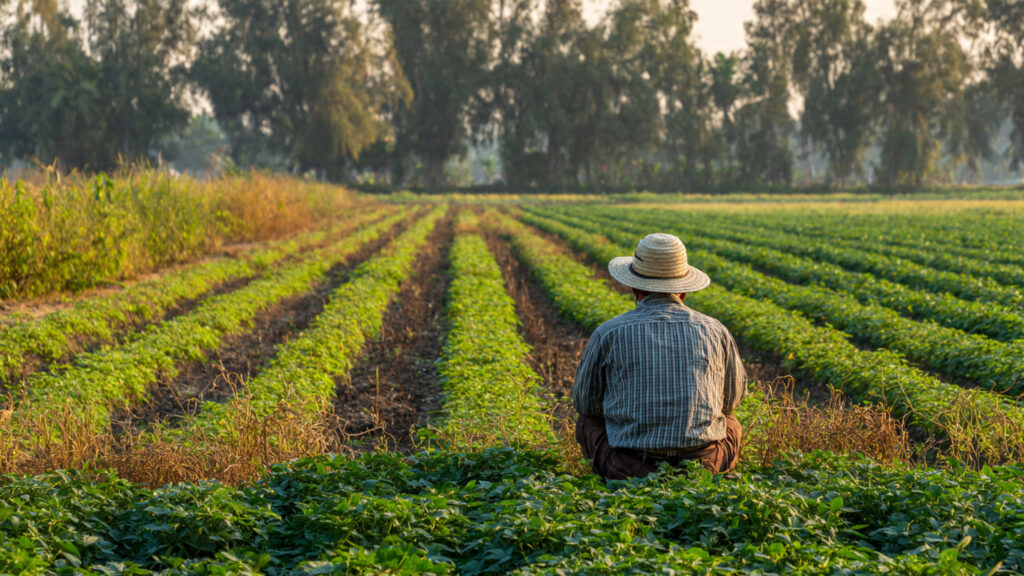
Agriculture has long been the backbone of human civilization, providing food, income, and livelihoods for billions. Yet, over time, intensive monoculture—the practice of growing the same crop year after year—has taken a heavy toll on farmland worldwide. Soil degradation, nutrient depletion, pest buildup, and declining yields have become major challenges for farmers everywhere. But a promising solution is emerging: crop diversification. By growing a variety of crops together or in rotation, degraded farmland can regain its fertility, resilience, and productivity, transforming struggling fields into thriving agricultural ecosystems.
Understanding the Problem: Degraded Farmland
Soil degradation is a global concern. According to the Food and Agriculture Organization (FAO), nearly a third of the world’s arable land is moderately or severely degraded due to erosion, salinization, nutrient loss, and chemical contamination. Monoculture farming, heavy reliance on synthetic fertilizers, and overuse of chemical pesticides have accelerated this decline.
The consequences are significant:
- Reduced Soil Fertility – Continuous planting of a single crop depletes specific nutrients, leaving the soil impoverished.
- Increased Pest and Disease Pressure – Monocultures provide pests with a consistent food source, often leading to outbreaks.
- Erosion and Water Loss – Bare soil between crops becomes vulnerable to wind and water erosion, reducing moisture retention.
- Lower Yields and Economic Vulnerability – Farmers face declining productivity and financial risk when a single crop fails.
Clearly, a new approach is needed—one that restores soil health while supporting sustainable agriculture and food security.
The Power of Crop Diversification
Crop diversification is the practice of cultivating multiple types of crops in the same area, either simultaneously (intercropping) or in succession (crop rotation). It is a centuries-old technique that has been rediscovered as a key strategy to restore degraded land. Diversified farming systems create more complex ecosystems that benefit both soil and plants.
How Diversification Restores Fertility
Different crops have varying nutrient requirements and root structures. For instance:
- Legumes (beans, lentils, peas) – Fix atmospheric nitrogen into the soil, enriching fertility naturally.
- Deep-rooted plants (sunflowers, carrots) – Break up compacted soil layers and bring nutrients from deeper soil levels to the surface.
- Leafy greens and cereals – Use nutrients differently, preventing depletion of any single element.
By rotating or intercropping these plants, farmers reduce the risk of nutrient exhaustion. Organic matter from crop residues also contributes to humus formation, enhancing soil structure, water retention, and microbial activity.
Enhancing Resilience
Crop diversification is not just about fertility—it also strengthens farmland resilience against environmental and economic shocks:
- Pest and Disease Management – Mixed crops disrupt pest life cycles, reducing infestations without heavy reliance on pesticides.
- Climate Adaptation – Different crops respond differently to weather extremes. A diversified field is more likely to survive droughts, floods, or unexpected temperature fluctuations.
- Economic Stability – Farmers with multiple crops have varied income streams, making them less vulnerable to market price volatility for a single crop.
In essence, diversification creates a more balanced and resilient farming ecosystem, benefiting both farmers and the environment.
Practical Approaches to Crop Diversification
Farmers worldwide have successfully applied various diversification techniques to rehabilitate degraded land. Here are some proven methods:
1. Crop Rotation
Crop rotation involves planting different crops in a planned sequence over several seasons. A typical rotation might alternate nitrogen-fixing legumes with cereals like maize or wheat. Benefits include:
- Replenished soil nutrients
- Reduced pest and disease cycles
- Improved soil structure and organic content
2. Intercropping
Intercropping involves growing two or more crops simultaneously in the same field. For example, planting maize alongside beans or millet with cowpeas. This approach:
- Maximizes land use
- Enhances nutrient cycling
- Creates a natural barrier to pests
3. Cover Cropping
Cover crops like clover, vetch, or rye are planted between main crop cycles. They protect the soil from erosion, suppress weeds, and add organic matter. When incorporated into the soil, they boost fertility and microbial diversity.
4. Agroforestry
Combining trees with crops or livestock can dramatically improve degraded land. Trees provide shade, prevent wind erosion, and contribute leaf litter that enriches soil. Certain species also fix nitrogen, further enhancing fertility.
5. Polyculture Systems
Polyculture is a diverse planting system in which multiple crops coexist in a single plot. This mimics natural ecosystems, promotes biodiversity, and often produces higher total yields than monocultures.
➡️ How to Grow Malabar Spinach from Cuttings for Fast, Easy Greens
➡️ How to Grow Super Delicious Cabbage at Home Without a Garden
➡️ How to Grow Bean Sprouts at Home in Plastic Bottles Easily (Step‑by‑Step Guide)
➡️ Why is Your Lemon Tree Blooming in the Heart of Winter?
➡️ Why Should Your Garden Have a Dedicated Pollinator Highway?
➡️ Why Do Your Fruit Trees Need a Winter Wash to Thrive in Spring?
➡️ How Can Rice Water Transform Your Fruits into Sweeter Delights?
➡️ Jumpstart Your Winter Garden: Seed Starting Under Lights
Success Stories from Around the World
Farmers across continents have demonstrated the transformative impact of crop diversification:
- India – In semi-arid regions, farmers rotated legumes with cereals on degraded soils. Within a few seasons, soil nitrogen levels improved, reducing fertilizer dependency and increasing yields.
- Africa – Smallholder farmers in Kenya and Uganda practiced intercropping maize with climbing beans and groundnuts. The system not only restored soil fertility but also provided additional food security and income.
- Latin America – Agroforestry programs in Brazil’s Cerrado region helped rehabilitate degraded farmland by combining native trees with cash crops like cacao and coffee, increasing resilience against droughts and improving long-term soil health.
These examples highlight that regardless of geography, diversifying crops can revitalize farmland and empower farmers.
Additional Benefits Beyond Soil Fertility
While restoring fertility is a primary goal, crop diversification offers several other advantages:
- Enhanced Biodiversity – A diverse crop system attracts beneficial insects, birds, and pollinators.
- Reduced Chemical Dependence – Healthier soils and pest management through natural means reduce the need for synthetic inputs.
- Carbon Sequestration – Diverse plants with extensive root systems capture more carbon, helping mitigate climate change.
- Cultural and Dietary Benefits – Multiple crops improve dietary diversity for communities and open new markets for farmers.
Tips for Farmers and Gardeners
To successfully diversify crops and restore degraded land:
- Assess Soil Health – Conduct soil tests to understand nutrient deficiencies and structure.
- Plan Rotation Cycles – Strategically plan which crops follow each other to maximize fertility benefits.
- Use Local Varieties – Indigenous crops are often more resilient and require fewer external inputs.
- Integrate Organic Matter – Compost, mulch, and crop residues enrich the soil naturally.
- Monitor and Adjust – Observe plant growth and soil condition regularly and adapt cropping strategies accordingly.
With careful planning and consistent practice, even severely degraded farmland can be transformed into productive, sustainable land.
The Broader Impact
Crop diversification does more than restore farmland—it contributes to global food security and environmental sustainability. Healthy soils produce higher yields, reduce the need for chemical inputs, and mitigate climate risks. Economically, farmers become more resilient, gaining stable incomes and reducing reliance on external fertilizers and pesticides. Ecologically, biodiversity flourishes, making ecosystems stronger and more adaptable.
Conclusion
Degraded farmland is not a lost cause. Through thoughtful crop diversification—using rotation, intercropping, cover crops, and agroforestry—farmers can restore fertility, enhance resilience, and boost productivity. This ancient agricultural wisdom, backed by modern scientific understanding, provides a sustainable path forward for communities facing soil degradation and environmental challenges.
By diversifying crops, we not only revive the land but also cultivate resilience, ecological balance, and long-term prosperity. The journey from depleted fields to flourishing farms is proof that with strategy, care, and biodiversity, agriculture can be both productive and sustainable, securing the food systems of tomorrow.