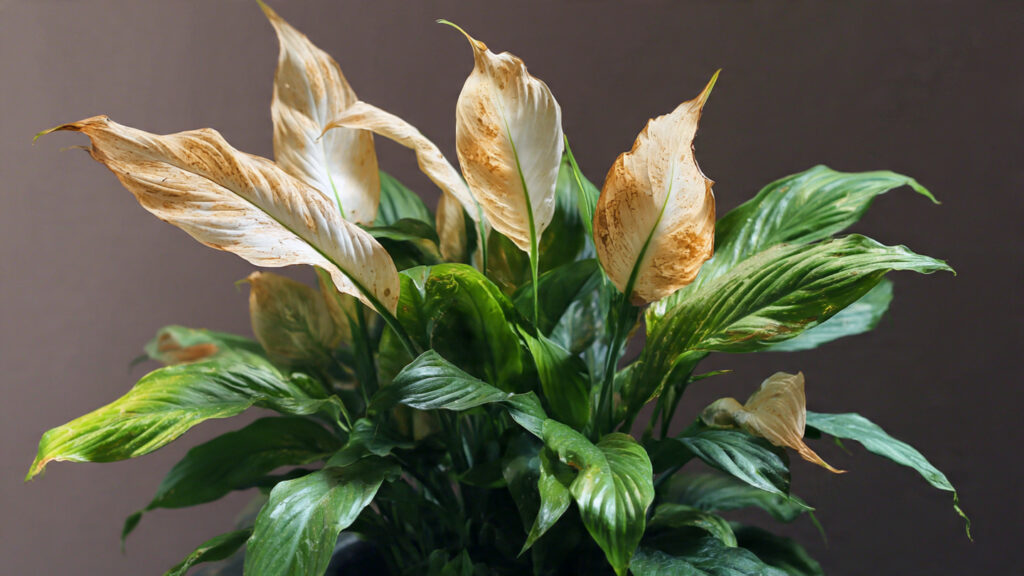
The peace lily (Spathiphyllum spp.) is a beloved houseplant, celebrated for its elegant white blooms, glossy green leaves, and ability to thrive in low-light indoor environments. Its soothing presence brightens homes and offices, and its air-purifying qualities make it a favorite among plant enthusiasts. However, one of the most common frustrations for peace lily owners is browning leaves. When the vibrant green foliage starts turning brown, it can indicate a problem with the plant’s care or environment. Understanding the causes is crucial to restoring your peace lily’s health and keeping it looking lush and vibrant.
In this guide, we explore nine common reasons why peace lily leaves turn brown and provide practical solutions for each issue.
1. Overwatering
Peace lilies are sensitive to overwatering, which can cause root rot and brown leaf tips.
Signs of Overwatering
- Yellowing leaves, especially near the base.
- Brown leaf tips combined with mushy stems.
- Foul or musty odor from the soil.
How to Fix It
- Check the soil moisture before watering; the top inch should be dry.
- Ensure your pot has drainage holes to prevent water accumulation.
- If root rot is present, remove the plant from the pot, trim damaged roots, and repot in fresh, well-draining soil.
Tip: Use a moisture meter or stick your finger into the soil to gauge water levels before adding more.
2. Underwatering
Conversely, underwatering can also lead to browning leaves. Peace lilies store water in their leaves, but prolonged dryness stresses the plant.
Signs of Underwatering
- Leaves droop or curl.
- Leaf tips or edges turn crispy and brown.
- Growth slows, and flowers may fade prematurely.
How to Fix It
- Water the plant thoroughly until water drains from the bottom.
- Maintain a consistent watering schedule, checking soil weekly.
- Mist leaves occasionally to maintain humidity in dry indoor environments.
3. Low Humidity
Peace lilies are tropical plants that thrive in humid environments. Indoor heating or air conditioning can reduce humidity, causing leaf browning.
Signs of Low Humidity
- Browning along leaf edges rather than tips.
- Leaves look dry or papery.
- Stunted growth in new shoots.
How to Fix It
- Increase humidity with a humidifier near the plant.
- Place the pot on a tray of water with pebbles to create localized humidity.
- Group multiple plants together to raise humidity levels naturally.
Tip: Peace lilies prefer humidity levels above 50% for optimal growth.
4. Too Much Direct Sunlight
Although peace lilies tolerate low light, exposure to direct sunlight can scorch their leaves, turning them brown or yellow.
Signs of Sun Damage
- Leaf edges appear burnt or crispy.
- Irregular brown patches on the surface of leaves.
- Wilting occurs even when soil is moist.
How to Fix It
- Move the plant to indirect or filtered light.
- East-facing windows are ideal; south or west windows may need sheer curtains.
- Rotate the plant periodically to ensure even light distribution.
5. Nutrient Deficiencies
Lack of essential nutrients can cause leaf browning and poor overall plant health. Peace lilies primarily need nitrogen, potassium, and trace minerals.
Signs of Nutrient Deficiency
- Older leaves turn yellow before browning at the tips.
- Stunted growth and poor flowering.
- Leaves appear dull or lack vibrancy.
How to Fix It
- Fertilize with a balanced, water-soluble houseplant fertilizer every 6–8 weeks during the growing season.
- Avoid over-fertilizing, which can burn roots and exacerbate leaf browning.
- Consider adding organic compost or diluted fish emulsion for gentle nutrition.
6. Salt Build-Up in Soil
Tap water or excessive fertilizer can leave salts in the soil, leading to brown leaf tips. Over time, these salts accumulate and damage roots.
Signs of Salt Build-Up
- White crust on soil surface.
- Browning or crisping of leaf tips while new growth remains healthy.
- Reduced water absorption by roots.
How to Fix It
- Flush the soil thoroughly with room-temperature water every few months to leach salts.
- Use distilled, filtered, or rainwater for routine watering to prevent accumulation.
- Avoid over-fertilizing; follow package instructions carefully.
7. Temperature Stress
Peace lilies are sensitive to temperature extremes. Both cold drafts and hot air can cause leaves to brown.
Signs of Temperature Stress
- Browning edges or tips of leaves.
- Drooping or curling leaves.
- Slowed growth or flower drop.
How to Fix It
- Keep peace lilies in temperatures between 65–85°F (18–29°C).
- Avoid placing plants near air conditioners, heaters, or drafty windows.
- Maintain stable indoor conditions for optimal growth.
8. Pests and Diseases
While relatively hardy, peace lilies can be affected by pests and fungal diseases that cause brown spots or edges.
Common Pests
- Spider mites: Tiny webs and speckled leaf surfaces.
- Aphids: Sticky residue and curled leaves.
- Mealybugs: Cotton-like clusters on stems and leaf joints.
Common Diseases
- Fungal leaf spots: Brown or black spots on leaves.
- Root rot: Often caused by overwatering and poor drainage.
How to Fix It
- Inspect leaves regularly for pests and remove them with a soft cloth or insecticidal soap.
- Ensure proper watering and drainage to prevent fungal infections.
- Remove affected leaves to prevent disease spread.
9. Natural Aging
Sometimes, browning leaves are simply a part of the plant’s natural life cycle. Older leaves naturally yellow and brown as they age.
Signs of Natural Aging
- Only lower or older leaves are affected.
- New leaves remain healthy and vibrant.
- The plant continues to grow and produce flowers.
How to Fix It
- Trim off brown leaves with clean, sharp scissors to improve appearance.
- Focus on caring for new growth rather than stressing over natural leaf loss.
Tips to Prevent Brown Leaves on Peace Lilies
- Water Properly: Monitor soil moisture and avoid extremes.
- Maintain Humidity: Use trays, humidifiers, or group plants together.
- Provide Indirect Light: Avoid direct sun to prevent scorching.
- Fertilize Appropriately: Use balanced fertilizers sparingly.
- Inspect Regularly: Look for pests, diseases, and root issues.
- Clean Leaves: Wipe dust off leaves to enhance photosynthesis.
- Prune Regularly: Remove dead or damaged foliage to encourage healthy growth.
By combining these preventive measures with careful monitoring, you can maintain a healthy, green, and flowering peace lily year-round.
Conclusion
Browning leaves on a peace lily are a common problem but usually a sign of environmental stress or care issues, rather than a fatal condition. The nine issues outlined above—overwatering, underwatering, low humidity, too much sunlight, nutrient deficiencies, salt build-up, temperature stress, pests and diseases, and natural aging—cover the majority of causes.
➡️ How to Grow Malabar Spinach from Cuttings for Fast, Easy Greens
➡️ How to Grow Super Delicious Cabbage at Home Without a Garden
➡️ How to Grow Bean Sprouts at Home in Plastic Bottles Easily (Step‑by‑Step Guide)
➡️ Why is Your Lemon Tree Blooming in the Heart of Winter?
➡️ Why Should Your Garden Have a Dedicated Pollinator Highway?
➡️ Why Do Your Fruit Trees Need a Winter Wash to Thrive in Spring?
➡️ How Can Rice Water Transform Your Fruits into Sweeter Delights?
➡️ Jumpstart Your Winter Garden: Seed Starting Under Lights
By identifying the underlying cause and applying the appropriate solution, you can restore your peace lily’s vibrant green foliage and elegant blooms. Paying attention to watering, lighting, humidity, nutrients, and plant placement will prevent future browning and support the overall health of your plant.
With consistent care, your peace lily can thrive for years, providing air-purifying benefits, aesthetic beauty, and a calming presence in any indoor space. Remember, a few brown leaves are not the end—they’re just a signal to adjust care practices and continue nurturing your plant.