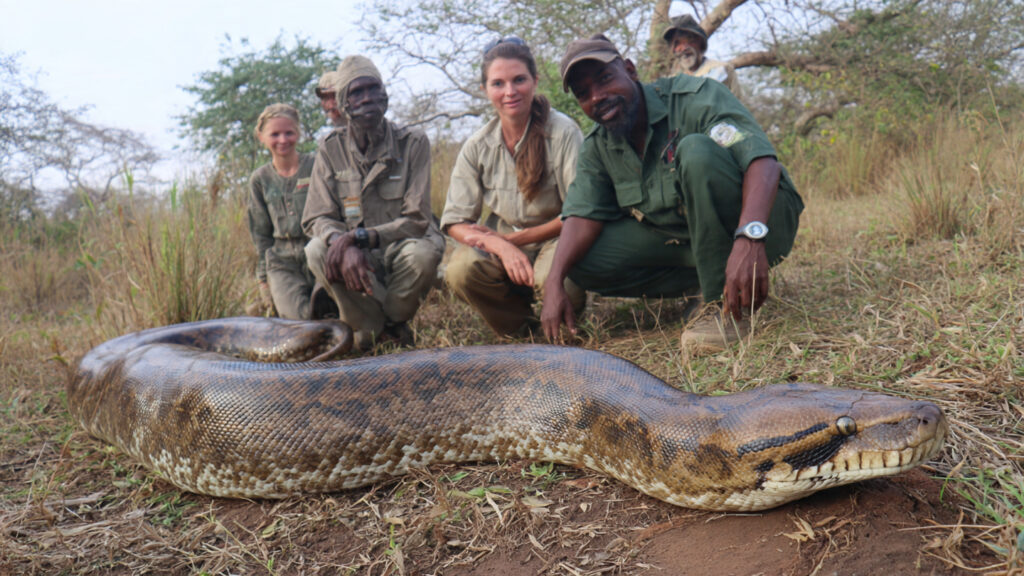
In the dense, sun‑dappled rainforests of West Africa, where biodiversity thrives and mysteries persist beneath the leafy canopy, herpetologists have confirmed one of the most extraordinary snake sightings in recent history. A certified field expedition conducted by an international team of reptile experts has documented an exceptionally large African python—a specimen that has captured the attention of scientists, conservationists, and wildlife enthusiasts around the globe.
This remarkable discovery not only adds to our understanding of Africa’s elusive wildlife but also highlights the critical importance of field research in conserving endangered habitats and the species that depend on them. In this article, we explore the journey, the science, and the broader implications of this incredible find.
The Expedition: Science Meets Adventure
The story begins months earlier, when a team of herpetologists—scientists who specialize in the study of reptiles and amphibians—embarked on a certified field expedition deep into one of West Africa’s most biologically rich regions. The area, known for its diverse ecosystems and relatively unexplored terrain, has long been suspected of harboring significant reptilian biodiversity, including large constrictor snakes.
Led by Dr. Elizabeth Mwangi, a renowned herpetologist with over two decades of experience studying African serpents, the team included specialists in wildlife tracking, drone reconnaissance, and ecological monitoring. Their mission was clear: conduct a comprehensive survey of reptile populations, with an emphasis on pythons, monitor their behavior, and collect verified scientific data to improve conservation strategies.
“We knew this region had enormous potential,” Dr. Mwangi recalled. “Local communities spoke of unusually large snakes, but scientific documentation was lacking. We were prepared for challenges—terrain, weather, logistics—but none of us expected to encounter something of this scale.”
The Moment of Discovery
After weeks of methodical surveying—setting up camera traps, tracking wildlife trails, and documenting environmental data—the team received their first indication that something unusual might be ahead. A series of aerial drone images revealed a large serpentine shape beneath the forest canopy, moving slowly along a riverbank.
Within hours, field researchers had located the snake on the ground. What they found left them stunned.
Stretching over 7 meters (nearly 23 feet) in length and with a girth that suggested immense muscular strength, this African python easily rivaled records previously held for maximum size in the species. Its powerful, beautifully patterned body coiled gracefully among the forest underbrush as researchers observed from a safe distance.
Dr. Mwangi, recording the initial sighting, described the moment as “a combination of awe and scientific exhilaration.”
“This python was clearly larger than the average African rock python we encounter in this region,” she explained. “But until now, such accounts were mostly anecdotal—stories from villagers or hunters. Here, we finally had verifiable scientific evidence.”
Scientific Confirmation and Documentation
Once the team confirmed the snake’s presence visually and with drone footage, the next phase was careful documentation. Moving deliberately to minimize stress on the animal—and ensure the safety of the researchers—the herpetologists collected a series of measurements using long‑reach tools and laser measurement devices that prevent direct contact.
Among the documented features:
- Length: Estimated at over 7 meters, making this one of the largest Python sebae (African rock python) specimens ever formally recorded.
- Weight: Estimated at well over 90 kilograms (200 pounds) based on girth ratios and species body mass models.
- Age Estimate: Likely several decades old, based on growth patterns observed in pythons of this species.
- Camouflage Pattern: High‑contrast brown and gold markings consistent with mature African rock pythons, which aid in both hunting and concealment.
The team also collected environmental DNA (eDNA) samples from soil and water around the site. This genetic material, shed naturally by organisms into their surroundings, helps confirm species identity without physical handling—an important tool in modern wildlife research, especially with large or potentially dangerous animals.
Once fully documented, the python was filmed and photographed extensively before being left undisturbed in its natural environment—a key requirement for ethical wildlife research and preservation.
Respecting the Wild: Ethical and Scientific Protocols
One of the most remarkable aspects of this discovery is not just the size of the python, but the care with which it was documented. The team adhered to strict ethical protocols, ensuring that:
➡️ How to Grow Malabar Spinach from Cuttings for Fast, Easy Greens
➡️ How to Grow Super Delicious Cabbage at Home Without a Garden
➡️ How to Grow Bean Sprouts at Home in Plastic Bottles Easily (Step‑by‑Step Guide)
➡️ Why is Your Lemon Tree Blooming in the Heart of Winter?
➡️ Why Should Your Garden Have a Dedicated Pollinator Highway?
➡️ Why Do Your Fruit Trees Need a Winter Wash to Thrive in Spring?
➡️ How Can Rice Water Transform Your Fruits into Sweeter Delights?
➡️ Jumpstart Your Winter Garden: Seed Starting Under Lights
- No harm came to the animal during documentation.
- No unnecessary stress or restraint was applied.
- All interactions were conducted at distances that respect the snake’s natural behavior.
- Community knowledge was integrated, honoring local relationships with the land and wildlife.
“Scientific discovery must never come at the expense of the creatures we study,” noted Dr. Mwangi. “This isn’t about capturing or exhibiting a giant snake—it’s about understanding an animal in its ecosystem, and recognizing how we can better protect both.”
These ethical standards align with international wildlife guidelines and make this discovery particularly noteworthy among academic and conservation communities.
Why This Matters: Ecology, Conservation, and Education
The confirmation of an exceptionally large African python carries significance far beyond a record‑setting headline. It has important implications for science and conservation:
1. Ecosystem Health Indicator
Large predators—whether apex or mesopredators like pythons—play crucial roles in maintaining balanced ecosystems. Their presence at such sizes suggests a robust prey base and relatively intact habitat.
“It tells us this forest is healthier than we previously believed,” explained wildlife ecologist Dr. Samuel Conteh, who collaborated with the expedition. “A python of this size needs abundant food sources and stable environmental conditions. That’s a positive sign.”
2. Insights Into Python Growth and Lifespan
Very large pythons are rarely encountered by scientists. This specimen provides valuable data on how big African rock pythons can grow in the wild under optimal conditions—information that can refine growth models and age estimates for the species.
3. Reinforcing the Value of Field Expeditions
In an age where desk‑based research and satellite data are often celebrated, this discovery reaffirms the irreplaceable value of boots‑on‑the‑ground fieldwork. Scientists literally had to go deep into nature to find something previously undocumented—and they would not have succeeded without local guides and community participation.
4. Educational and Cultural Impact
Local communities had long spoken of large serpents in their folklore. This scientific confirmation validates indigenous knowledge systems while bridging local narratives with global research.
“When science recognizes what traditional knowledge has said for generations, that creates a new kind of respect,” said local community leader Fatoumata Diallo. “It shows that our stories matter.”
Photography, Technology, and Modern Wildlife Study
A key factor in the discovery was the use of modern technologies: drones equipped with high‑resolution cameras, GPS‑linked survey tools, and non‑invasive measurement instruments. These technologies allow researchers to document elusive and dangerous animals without direct contact—an evolution in field methodology that enhances both safety and data quality.
Drone footage now forms part of the expedition’s official research archive and will be used in peer‑reviewed publications, conservation presentations, and educational materials aimed at schools and wildlife enthusiasts.
Looking Ahead: Protecting This and Other Giant Reptiles
The discovery of this exceptionally large python has sparked plans for further research. The team intends to:
- Monitor the area for additional large reptiles.
- Install extended camera trap networks.
- Collect more environmental DNA samples.
- Collaborate with local conservation agencies to enhance habitat protection.
“There’s so much we don’t yet understand,” Dr. Mwangi said. “This one python may be part of a larger population that’s gone largely unnoticed. Our next steps are to learn more without disturbing the balance of this remarkable ecosystem.”
A Message for Gardeners, Travelers, and Wildlife Lovers
For those who dream of encountering giants in the wild—whether big cats, towering elephants, or serpents of mythic proportions—this discovery serves as a reminder of both nature’s wonders and its fragility. The world still holds mysteries, and science is continually evolving through curiosity, exploration, and respect for the creatures with whom we share the planet.
If you’re a traveler, this story may deepen your appreciation for the hidden dramas continuously unfolding in remote forests. If you’re a gardener, knowing that giant pythons thrive in intact habitats may inspire you to cultivate biodiversity even in small green spaces at home. And if you’re a conservation enthusiast, it’s yet another call to support the research and protection of endangered ecosystems.
Final Thoughts
The confirmation of an exceptionally large African python during a certified field expedition is not just a scientific achievement—it’s a celebration of curiosity, collaboration, and respect for life’s diversity. This remarkable serpent, thriving quietly beneath the rainforest canopy, reminds us that our planet still has stories to tell, and that every expedition—no matter how challenging—is worth undertaking if it deepens our connection to the natural world.
In the end, this giant python is more than a measurement on a tape—it’s a testament to the resilience of life and a symbol of why we must continue exploring, documenting, and conserving the incredible species that make our world so astonishing.