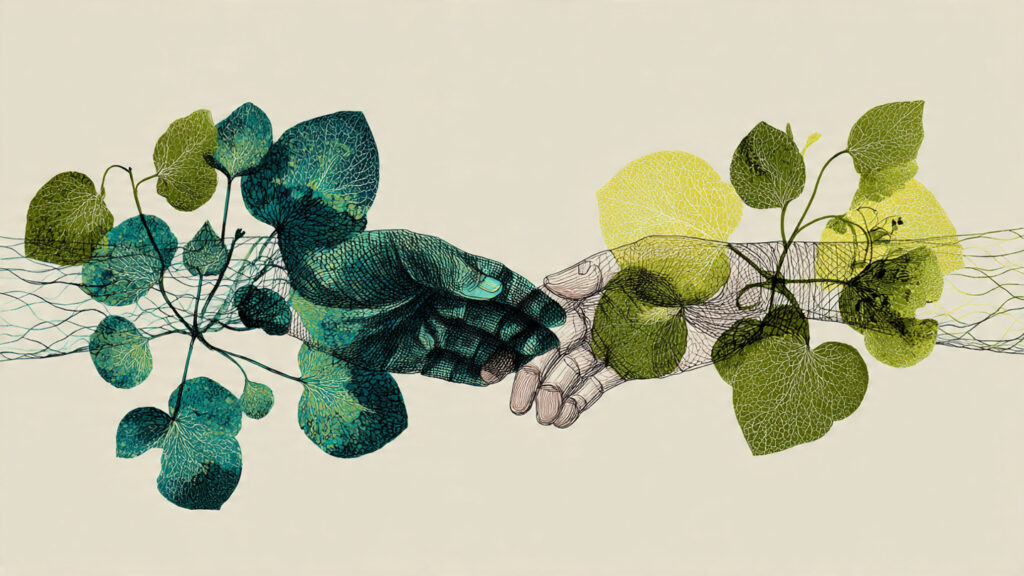
For decades, scientists and gardeners have observed plants responding to their environment, but recent research reveals a fascinating layer of interaction: plants can “communicate” with each other when they touch, and this communication makes them stronger. While plants don’t have voices or nervous systems like animals, they possess remarkable ways of sensing and responding to their surroundings. When plants physically connect, they exchange signals that can influence growth, resilience, and overall health, reshaping our understanding of plant behavior.
This emerging field—sometimes called plant neurobiology or plant signaling—shows that plants are far from passive organisms. Instead, they actively sense touch, detect neighbors, and adjust their growth strategies accordingly.
How Plants Sense Touch
Plants use a mechanism called thigmonasty, which is a growth or movement response to touch. Unlike animals, plants cannot move from place to place, so they rely on cellular and chemical signals to respond to their environment.
Key features of plant touch sensing include:
- Mechanoreceptors: Specialized cells in leaves, stems, and roots that detect physical contact.
- Electrical signaling: Touch triggers changes in electrical potential across plant cells, similar to how neurons work in animals.
- Hormonal response: Plants release hormones like auxins and jasmonic acid to adjust growth after sensing touch.
A classic example of thigmonasty is the sensitive plant (Mimosa pudica), which folds its leaves instantly when touched. But subtle responses are more widespread: when stems or roots come into contact with neighboring plants, they send chemical and electrical signals that can alter development.
Touch and Plant Strength
One of the most surprising discoveries is that touch doesn’t just make plants respond—it actually makes them stronger. When plants sense contact with nearby plants or other objects, they undergo physiological changes that improve their resilience.
Benefits of touch-induced strengthening include:
- Enhanced structural support: Physical contact triggers thicker stems and stronger roots.
- Resistance to stress: Plants exposed to touch can better withstand wind, heavy rain, or herbivory.
- Optimized growth patterns: Touch can encourage branching and leaf expansion to compete effectively for light and resources.
- Improved disease resistance: Some studies suggest touch signals activate defense-related genes.
Researchers often simulate touch by gently brushing plant leaves or stems, a technique sometimes called mechanical stimulation. Surprisingly, repeated gentle touch can reduce plant height while increasing stem diameter, resulting in sturdier, more resilient plants.
Root-to-Root Communication
Touch isn’t limited to above-ground structures. Roots can also sense neighboring plants in the soil. When roots encounter roots from other plants, they can:
- Redirect growth to avoid overcrowding.
- Increase nutrient uptake efficiency.
- Send chemical signals to trigger stress responses.
These underground interactions are essential in dense plant communities, where competition for water, minerals, and space is high. By “feeling” each other through root contact, plants can avoid conflict and cooperate in subtle ways, optimizing survival.
How Plants Communicate Chemically
While touch is a physical trigger, it often leads to chemical signaling, which allows plants to convey messages to neighbors even without direct contact. Some important chemical messengers include:
- Volatile Organic Compounds (VOCs): These airborne molecules can alert nearby plants to threats like insect attacks.
- Jasmonic Acid: Often released after mechanical stress, it helps strengthen cell walls and activate defense mechanisms.
- Auxins and Cytokinins: Hormones that regulate growth and branching patterns in response to touch.
For instance, a tomato plant that experiences gentle mechanical stress may release chemical signals that make surrounding tomato plants more robust against environmental stress. This demonstrates a combination of touch and chemical communication that enhances community resilience.
Experiments That Prove Touch Matters
Scientific studies have confirmed the surprising effects of touch on plant health.
1. Arabidopsis Study: Researchers gently brushed Arabidopsis thaliana seedlings for a few seconds daily. Over time, the brushed plants developed thicker stems, shorter stature, and stronger root systems compared to untouched plants.
2. Tree Saplings: Experiments with young trees show that repeated gentle shaking simulates natural wind or touch from neighboring branches. This mechanical stress promotes lignin production, which strengthens stems and reduces the likelihood of snapping during storms.
➡️ How to Grow Malabar Spinach from Cuttings for Fast, Easy Greens
➡️ How to Grow Super Delicious Cabbage at Home Without a Garden
➡️ How to Grow Bean Sprouts at Home in Plastic Bottles Easily (Step‑by‑Step Guide)
➡️ Why is Your Lemon Tree Blooming in the Heart of Winter?
➡️ Why Should Your Garden Have a Dedicated Pollinator Highway?
➡️ Why Do Your Fruit Trees Need a Winter Wash to Thrive in Spring?
➡️ How Can Rice Water Transform Your Fruits into Sweeter Delights?
➡️ Jumpstart Your Winter Garden: Seed Starting Under Lights
3. Agricultural Implications: In greenhouse studies, touching or brushing crops like wheat or soybeans resulted in plants that were sturdier and more resistant to environmental stress, highlighting practical applications for farming and gardening.
These experiments reveal that touch is not just incidental—it’s a deliberate signal that plants interpret and respond to in ways that improve survival.
Implications for Gardeners
Understanding that plants communicate through touch can change how we garden and landscape:
- Spacing Matters: While overcrowding isn’t ideal, allowing plants to touch occasionally can stimulate stronger growth.
- Mechanical Stimulation: For smaller potted plants, gently brushing stems or leaves a few times a week can enhance sturdiness.
- Companion Planting: Placing compatible plants together may allow beneficial touch-based communication and stress signaling.
- Wind Simulation: Even simple airflow from a fan can mimic natural touch and encourage stronger stems in indoor plants.
In other words, gardeners can actively use touch as a tool to cultivate healthier, more resilient plants.
Touch and Plant “Social Networks”
Recent studies suggest plants form complex “social networks” through both touch and chemical signaling. In dense ecosystems, these networks help plants:
- Avoid competition for light and nutrients.
- Share defense information when threatened by pests.
- Adjust growth dynamically to environmental changes.
Some researchers even propose that plants “sense” which neighbors are related, modifying their growth in ways that benefit genetically similar plants—a remarkable concept that suggests plants aren’t just passive organisms but active participants in their community.
How Touch Influences Flowering
Touch can also affect reproduction. Physical stimulation can:
- Accelerate or delay flowering depending on the species.
- Increase flower number in some plants, improving pollination success.
- Alter branching to maximize exposure to pollinators.
For ornamental gardeners, understanding touch-induced flowering can help design gardens that are both aesthetically pleasing and ecologically productive.
Practical Tips for Using Touch in Your Garden
Here’s how gardeners can leverage this natural plant communication to grow stronger, healthier plants:
- Gently Brush Seedlings: A soft swipe of the hand or brush a few times a week strengthens young plants.
- Use Companion Planting: Planting compatible species together may improve resilience through touch and chemical signaling.
- Avoid Excessive Overcrowding: Touch is beneficial, but competition for resources can negate advantages.
- Simulate Wind: Fans or outdoor exposure can mimic natural mechanical stress, strengthening stems.
- Observe Responses: Notice changes in stem thickness, leaf size, and flowering patterns to adjust techniques.
Even small, consistent interventions can produce remarkable results over time.
Final Thoughts
The idea that plants can talk to each other through touch challenges traditional notions of plant life. Touch triggers chemical and electrical signals that make plants stronger, more resilient, and better able to survive environmental stress. From roots to leaves, plants are constantly sensing, adapting, and interacting with their neighbors.
For gardeners, this knowledge opens new possibilities. Gentle mechanical stimulation, strategic plant placement, and even simple airflow can enhance growth, encourage flowering, and create healthier gardens.
Ultimately, plants are not passive scenery—they are active, communicative organisms that respond to touch in profound ways. By understanding and leveraging these natural interactions, we can cultivate gardens that are not only beautiful but biologically vibrant and resilient.