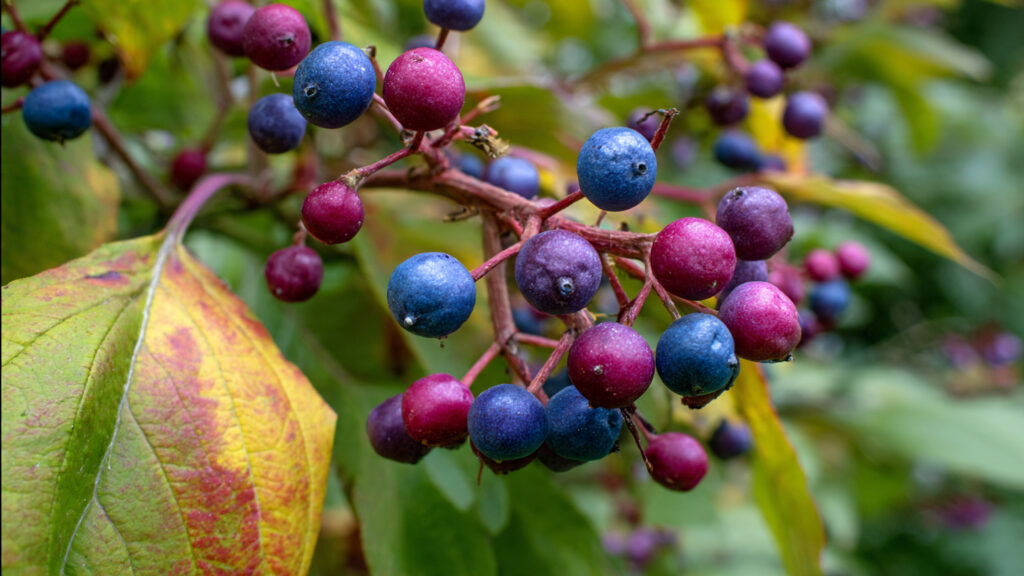
In forests, meadows, and hedgerows around the world, a quiet deception unfolds every day. Bright red and glossy “berries” dangle invitingly from branches, catching the attention of hungry birds. A thrush swoops down, swallows one whole, and flies off—unknowingly becoming part of a botanical illusion.
Here’s the twist: some of these tempting fruits aren’t fruits at all.
Instead, certain plants have evolved fake berries—structures that look and behave like real fruits but are made from entirely different plant parts. This remarkable evolutionary strategy allows them to trick birds into eating them and dispersing their seeds far and wide. It’s one of nature’s cleverest marketing campaigns.
Let’s explore how this botanical sleight of hand works—and why it’s so effective.
What Makes a Berry “Fake”?
In botanical terms, a true berry develops from the ovary of a flower after pollination. Classic examples include tomatoes, grapes, and blueberries. But not all fleshy, colorful structures we casually call “berries” fit this definition.
Some plants produce berry-like structures that aren’t derived from the ovary at all. Instead, they may develop from:
- Modified leaves
- Swollen flower stems
- Fused bracts (leaf-like structures beneath flowers)
- Other accessory tissues
To birds, though, the distinction doesn’t matter. If it’s colorful, juicy, and easy to swallow, it’s food.
And that’s exactly the point.
The Masters of Disguise
🎄 The Yew’s Deceptive “Fruit”
One of the most famous examples is the Taxus baccata. Native to Europe and parts of Asia, this evergreen tree produces bright red, cup-shaped structures called arils.
The aril looks like a soft berry with a seed inside—but it isn’t a fruit in the botanical sense. It develops from tissue surrounding the seed, not from a flower’s ovary.
Here’s where it gets even more fascinating:
- The fleshy red aril is sweet and edible to birds.
- The seed inside is highly toxic to mammals (including humans).
- Birds can safely digest the aril and pass the seed intact.
By packaging its poisonous seed inside a bird-friendly wrapper, the yew ensures safe transport to distant locations. The bird gets a snack; the plant gets a delivery service.
🌿 Junipers and Their “Berries”
Another classic example comes from the Juniperus communis. Its small blue “berries” are widely used as a spice and for flavoring gin—but botanically speaking, they aren’t berries.
They’re actually fleshy cones.
Unlike flowering plants, junipers are conifers and reproduce using cones. In this case, the cone scales fuse together and become fleshy, forming a berry-like structure that attracts birds.
➡️ How to Grow Malabar Spinach from Cuttings for Fast, Easy Greens
➡️ How to Grow Super Delicious Cabbage at Home Without a Garden
➡️ How to Grow Bean Sprouts at Home in Plastic Bottles Easily (Step‑by‑Step Guide)
➡️ Why is Your Lemon Tree Blooming in the Heart of Winter?
➡️ Why Should Your Garden Have a Dedicated Pollinator Highway?
➡️ Why Do Your Fruit Trees Need a Winter Wash to Thrive in Spring?
➡️ How Can Rice Water Transform Your Fruits into Sweeter Delights?
➡️ Jumpstart Your Winter Garden: Seed Starting Under Lights
To a bird, it’s a juicy fruit.
To a botanist, it’s a modified cone.
To the plant, it’s mission accomplished.
🌺 Mock Strawberries and False Temptations
The Duchesnea indica, also known as Indian mock strawberry, produces bright red fruits that closely resemble real strawberries. However, the fleshy part isn’t derived the same way as in true strawberries.
While these fruits are technically edible, they are bland and less appealing to humans. Birds, however, are less picky. The plant leverages bright coloration and visibility rather than rich flavor to encourage seed dispersal.
Why Birds Fall for the Trick
Birds are highly visual foragers. Many species have excellent color vision and are particularly attracted to red, orange, and blue hues—colors that stand out vividly against green foliage.
Plants exploit this preference by evolving:
- Bright pigmentation
- Glossy, reflective surfaces
- Soft, swallowable textures
- Nutrient-rich pulp
Even if the structure isn’t a “true fruit,” as long as it meets these criteria, birds respond.
Importantly, birds typically swallow small fruits whole. Seeds pass through their digestive systems undamaged and are deposited elsewhere—often with a convenient package of fertilizer.
It’s a win-win relationship… even if it started with a bit of deception.
Evolution: The Art of Botanical Marketing
This phenomenon is a brilliant example of convergent evolution—when unrelated organisms independently evolve similar features because they serve the same function.
Flowering plants and conifers are evolutionarily distant. Yet both developed fleshy, berry-like structures because the strategy works.
The goal is simple:
- Make seeds mobile.
- Outsource transportation to animals.
- Increase the chance of colonizing new territory.
Wind dispersal works for some species, but animal dispersal is far more targeted. Birds carry seeds to:
- Forest clearings
- Riverbanks
- Meadows
- Even distant islands
In many ecosystems, bird-mediated dispersal shapes plant distribution patterns and biodiversity.
The Chemical Side of the Deception
Some fake berries go beyond visual mimicry. They also manipulate chemistry.
For example:
- Sugars provide quick energy for birds.
- Specific lipid compositions enhance digestibility.
- Toxins may deter mammals but spare birds.
The Taxus brevifolia follows a similar strategy to its European cousin. While its seeds contain toxic compounds, the surrounding fleshy tissue is attractive to birds.
This selective toxicity ensures that the right dispersers—birds—are rewarded, while seed predators are discouraged.
Are They Really “Fake”?
Calling these structures “fake berries” might sound like a botanical scandal, but they’re not defective or accidental. They’re functional analogues—structures that perform the same role as true berries, even if they originate differently.
In evolutionary terms, function matters more than origin.
From the bird’s perspective, it’s a meal.
From the plant’s perspective, it’s transportation.
From nature’s perspective, it’s a beautifully efficient system.
Ecological Ripple Effects
These deceptive fruits play a major role in ecosystems:
🌍 Forest Regeneration
Birds disperse seeds into disturbed or open areas, accelerating forest recovery.
🐦 Migration Networks
Migratory birds rely on berry-producing plants as seasonal fuel sources. In return, they transport seeds across vast geographic ranges.
🌱 Biodiversity Hotspots
Areas rich in fruiting plants often support greater bird diversity—and vice versa.
Without these berry-like structures, many plant species would struggle to expand their range or adapt to environmental change.
Deception in Nature: A Common Theme
Plants are masters of subtle trickery.
- Some orchids mimic female insects to attract pollinators.
- Certain flowers imitate rotting flesh to lure flies.
- Others produce nectar guides visible only in ultraviolet light.
Fake berries are part of this larger evolutionary playbook: shape perception, influence behavior, survive and spread.
Unlike predators that deceive to kill, plants deceive to reproduce. The result is a complex web of mutual dependence—where even trickery benefits both parties.
A Delicate Balance
Although birds benefit from the fleshy rewards, the relationship isn’t entirely altruistic. Plants design their offerings carefully:
- Fruits are sized for specific bird species.
- Ripening often coincides with migration periods.
- Nutritional content may vary depending on dispersal needs.
This suggests a long history of co-evolution, where plant traits and bird preferences shaped one another over millions of years.
Seeing the Forest Differently
Next time you notice a bright red “berry” in the wild, pause before assuming it’s a fruit in the strict botanical sense. It may be:
- A fleshy cone
- A modified seed covering
- A swollen stem
- Or an accessory tissue masquerading as fruit
Nature doesn’t follow human definitions. It follows what works.
And what works, apparently, is giving birds a convincing illusion.
The Bigger Lesson
Fake berries remind us that evolution is less about honesty and more about effectiveness. Plants don’t need to produce true fruits if something else can serve the same purpose.
Through color, texture, sweetness, and clever chemical design, they manipulate behavior without force—just persuasion.
In the quiet exchange between plant and bird, deception becomes cooperation, illusion becomes survival, and a simple snack becomes a journey across landscapes.