Gardening isn’t only about sun-drenched landscapes. Many homes and gardens have areas where sunlight barely reaches—under trees, beside tall buildings, or in north-facing corners. These shady spots often go unused, but they can be transformed into lush, verdant spaces with the right plants. Shade-loving plants are specially adapted to thrive with minimal sunlight, offering beauty, texture, and even fragrance in areas most gardeners overlook.
In this guide, we’ll explore 12 shade-loving plants that flourish in low-light conditions and provide tips to help you cultivate vibrant greenery where the sun rarely reaches.
Why Shade-Loving Plants Are Special
Shade-loving plants have evolved to make the most of limited light. Unlike sun-loving species, they:
- Adapt to low-light conditions: Their large or darker leaves capture and utilize the available sunlight efficiently.
- Require less water: Many shade-tolerant plants have slower transpiration rates.
- Provide textural variety: These plants often have interesting foliage or unique leaf patterns that enhance garden aesthetics.
- Support biodiversity: Shade gardens can attract birds, insects, and pollinators that prefer cooler, protected spaces.
Choosing the right shade-loving species allows gardeners to turn previously neglected areas into thriving green oases.
1. Hostas
Hostas are the quintessential shade garden plant, known for their lush, large leaves and graceful form. They come in a variety of sizes, leaf shapes, and colors—from deep greens to striking variegated patterns.
- Ideal conditions: Partial to full shade.
- Water needs: Moderate; keep soil moist but well-draining.
- Tips: Remove yellowing leaves in late fall and mulch to retain soil moisture.
Hostas can also tolerate morning sun but appreciate protection from harsh afternoon rays.
2. Ferns
Ferns are natural shade-dwellers, offering feathery foliage and a soft, woodland feel. Popular varieties include Boston fern, maidenhair fern, and Japanese painted fern.
- Ideal conditions: Filtered or dappled shade.
- Water needs: High; ferns enjoy consistently moist soil.
- Tips: Mist regularly to maintain humidity, especially indoors or on patios.
Ferns are perfect for filling gaps under trees or adding greenery to shadowed garden corners.
3. Astilbe
Astilbe is prized for its plume-like flowers and colorful foliage, which brighten shady beds with red, pink, white, or lavender blooms.
- Ideal conditions: Partial to full shade.
- Water needs: High; astilbes thrive in moist, fertile soil.
- Tips: Fertilize in early spring and remove spent blooms to encourage prolonged flowering.
This plant adds vertical interest and vibrant color to low-light areas.
4. Heuchera (Coral Bells)
Heuchera is a versatile perennial, valued for its colorful, textured leaves ranging from silver to burgundy to lime green. Some varieties also produce delicate flowers on tall stems.
- Ideal conditions: Partial to full shade.
- Water needs: Moderate; avoid waterlogged soil.
- Tips: Mulch to protect roots in winter and pinch back flower stalks after blooming.
Coral bells are excellent for containers, borders, or as ground cover in shade gardens.
5. Hellebores
Known as Lenten roses, hellebores bloom in late winter or early spring, offering early color in shady gardens. Their thick, leathery leaves remain attractive year-round.
- Ideal conditions: Full to partial shade.
- Water needs: Moderate; well-draining soil is essential.
- Tips: Remove old leaves before flowering to showcase fresh blooms.
Hellebores are hardy perennials and work beautifully in woodland-style landscapes.
6. Bleeding Heart (Dicentra spectabilis)
Bleeding hearts are famous for their delicate, heart-shaped flowers that dangle elegantly from arching stems. They create a romantic, cottage-garden feel.
➡️ How to Grow Malabar Spinach from Cuttings for Fast, Easy Greens
➡️ How to Grow Super Delicious Cabbage at Home Without a Garden
➡️ How to Grow Bean Sprouts at Home in Plastic Bottles Easily (Step‑by‑Step Guide)
➡️ Why is Your Lemon Tree Blooming in the Heart of Winter?
➡️ Why Should Your Garden Have a Dedicated Pollinator Highway?
➡️ Why Do Your Fruit Trees Need a Winter Wash to Thrive in Spring?
➡️ How Can Rice Water Transform Your Fruits into Sweeter Delights?
➡️ Jumpstart Your Winter Garden: Seed Starting Under Lights
- Ideal conditions: Partial to full shade.
- Water needs: Moderate; keep soil evenly moist.
- Tips: Cut back foliage after flowering to encourage healthy growth next season.
These plants thrive in cooler, shaded environments and complement ferns and hostas beautifully.
7. Japanese Forest Grass (Hakonechloa macra)
This ornamental grass adds movement, color, and texture to shade gardens. Its arching, bamboo-like blades often have golden or variegated stripes.
- Ideal conditions: Partial to full shade.
- Water needs: Moderate; prefers well-drained, humus-rich soil.
- Tips: Divide clumps every 3–4 years to maintain vigor.
Japanese forest grass is perfect for planting along paths or in woodland-style landscapes.
8. Solomon’s Seal (Polygonatum)**
Solomon’s seal produces graceful, arching stems with hanging tubular flowers, often accompanied by attractive foliage that turns golden in fall.
- Ideal conditions: Full to partial shade.
- Water needs: Moderate; prefers consistently moist soil.
- Tips: Plant in clusters for maximum visual impact and support wildlife like bees.
This perennial adds elegance to shade borders or woodland gardens.
9. Lungwort (Pulmonaria)**
Lungwort is valued for its spotted leaves and clusters of small, tubular flowers that can range from blue to pink to white.
- Ideal conditions: Partial to full shade.
- Water needs: Moderate; avoid letting soil dry out completely.
- Tips: Remove faded flowers to encourage extended blooming.
Lungwort is a compact, colorful choice for borders and shaded rock gardens.
10. Tiarella (Foam Flower)**
Tiarella produces frothy clusters of white or pink flowers above attractive, patterned foliage. It’s low-growing and ideal as ground cover.
- Ideal conditions: Partial to full shade.
- Water needs: Moderate; keep soil consistently moist.
- Tips: Divide plants every few years to maintain healthy growth.
Its unique leaf patterns make tiarella stand out even when not in bloom.
11. Brunnera (Siberian Bugloss)**
Brunnera has heart-shaped, often silver-speckled leaves with delicate blue flowers in spring, resembling tiny forget-me-nots.
- Ideal conditions: Partial to full shade.
- Water needs: Moderate; soil should remain moist but well-drained.
- Tips: Protect from harsh afternoon sun to prevent leaf scorch.
Brunnera works beautifully as a border plant or in container arrangements for shaded patios.
12. Fern-Leaf Bleeding Heart (Dicentra eximia)**
Different from the classic bleeding heart, this species produces smaller, fern-like foliage and delicate red-pink flowers that bloom from spring through fall.
- Ideal conditions: Partial shade.
- Water needs: Moderate; prefers well-draining soil rich in organic matter.
- Tips: Cut back dead foliage in late winter to encourage vigorous spring growth.
Its extended bloom period makes it ideal for long-lasting color in shaded areas.
Tips for Creating a Thriving Shade Garden
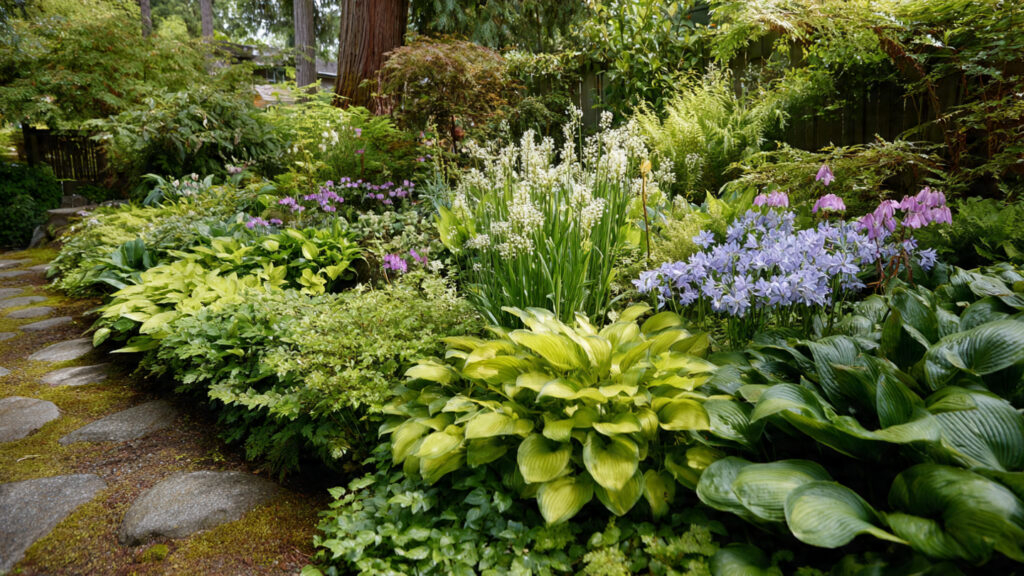
- Use Layering: Combine tall plants like ferns with medium-height perennials and low-growing ground covers for a lush, multi-dimensional look.
- Focus on Foliage: Shade gardens benefit from plants with interesting leaf shapes, colors, and textures since flowers may be less prominent.
- Soil Enrichment: Amend soil with compost and organic matter to retain moisture and nutrients, as shaded areas may have poorer soil.
- Mulching: Apply mulch to help maintain consistent soil moisture, suppress weeds, and improve soil structure.
- Water Management: Shade gardens can still dry out quickly if soil drains poorly. Monitor moisture levels and water as needed.
Benefits of Shade Gardens
- Year-Round Interest: Many shade-loving plants retain attractive foliage even when not flowering.
- Low Maintenance: These plants often require less pruning, fertilization, and sunlight monitoring.
- Biodiversity Support: Shade gardens provide habitat for pollinators, birds, and beneficial insects.
- Aesthetic Value: Lush foliage, textured leaves, and delicate blooms create serene, relaxing spaces.
Conclusion
Shade gardens prove that beauty and productivity are not limited to sunny spots. By selecting the right shade-loving plants—like hostas, ferns, astilbe, hellebores, and bleeding hearts—you can transform dark corners into vibrant, thriving spaces. Focus on plants with interesting foliage, layered textures, and complementary colors to create depth and visual appeal.
With consistent care, enriched soil, proper watering, and occasional fertilization, your shaded garden will flourish throughout the seasons. Whether you are revitalizing a backyard nook, designing a woodland retreat, or adding greenery to a north-facing porch, these 12 shade-loving plants offer reliable, eye-catching results.