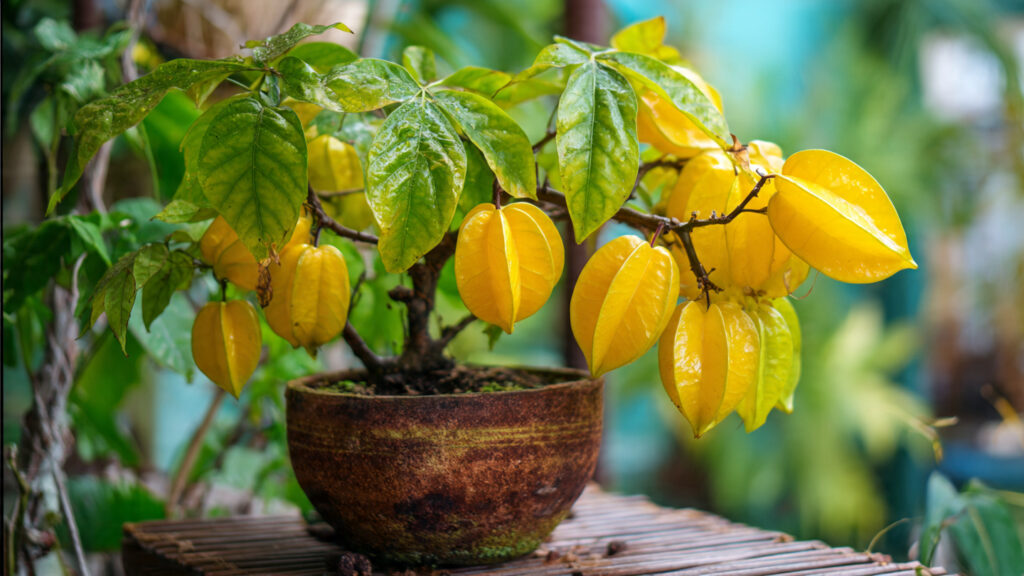
Imagine stepping onto your balcony or patio and picking fresh, golden star-shaped fruit straight from your own tree. Sounds like a tropical dream, right? The good news is—you don’t need a big backyard or a warm orchard to enjoy star fruit (carambola). With the right care, you can grow this exotic beauty in a pot, even in small spaces.
Growing star fruit in containers is not only possible, but also incredibly rewarding. From planting a seed to harvesting crisp, juicy fruit, this guide will walk you through everything you need to know.
Let’s bring the tropics home—one pot at a time. 🌴🍋
Why Grow Star Fruit in a Pot?
Star fruit trees are naturally tropical, but container gardening makes them more adaptable. Growing in a pot offers several advantages:
- Perfect for balconies and patios
- Easy to move indoors during cold weather
- Better control over soil, water, and pests
- A beautiful ornamental plant with glossy leaves and fragrant flowers
Even if you live outside the tropics, you can still enjoy homegrown star fruit with the right setup.
Step 1: Choosing the Right Star Fruit Seeds
You can grow star fruit from seed, but it’s important to start correctly.
Where to Get Seeds
- Use seeds from a fresh, ripe star fruit
- Choose fruit that is yellow with slightly brown edges
- Avoid dried or old seeds—star fruit seeds lose viability quickly
Quick Tip
Plant the seeds within a few days of removing them for the best germination rate.
Step 2: Germinating Star Fruit Seeds
Star fruit seeds germinate fairly easily when kept warm and moist.
How to Germinate
- Rinse seeds gently to remove fruit pulp
- Let them dry for a few hours (not days)
- Fill a small seed tray or pot with light potting mix
- Plant seeds about ½ inch deep
- Mist the soil and cover with plastic wrap to retain humidity
Ideal Conditions
- Temperature: 75–85°F (24–29°C)
- Bright indirect light
- Soil kept consistently moist
Germination Time
Seeds usually sprout within 1–3 weeks.
Step 3: Selecting the Best Pot for Star Fruit
Once seedlings grow a few inches tall, it’s time to move them into a larger container.
Best Pot Size
- Start with a 10–12 inch pot
- Eventually upgrade to a 20–24 inch container
Star fruit trees develop strong roots, so give them space.
Pot Requirements
- Must have drainage holes
- Use sturdy material like clay or thick plastic
- A pot with wheels makes moving easier
Step 4: The Perfect Soil Mix
Star fruit loves rich, well-draining soil.
Ideal Container Soil Blend
Mix together:
- 50% high-quality potting soil
- 25% compost or aged manure
- 25% perlite or sand for drainage
Soil pH
Star fruit prefers slightly acidic soil:
- pH range: 5.5–6.5
Healthy soil is the foundation for healthy fruit.
➡️ How to Grow Malabar Spinach from Cuttings for Fast, Easy Greens
➡️ How to Grow Super Delicious Cabbage at Home Without a Garden
➡️ How to Grow Bean Sprouts at Home in Plastic Bottles Easily (Step‑by‑Step Guide)
➡️ Why is Your Lemon Tree Blooming in the Heart of Winter?
➡️ Why Should Your Garden Have a Dedicated Pollinator Highway?
➡️ Why Do Your Fruit Trees Need a Winter Wash to Thrive in Spring?
➡️ How Can Rice Water Transform Your Fruits into Sweeter Delights?
➡️ Jumpstart Your Winter Garden: Seed Starting Under Lights
Step 5: Sunlight Needs for Star Fruit Trees
Star fruit thrives in sunshine.
Best Light Conditions
- Full sun for 6–8 hours daily
- Place the pot in the brightest location possible
If growing indoors, use:
- A sunny south-facing window
- Or a grow light during winter months
Without enough light, the tree may grow slowly and produce fewer fruits.
Step 6: Watering Star Fruit in Containers
Container trees dry out faster than garden-planted ones, so watering is crucial.
Watering Rules
- Keep soil consistently moist but never soggy
- Water deeply when the top 2 inches feel dry
- Reduce watering slightly during cooler months
Warning Signs
- Drooping leaves = underwatering
- Yellowing leaves = overwatering or poor drainage
A balanced watering routine is key.
Step 7: Feeding Your Star Fruit Tree
Star fruit trees are heavy feeders, especially in pots.
Best Fertilizer Schedule
- Use a balanced fertilizer (10-10-10 or citrus fertilizer)
- Feed every 4–6 weeks during spring and summer
Organic Options
- Compost tea
- Worm castings
- Banana peel water (for potassium boost)
Stop fertilizing in winter when growth slows.
Step 8: Pruning and Shaping for Container Growth
Pruning helps keep your tree compact and productive.
When to Prune
- Light pruning in early spring
- Remove dead or crossing branches anytime
Why Prune?
- Encourages bushier growth
- Improves airflow
- Helps fruit production
Container trees should stay around 4–6 feet tall for easy care.
Step 9: Pollination and Flowering
Star fruit produces delicate pink or lavender flowers.
Do You Need Hand Pollination?
Sometimes, especially indoors.
To help:
- Gently brush flowers with a soft paintbrush
- Or move the plant outdoors during flowering season
More pollination = more fruit!
Step 10: Protecting Star Fruit From Cold Weather
Star fruit is sensitive to frost.
Temperature Limits
- Ideal: 65–85°F (18–29°C)
- Damage occurs below 40°F (4°C)
Cold Protection Tips
- Bring pots indoors during winter
- Cover with frost cloth if outside
- Keep away from cold drafts indoors
Growing in containers makes winter care much easier.
Step 11: Common Pests and Problems
Container-grown star fruit trees are generally healthy, but watch for:
Common Pests
- Aphids
- Spider mites
- Mealybugs
Natural Treatments
- Neem oil spray
- Insecticidal soap
- Wiping leaves with diluted alcohol
Preventive Care
- Good airflow
- Avoid overwatering
- Inspect leaves regularly
Step 12: When Will You Harvest Star Fruit?
Patience is part of the tropical journey.
Timeline
- Seed-grown trees may take 3–6 years to fruit
- Grafted varieties fruit sooner (1–2 years)
Signs Star Fruit Is Ready
- Fruit turns bright yellow
- Slight browning on ridges
- Sweet aroma develops
Harvest gently with scissors to avoid damaging branches.
Enjoying Your Tropical Home Harvest
Once picked, star fruit is perfect for:
- Fresh snacking
- Fruit salads
- Juices and smoothies
- Garnishing desserts
- Making tropical jams
And nothing beats the satisfaction of saying,
“I grew this in a pot!” 🌟🍈
Final Thoughts: A Star Fruit Tree Is a Tropical Treasure
Growing star fruit in a container is a wonderful way to bring exotic beauty, flavor, and greenery into your home garden. With sunshine, good soil, consistent watering, and a little patience, your potted tree can reward you with stunning star-shaped fruit for years to come.
So grab a pot, plant that seed, and let your tropical gardening story begin!