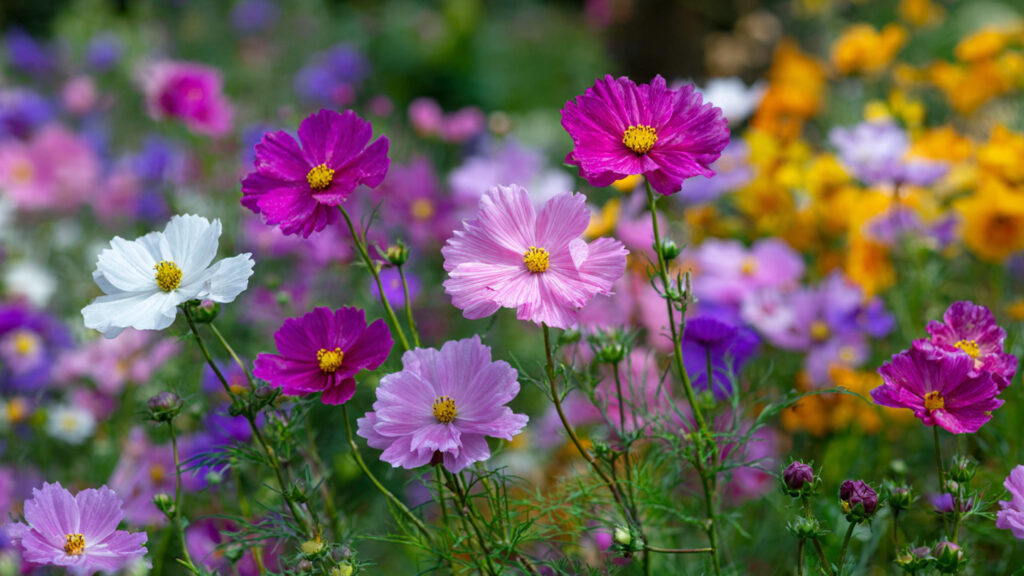
Cosmos, with their vibrant, daisy-like blooms and feathery foliage, are one of the most charming and easy-to-grow flowers in any garden. While many gardeners are familiar with shorter, compact varieties, tall cosmos varieties, such as Cosmos bipinnatus, offer a dramatic, airy presence that can transform a garden into a meadow-like paradise. Their graceful height, ranging from 4 to 6 feet, combined with their delicate, colorful flowers, makes them perfect for background planting, naturalistic borders, or even cut flower gardens. However, cultivating tall cosmos successfully requires thoughtful planning and care. Here are simple, effective strategies to help your tall cosmos thrive and become the stars of your garden.
1. Choosing the Right Variety
When aiming for height and a striking presence, selecting the right tall cosmos variety is the first step. Popular tall varieties include:
- ‘Sensation Mix’ – A vibrant mix of pink, white, and crimson blooms reaching up to 6 feet.
- ‘Purity’ – Tall, elegant white flowers that create a serene backdrop.
- ‘Sonata’ – Slightly shorter than ‘Sensation,’ but still grows up to 4–5 feet with a profusion of soft pink and white flowers.
Choosing the right variety not only determines the height but also affects flowering time, bloom density, and overall garden aesthetics. Make sure to purchase seeds or seedlings from reputable sources to ensure true-to-type plants.
2. Optimal Planting Location
Tall cosmos love the sun. They thrive in full sun, requiring at least 6–8 hours of direct sunlight per day. A sunny location ensures vigorous growth, abundant blooms, and strong stems that can support the height of the plant.
Soil preferences are simple but important. Cosmos are not fussy, but they perform best in well-drained soil with a neutral pH. Avoid overly rich soil because high fertility can encourage excessive leafy growth at the expense of flowers. In fact, moderately poor soil often produces sturdier, bloom-heavy plants.
3. Sowing Seeds Correctly
Cosmos can be started from seed directly in the garden or indoors as transplants. Both methods have advantages, but for tall varieties, direct sowing is often easier and reduces transplant shock.
Direct Sowing Tips:
- Wait until the danger of frost has passed. Cosmos are sensitive to cold.
- Scatter seeds evenly over prepared soil or plant in rows, spacing them 12–18 inches apart to allow adequate air circulation and room for tall growth.
- Lightly press the seeds into the soil but do not cover them heavily, as they need light to germinate.
- Keep the soil consistently moist until germination, which usually occurs in 7–14 days.
Indoor Starting Tips:
- Sow seeds 4–6 weeks before the last expected frost in small pots or seed trays.
- Use a light, well-draining seed-starting mix.
- Provide ample light—either from a sunny window or grow lights—for 12–16 hours a day to prevent spindly seedlings.
- Harden off seedlings for 7–10 days before transplanting outdoors, gradually exposing them to outdoor conditions.
4. Supporting Tall Stems
One challenge with tall cosmos is their tendency to flop over, especially in windy areas or during heavy rains. To prevent this:
- Plant in groups: Crowding plants slightly encourages mutual support and reduces wind damage.
- Use stakes or cages: Simple bamboo stakes, tomato cages, or trellises can keep plants upright. Place supports early in the season to avoid disturbing roots later.
- Pinch and prune selectively: Pinching the tips when seedlings are young encourages branching, creating a bushier plant with multiple stems that are better at standing tall.
5. Watering and Fertilization
Tall cosmos are drought-tolerant once established but perform best with regular watering during dry spells. Deep watering encourages strong root growth. Avoid overwatering, as waterlogged soil can cause root rot.
Fertilization Guidelines:
- Cosmos do not need heavy feeding. Over-fertilizing, especially with high-nitrogen fertilizers, can result in lush foliage but few flowers.
- A light application of a balanced, low-nitrogen fertilizer or compost at planting time is sufficient.
- For continuous blooms, side-dress with compost or a mild fertilizer once a month during the growing season.
6. Encouraging Continuous Blooming
Tall cosmos are renowned for their long flowering period, often blooming from mid-summer until frost. To maximize blooms:
- Deadheading: Regularly remove spent flowers to encourage the plant to produce new ones rather than going to seed.
- Succession planting: Sow seeds every 3–4 weeks in early summer for a continuous display throughout the season.
- Pinching young plants: Pinch the top inch of seedlings once they are 6–8 inches tall to promote branching and more flower stems.
These small actions dramatically extend the flowering period and ensure your garden remains vibrant.
7. Pest and Disease Management
Cosmos are generally resilient, but tall varieties can be susceptible to certain pests and diseases:
- Aphids and spider mites: Keep an eye on young shoots. A strong spray of water or insecticidal soap can control infestations.
- Powdery mildew: Tall, densely planted cosmos may develop powdery mildew in humid conditions. Ensure proper spacing for airflow and remove affected foliage promptly.
- Slugs and snails: Occasionally, slugs may nibble on young plants. Use natural deterrents or barriers as needed.
Maintaining healthy plants through proper watering, spacing, and sunlight exposure is often the most effective defense against pests and diseases.
➡️ How to Grow Malabar Spinach from Cuttings for Fast, Easy Greens
➡️ How to Grow Super Delicious Cabbage at Home Without a Garden
➡️ How to Grow Bean Sprouts at Home in Plastic Bottles Easily (Step‑by‑Step Guide)
➡️ Why is Your Lemon Tree Blooming in the Heart of Winter?
➡️ Why Should Your Garden Have a Dedicated Pollinator Highway?
➡️ Why Do Your Fruit Trees Need a Winter Wash to Thrive in Spring?
➡️ How Can Rice Water Transform Your Fruits into Sweeter Delights?
➡️ Jumpstart Your Winter Garden: Seed Starting Under Lights
8. Companion Planting and Garden Design
Tall cosmos are versatile in garden design. Their airy structure and bright blooms make them ideal for:
- Background planting: Use tall cosmos as a backdrop for shorter annuals or perennials.
- Naturalistic borders: Combine with zinnias, sunflowers, or ornamental grasses to create a meadow effect.
- Pollinator gardens: Cosmos attract bees, butterflies, and other beneficial insects, making them excellent companions for vegetable gardens.
For a striking visual effect, mix colors and varieties. Plant white cosmos behind deep pink or crimson varieties to create contrast, or scatter different colors randomly for a wildflower look.
9. Harvesting for Cut Flowers
Tall cosmos make excellent cut flowers due to their long, slender stems. To harvest:
- Cut stems early in the morning for maximum freshness.
- Use sharp scissors or garden shears to avoid crushing stems.
- Place cut flowers in water immediately and change the water daily to prolong vase life.
Regular harvesting also encourages the plant to produce more blooms, benefiting both your garden and your indoor floral arrangements.
10. Overwintering and Seed Collection
While cosmos are annuals in most climates, you can save seeds to enjoy them next season:
- Allow some flowers to go to seed late in the season.
- Collect mature seed heads once they are dry and brown.
- Store seeds in a cool, dry place until the next planting season.
In mild climates, some cosmos may self-seed and return naturally the following year, creating a low-maintenance cycle of beauty.
Conclusion
Growing tall cosmos is one of the most rewarding experiences for gardeners seeking height, color, and movement in their landscapes. With a sunny location, proper spacing, light fertilization, and thoughtful support, these elegant plants can provide weeks of vibrant blooms and attract beneficial pollinators. By following these simple strategies—choosing the right variety, sowing correctly, managing water and nutrients, and supporting tall stems—you can cultivate cosmos that are not only tall but also strong, healthy, and spectacularly beautiful.
Whether you’re aiming for a romantic cottage garden, a natural meadow effect, or a colorful pollinator haven, tall cosmos varieties are a versatile, easy-to-grow option that brings elegance and life to any garden. With just a little planning and care, your garden can be transformed into a thriving display of height, color, and graceful movement from summer to fall.