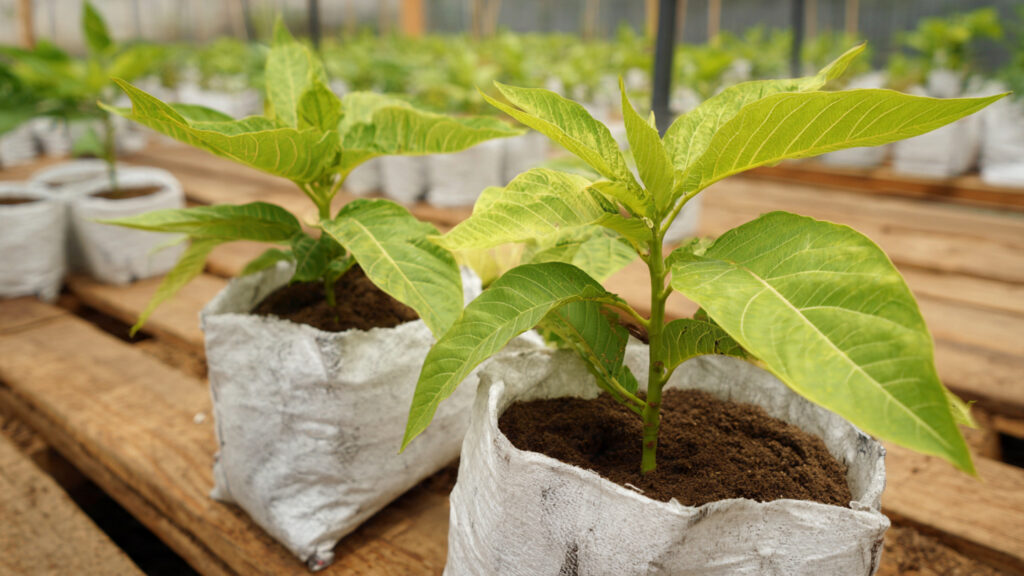
Custard apple (Annona squamosa), also known as sugar apple or sweetsop, is a tropical fruit tree cherished for its creamy, sweet pulp and unique flavor. Traditionally grown in open soil, custard apple plants can also thrive in grow bags, making them an excellent choice for gardeners with limited space, poor soil quality, or urban balconies. Grow bags provide flexibility, improved root aeration, and easier management, while still allowing the plant to produce high yields. This guide explores how to grow custard apple plants in grow bags successfully, from selecting the right variety to maximizing fruit production.
Why Grow Custard Apple in Grow Bags?
Growing custard apple in grow bags offers several advantages over traditional in-ground planting:
- Mobility: Grow bags can be moved to optimize sunlight exposure or protect plants from adverse weather.
- Soil Control: You can provide a nutrient-rich, well-draining soil mix, ideal for custard apple trees.
- Space Efficiency: Perfect for small backyards, terraces, and urban gardens.
- Root Aeration: Fabric grow bags promote air pruning of roots, preventing circling and encouraging a healthy, fibrous root system.
- Ease of Maintenance: Grow bags allow better control over watering, fertilization, and pest management.
By choosing grow bags, gardeners can cultivate custard apple plants efficiently while maintaining maximum control over growing conditions.
Selecting the Right Custard Apple Variety
Choosing the appropriate variety is crucial for maximizing yield in grow bags:
- Local Varieties: Some regions have custard apple varieties adapted to local climates and pests.
- Dwarf Varieties: Compact or dwarf varieties are ideal for grow bags, as they require less space and are easier to manage.
- High-Yielding Varieties: Varieties like ‘Balanagar’ or ‘Sitaphal’ are known for consistent fruiting and sweet, creamy pulp.
- Disease Resistance: Choose varieties resistant to common custard apple pests and diseases, such as fruit borer and leaf spot.
Selecting the right variety ensures that your plant thrives in a container environment and produces abundant, high-quality fruit.
Choosing the Right Grow Bag
The choice of grow bag impacts root health, plant growth, and yield:
- Size: For young seedlings, 15–20 liters is sufficient. Mature plants require 50–100 liters or larger to accommodate root growth.
- Material: Fabric grow bags offer excellent aeration, drainage, and durability. Plastic containers can be used but may overheat roots in direct sunlight.
- Drainage: Ensure the bag has sufficient drainage holes to prevent waterlogging and root rot.
- Portability: Consider handles or lightweight designs for easy movement.
A properly sized and ventilated grow bag supports root development and promotes vigorous plant growth.
Soil Preparation for Custard Apple Grow Bags
Custard apple plants prefer well-draining, fertile soil:
- Soil Mix: A mixture of garden soil, compost, sand, and cocopeat or perlite provides adequate drainage, nutrients, and aeration.
- pH Range: Maintain slightly acidic to neutral soil, around 6.0–7.0, to optimize nutrient availability.
- Organic Matter: Incorporate decomposed cow dung, compost, or vermicompost to enhance fertility and microbial activity.
- Avoid Heavy Clay: Dense soil retains water and restricts root growth, leading to stunted development.
The right soil mix ensures healthy roots, stronger growth, and better fruit production in grow bags.
Planting Custard Apple in Grow Bags
Proper planting technique is essential for successful establishment:
- Seedling Selection: Choose healthy seedlings or grafted plants with well-developed roots. Grafted plants often bear fruit earlier than seed-grown plants.
- Planting Depth: Place the seedling in the bag so that the root collar is level with the soil surface. Avoid burying the stem too deep.
- Firming Soil: Gently press the soil around the roots to eliminate air pockets and stabilize the plant.
- Initial Watering: Water thoroughly after planting to settle the soil and reduce transplant shock.
- Mulching: Add a thin layer of mulch around the base to retain moisture and prevent temperature fluctuations.
Correct planting establishes a strong foundation for vigorous growth and fruiting.
Watering Techniques
Custard apple plants require careful watering management:
- Young Plants: Keep the soil consistently moist but not waterlogged. Watering 2–3 times a week may be necessary during dry periods.
- Mature Plants: Reduce frequency slightly but maintain deep watering to encourage root expansion.
- Seasonal Adjustment: Increase watering during flowering and fruit development for better yield and fruit size.
- Drainage Check: Ensure water does not accumulate at the bottom of the grow bag, which can lead to root rot.
Balanced watering promotes healthy growth, flower set, and fruit development.
Fertilization for Maximum Yield
Custard apple plants are heavy feeders, especially during flowering and fruiting:
- Organic Fertilizers: Use compost, vermicompost, or well-decomposed cow dung as base nutrition.
- Nitrogen: Supports vegetative growth and strong leaves. Apply carefully to avoid excessive foliage at the expense of flowering.
- Phosphorus: Encourages root development and flower initiation.
- Potassium: Improves fruit size, sweetness, and overall yield.
- Micronutrients: Zinc, magnesium, and iron contribute to leaf health, flowering, and fruit quality.
Apply fertilizers monthly or as needed, adjusting based on plant growth and seasonal requirements.
➡️ How to Grow Malabar Spinach from Cuttings for Fast, Easy Greens
➡️ How to Grow Super Delicious Cabbage at Home Without a Garden
➡️ How to Grow Bean Sprouts at Home in Plastic Bottles Easily (Step‑by‑Step Guide)
➡️ Why is Your Lemon Tree Blooming in the Heart of Winter?
➡️ Why Should Your Garden Have a Dedicated Pollinator Highway?
➡️ Why Do Your Fruit Trees Need a Winter Wash to Thrive in Spring?
➡️ How Can Rice Water Transform Your Fruits into Sweeter Delights?
➡️ Jumpstart Your Winter Garden: Seed Starting Under Lights
Supporting Growth and Structure
Custard apple plants can become top-heavy as they grow:
- Staking: Use bamboo or wooden stakes to support young plants and prevent bending.
- Pruning: Remove dead or diseased branches, shape the plant, and thin overcrowded shoots to improve sunlight penetration and airflow.
- Training: Encourage an open canopy with evenly spaced branches for better fruiting.
Proper support and pruning increase fruit exposure to sunlight and reduce disease incidence.
Flowering and Pollination
Custard apple plants produce flowers that require successful pollination for fruit set:
- Flower Type: Most custard apple flowers are hermaphroditic, but pollination is enhanced by insects.
- Manual Pollination: In grow bag setups, hand-pollinating flowers with a small brush can improve fruit set.
- Flowering Period: Occurs during warm months; ensure consistent watering and nutrition during this time.
Adequate pollination ensures a higher number of fruits per plant, maximizing yield.
Pest and Disease Management
Container-grown custard apple plants can still be susceptible to pests and diseases:
- Common Pests: Fruit borers, mealybugs, aphids, and scale insects. Inspect regularly and treat with neem oil or insecticidal soap.
- Fungal Diseases: Powdery mildew and leaf spot can affect leaves. Maintain airflow, avoid overhead watering, and prune affected leaves promptly.
- Preventive Care: Remove fallen leaves and fruit to reduce disease reservoirs and stress on the plant.
Monitoring and early intervention help maintain healthy plants and abundant fruit production.
Harvesting Custard Apple Fruits
Proper harvesting ensures peak flavor and quality:
- Maturity Signs: Fruits are ready when they turn greenish-yellow, develop a slight softness, and the skin segments start to separate slightly.
- Harvesting Technique: Twist gently or use scissors to avoid damaging branches. Handle carefully to prevent bruising.
- Frequency: Pick fruits as they ripen; overripe fruits left on the plant may fall and spoil.
- Post-Harvest: Store in a cool, ventilated place; fruits ripen fully after harvest if picked slightly early.
Timely harvesting maximizes fruit quality and encourages continued fruit production.
Advantages of Grow Bags for Backyard Custard Apple Plants
- Urban Gardening: Ideal for small spaces such as balconies, terraces, or patios.
- Soil Independence: No reliance on poor native soil; you control nutrients, pH, and drainage.
- Pest Control: Easier to monitor and manage pests in a contained environment.
- Seasonal Flexibility: Move plants indoors or to protected areas during extreme weather.
- Maximized Yield: Well-managed grow bags allow the plant to focus energy on fruiting rather than excessive root expansion.
Grow bags offer convenience and flexibility, making custard apple cultivation accessible to all gardeners.
Conclusion
Growing custard apple plants in grow bags is a practical and highly rewarding approach for backyard gardeners. By selecting the right variety, using an appropriately sized grow bag, providing nutrient-rich soil, and managing watering, fertilization, pruning, and pest control, gardeners can enjoy abundant harvests of sweet, creamy custard apple fruits.
Grow bags not only improve root health and aeration but also allow for mobility, making it easier to protect plants from adverse weather or optimize sunlight. Whether you live in an urban setting or have limited garden space, custard apple cultivation in grow bags provides a convenient and efficient way to enjoy homegrown fruit.
With consistent care, attention to flowering and pollination, and timely harvesting, your custard apple plants will reward you with a high yield of delicious, nutritious fruit, making this method both practical and productive for modern backyard gardeners.