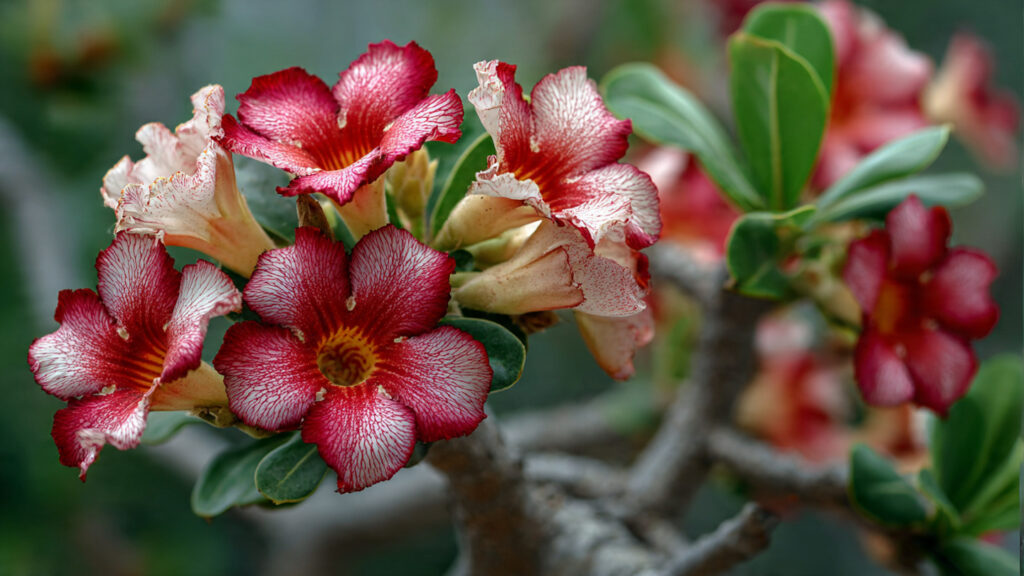
The Adenium, commonly known as the desert rose, is a stunning succulent that has captured the imagination of gardeners and plant enthusiasts worldwide. With its thick, bulbous trunk, elegant branching patterns, and vibrant flowers, Adenium is much more than a flowering plant—it is a living sculpture that can transform ordinary garden spaces into works of art. Whether displayed in containers, mixed borders, or as a focal point in a minimalist landscape, Adenium offers unparalleled opportunities for creative expression and sculptural impact.
This guide explores the artistic potential of Adenium, from selecting the right varieties to sculpting its form, integrating it into garden designs, and maintaining its health for long-lasting beauty.
Understanding Adenium as a Sculptural Plant
Adenium’s appeal lies in its combination of structural form and color:
- Caudex and trunk: The swollen base (caudex) adds dramatic visual weight, creating a bonsai-like appearance even in small specimens.
- Branching patterns: Natural twists and curves in branches create dynamic lines that mimic living sculpture.
- Flowers: Trumpet-shaped blooms in shades of red, pink, white, and bi-colors provide vibrant contrast against the sculptural trunk.
- Adaptability: Adenium thrives in containers, raised beds, and rocky gardens, making it versatile for design experimentation.
These characteristics make Adenium an ideal plant for gardeners seeking architectural and artistic impact in their landscapes.
Selecting the Right Adenium Variety
Adenium varieties differ in size, branching habit, and flower color. Choosing the right type is critical for sculptural impact:
- Adenium obesum – The classic desert rose, with a pronounced caudex and abundant blooms.
- Adenium arabicum – Known for thick, gnarled trunks and dramatic branch structures, perfect for bonsai-inspired designs.
- Adenium multiflorum – Produces clusters of flowers and a more delicate branching pattern, ideal for smaller spaces.
- Dwarf or hybrid varieties – Offer unique caudex shapes and color combinations, allowing artistic experimentation in containers.
Selecting a variety suited to your space and artistic vision ensures a harmonious balance between structure and floral display.
Preparing Adenium for Sculptural Display
The aesthetic impact of Adenium can be maximized by preparing and training the plant:
1. Container Selection
- Use wide, shallow pots for bonsai-style plants to emphasize trunk shape.
- Larger containers support more extensive root systems for dramatic caudex development.
- Choose materials that complement the garden design, such as terracotta, stone, or glazed ceramics.
2. Soil Mix
- Adenium thrives in well-draining, sandy soil, often with a mix of cactus soil, perlite, and coarse sand.
- Avoid heavy clay, which retains water and can cause root rot, compromising both plant health and aesthetic appeal.
3. Sunlight Exposure
- Full sun encourages strong, compact growth and vibrant flowers.
- Position containers or plants to highlight caudex form and branching lines from key viewing angles.
Sculptural Training Techniques
Adenium’s natural form can be enhanced using creative pruning, wiring, and shaping techniques:
1. Pruning
- Remove weak, crossing, or unattractive branches to emphasize symmetry or balance.
- Encourage upward or outward growth patterns depending on your desired visual effect.
- Prune after flowering to stimulate new growth and maintain a tidy silhouette.
2. Wiring
- For bonsai-style forms, gently wrap branches with soft wiring to guide curvature.
- Gradually adjust wire to prevent damage as the branch thickens.
- Wiring allows the creation of dynamic lines and elegant arcs that mimic traditional sculptures.
3. Branch Selection
- Highlight a few primary branches for a minimalist design.
- Remove competing stems that obscure the caudex or interrupt flow.
By training the plant thoughtfully, Adenium becomes a living sculpture with defined artistic lines and balance.
Integrating Adenium into Garden Landscapes
Adenium can serve as a sculptural element in various garden styles:
1. Focal Points
- Place a large Adenium on a pedestal, raised bed, or central island.
- Surround with gravel, stones, or low-growing plants to accentuate its form.
2. Container Gardens
- Combine multiple Adenium specimens in a container garden with contrasting textures.
- Use neutral or monochromatic backgrounds to make colors and shapes pop.
3. Rock Gardens and Succulent Beds
- Adenium pairs beautifully with cacti, agave, and succulents for a desert-inspired sculptural effect.
- Position near pathways or seating areas to allow viewers to appreciate trunk form and flower details.
4. Mixed Borders
- Use Adenium as an accent in flower beds with complementary textures, such as ornamental grasses or small shrubs.
- Its sculptural trunk contrasts beautifully with softer foliage, creating visual depth.
Care Practices to Maintain Artistic Form
Maintaining Adenium’s health is essential to preserve its sculptural impact:
1. Watering
- Adenium is drought-tolerant but benefits from moderate watering during the growing season.
- Allow soil to dry between watering to prevent root rot.
- Reduce watering in winter when the plant is dormant.
2. Fertilization
- Use a balanced, water-soluble fertilizer every 4–6 weeks during the growing season.
- High-phosphorus fertilizers encourage vibrant flowers without compromising caudex development.
3. Pest and Disease Management
- Inspect regularly for aphids, mealybugs, and spider mites.
- Treat infestations promptly with insecticidal soap or neem oil.
- Maintain good airflow around branches to reduce fungal issues.
4. Sunlight and Positioning
- Ensure full sun exposure for flower production and caudex thickness.
- Rotate containers occasionally to encourage balanced growth.
Seasonal Considerations
Adenium’s sculptural potential is influenced by seasonal growth patterns:
- Spring and Summer: Rapid growth, active flowering, and ideal pruning time.
- Fall: Gradually reduce watering as growth slows; allow caudex to store energy.
- Winter: Minimal water; protect from frost and cold drafts to maintain structural integrity.
Understanding these seasonal cycles ensures that your Adenium maintains both health and artistic form throughout the year.
Creative Display Ideas
- Bonsai Artistry: Shape Adenium in bonsai containers to mimic miniature trees with twisted trunks.
- Single Specimen Showpiece: Feature one dramatic caudex as the centerpiece of a patio or terrace.
- Symmetry and Balance: Place multiple Adenium in a symmetrical arrangement to create a sculptural visual rhythm.
- Contrasting Textures: Pair Adenium with rocks, pebbles, or contrasting plants for artistic depth and interest.
These design techniques allow gardeners to leverage Adenium as a living sculpture, blending horticulture with creativity.
Benefits of Using Adenium as a Sculptural Element
- Low Maintenance: Drought-tolerant and resistant to many pests.
- Visual Drama: Bulbous trunks and twisting branches provide architectural interest.
- Year-Round Appeal: Even when not flowering, the caudex and branches serve as sculptural elements.
- Versatility: Suitable for containers, garden beds, or minimalist landscapes.
By combining these benefits, Adenium becomes more than a plant—it becomes an artistic statement in any landscape.
➡️ How to Grow Malabar Spinach from Cuttings for Fast, Easy Greens
➡️ How to Grow Super Delicious Cabbage at Home Without a Garden
➡️ How to Grow Bean Sprouts at Home in Plastic Bottles Easily (Step‑by‑Step Guide)
➡️ Why is Your Lemon Tree Blooming in the Heart of Winter?
➡️ Why Should Your Garden Have a Dedicated Pollinator Highway?
➡️ Why Do Your Fruit Trees Need a Winter Wash to Thrive in Spring?
➡️ How Can Rice Water Transform Your Fruits into Sweeter Delights?
➡️ Jumpstart Your Winter Garden: Seed Starting Under Lights
Conclusion
Adenium offers gardeners an extraordinary opportunity to combine horticulture with artistic expression. Its unique caudex, elegant branching, and vibrant flowers make it a perfect sculptural element capable of transforming ordinary garden spaces into living art.
Through careful selection of varieties, skillful pruning and wiring, and thoughtful placement, Adenium can serve as a focal point, accent, or centerpiece in a wide range of garden styles. Maintaining its health through proper watering, fertilization, and pest management ensures the plant retains its dramatic form and continues to provide visual impact year after year.
Whether used in bonsai containers, rock gardens, or as a garden centerpiece, Adenium exemplifies the artistry of living sculpture, offering endless opportunities for creativity and aesthetic enjoyment. By understanding and nurturing its form, gardeners can explore the full artistic potential of Adenium, creating a landscape that is both vibrant and visually captivating.