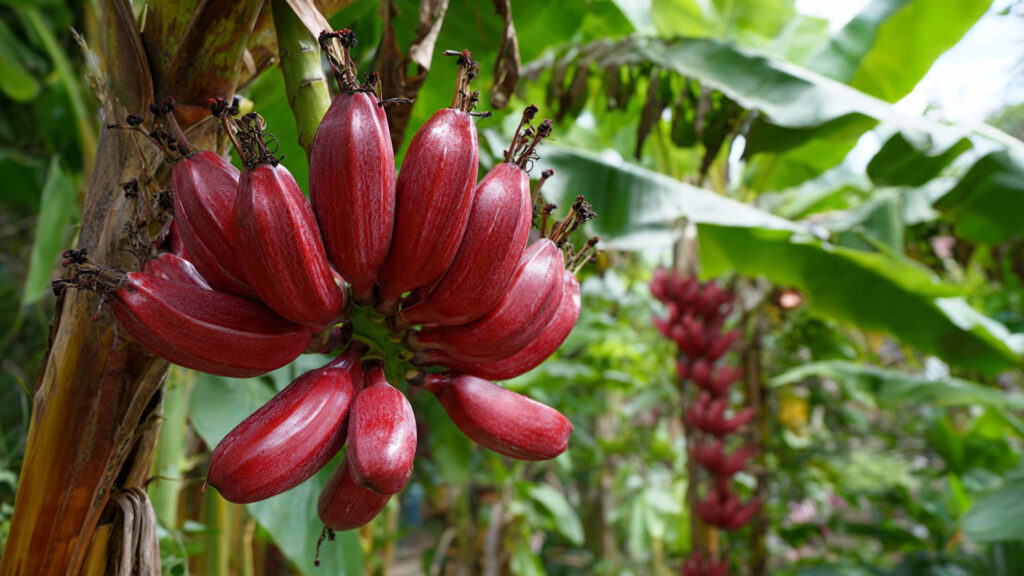
Red bananas (Musa acuminata ‘Red Dacca’) are a unique and visually striking addition to any tropical garden. Their deep reddish-purple skin, sweet flavor, and lush foliage make them a favorite among gardeners seeking both beauty and function. Unlike common yellow bananas, red bananas offer a stunning aesthetic that enhances the tropical landscape, while their fruit is delicious, nutrient-rich, and perfect for fresh consumption or cooking.
Growing red bananas in a tropical garden is both rewarding and achievable if you understand the specific requirements of this exotic plant. From soil preparation and planting to watering, fertilization, pest management, and harvesting, this guide provides comprehensive, practical advice for successfully cultivating red bananas for maximum visual and fruit appeal.
Understanding Red Bananas
Red bananas are a cultivar of the species Musa acuminata, known for their compact growth, deep red fruit, and striking burgundy-tinged leaves. They thrive in warm, humid tropical conditions and require careful attention to light, water, and soil to produce vibrant foliage and high-quality fruit.
Key Characteristics
- Colorful Fruit: The signature red-purple skin sets them apart in a tropical garden.
- Sweet Flavor: Red bananas are sweeter than yellow varieties and have a hint of raspberry flavor.
- Foliage Appeal: Large, broad leaves often with a reddish tint provide dramatic tropical visual impact.
- Growth Habit: Typically reach 10–12 feet in height in ideal conditions, making them suitable for garden focal points.
Understanding these traits helps gardeners provide the right care for both aesthetic and productive goals.
Selecting the Right Location
Red bananas require specific environmental conditions to thrive and produce both fruit and stunning foliage:
Sunlight
- Full to partial sun is essential; 6–8 hours of direct sunlight ensures healthy leaf growth and fruit development.
- In extremely hot regions, partial afternoon shade can prevent leaf scorch.
Temperature
- Ideal growth occurs in temperatures between 75–95°F (24–35°C).
- Red bananas are sensitive to cold; temperatures below 50°F (10°C) can stunt growth or damage plants.
Soil
- Well-draining, nutrient-rich soil is critical. Red bananas prefer loamy soil enriched with organic matter.
- A slightly acidic to neutral pH (5.5–7.0) supports optimal nutrient uptake.
- Avoid waterlogged or clay-heavy soil, which can lead to root rot.
Selecting the right location ensures healthy growth, rapid leaf expansion, and vibrant fruit development.
Planting Red Bananas
Proper planting technique sets the foundation for success:
Planting Material
- Suckers (Offsets): Most gardeners propagate red bananas from suckers taken from mature plants. Choose healthy, disease-free suckers 3–4 feet tall with well-developed roots.
- Tissue Culture Plants: These are available from nurseries and are disease-free and uniform.
Planting Technique
- Dig a hole twice the width and depth of the root ball.
- Place the plant so the roots spread naturally and the corm sits slightly above soil level.
- Backfill with enriched soil, firm gently, and water thoroughly.
- Apply a 2–3 inch layer of mulch around the base to retain moisture and suppress weeds.
Proper planting ensures rapid establishment, strong root development, and vigorous growth.
Watering Requirements
Red bananas are water-loving plants, but improper watering can compromise growth:
- Consistent Moisture: Keep soil consistently moist but avoid waterlogging, which can cause root rot.
- Deep Watering: Water deeply to reach the entire root system, encouraging strong roots.
- Mulching: Use organic mulch like straw or bark to retain moisture and regulate soil temperature.
- Humidity: High humidity promotes leaf health and prevents leaf edges from drying.
Consistent, adequate water ensures lush, dramatic foliage and supports heavy fruiting.
Fertilization for Growth and Fruit Production
Nutrient management is essential for red bananas to produce both visual impact and delicious fruit:
- Nitrogen: Promotes leaf growth and enhances the reddish hue of foliage.
- Phosphorus: Encourages flowering and strong root development.
- Potassium: Critical for fruit formation, sugar accumulation, and overall plant vigor.
- Application Frequency: Fertilize monthly during the growing season with a balanced fertilizer or apply compost and organic manure regularly.
- Foliar Feeding: Spray diluted fertilizer on leaves to boost growth and color.
A well-fed red banana plant develops vibrant leaves and produces large, sweet fruits.
Supporting Structure and Plant Care
Red bananas can grow tall and may require support:
- Staking: Use bamboo stakes or garden poles to support the pseudostem, especially when heavy fruit begins to form.
- Pruning: Remove dead leaves regularly to improve appearance and reduce pest habitats.
- Sucker Management: Allow only 2–3 suckers per main plant to focus energy on fruit and foliage.
Proper structural support and pruning ensure a neat, visually appealing plant and prevent breakage.
Flowering and Fruit Production
Red bananas produce impressive inflorescences that eventually develop into clusters of fruit:
➡️ How to Grow Malabar Spinach from Cuttings for Fast, Easy Greens
➡️ How to Grow Super Delicious Cabbage at Home Without a Garden
➡️ How to Grow Bean Sprouts at Home in Plastic Bottles Easily (Step‑by‑Step Guide)
➡️ Why is Your Lemon Tree Blooming in the Heart of Winter?
➡️ Why Should Your Garden Have a Dedicated Pollinator Highway?
➡️ Why Do Your Fruit Trees Need a Winter Wash to Thrive in Spring?
➡️ How Can Rice Water Transform Your Fruits into Sweeter Delights?
➡️ Jumpstart Your Winter Garden: Seed Starting Under Lights
- Flower Development: Large, red-purple flowers emerge from the center of the plant in mid-to-late growing season.
- Pollination: Most red bananas are parthenocarpic, producing fruit without pollination, but pollinator presence can improve yield.
- Fruit Development: Fruits take 3–4 months to mature depending on climate and care. Monitor water and nutrient supply to ensure sweet, plump bananas.
Healthy, well-fed plants produce both striking flowers and high-quality fruit, enhancing the tropical garden’s visual appeal.
Pest and Disease Management
Red bananas are susceptible to pests and diseases common in tropical climates:
Common Pests
- Aphids, mealybugs, and banana weevils can weaken plants.
- Spider mites may cause leaf discoloration.
Common Diseases
- Panama disease (Fusarium wilt)
- Black Sigatoka (leaf spot)
- Bacterial wilt
Management Techniques
- Inspect plants regularly and remove affected leaves or pests.
- Apply neem oil, insecticidal soap, or organic fungicides when needed.
- Maintain good airflow around plants to reduce fungal infections.
Effective pest and disease management ensures that foliage remains vibrant and fruit develops fully.
Harvesting Red Bananas
- Timing: Harvest fruit when the skin is reddish and slightly soft to the touch.
- Technique: Cut entire bunches with a sharp knife or pruning shears to avoid damaging the plant.
- Post-Harvest Ripening: Allow fruit to ripen fully at room temperature; red bananas are sweeter than yellow varieties when fully mature.
Proper harvesting maximizes both fruit quality and visual impact in the garden.
Maximizing Visual Appeal
Red bananas are not just about fruit—they create stunning garden aesthetics:
- Foliage Display: Their large, reddish-tinted leaves serve as a tropical backdrop for other plants.
- Grouping: Plant in clusters to create dramatic focal points in tropical garden beds.
- Contrasting Plants: Pair with green-leaved palms, heliconias, or colorful flowering plants to enhance visual impact.
- Container Planting: Smaller red banana cultivars in decorative pots can be moved to optimize sunlight or create striking patio displays.
The combination of colorful foliage and fruit makes red bananas a garden centerpiece.
Seasonal Care Tips
- Spring: Plant or transplant, apply balanced fertilizer, and monitor water levels.
- Summer: Ensure consistent watering, high humidity, and pest management; monitor fruit development.
- Autumn: Harvest ripe fruit, continue pruning and mulching to prepare for off-season growth.
- Winter (if tropical mild season): Protect plants from extreme cold or strong winds; maintain moisture.
Following seasonal care routines ensures year-round foliage health and consistent fruit production.
Final Thoughts
Red bananas are both a functional and ornamental choice for tropical gardens. With proper care, they offer:
- Stunning visual appeal through vibrant foliage and reddish fruits.
- Sweet, flavorful bananas for fresh eating or cooking.
- Tropical garden focal points that enhance landscaping.
- Relatively easy management when grown in optimal conditions.
Key strategies for success include:
- Selecting healthy plants and suitable varieties.
- Planting in sunny, warm, well-draining sites.
- Providing consistent water, humidity, and nutrients.
- Supporting growth with staking, pruning, and sucker management.
- Monitoring for pests and diseases to maintain plant health.
By mastering these techniques, gardeners can cultivate red bananas that are both visually striking and highly productive, transforming any tropical garden into a lush, colorful paradise.