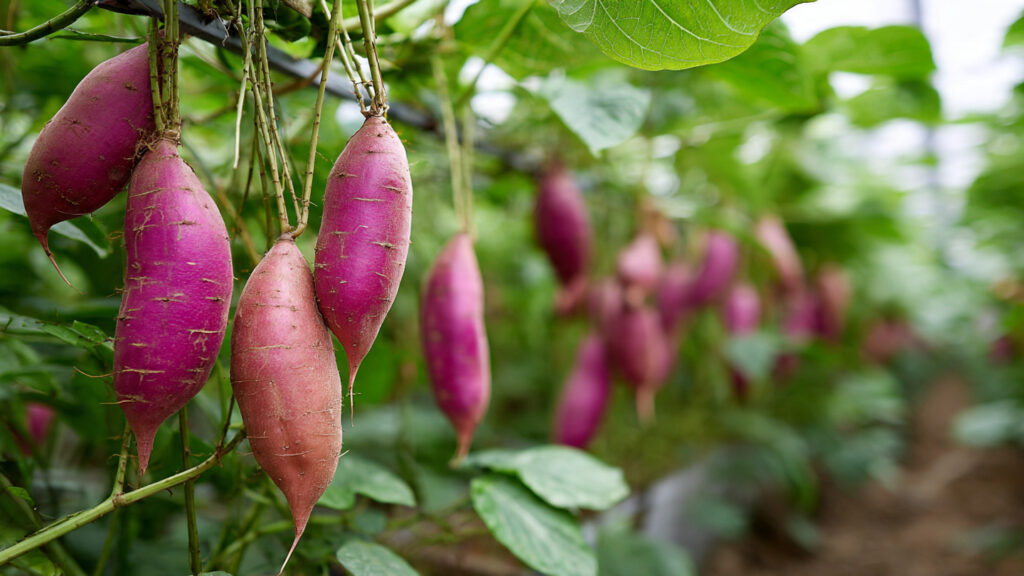
Sweet potatoes are usually associated with sprawling vines, sprawling across gardens and taking up more space than most gardeners anticipate. But what if there was a way to grow sweet potatoes vertically, saving space, boosting yield, and producing a crop that looks as impressive as it tastes? An experimental planting method has been making waves among urban gardeners and innovative horticulturists, and the results are nothing short of shocking.
Rethinking How Sweet Potatoes Grow
Traditionally, sweet potatoes are grown horizontally in the ground. Their vines creep across the soil while their roots—technically “tubers”—develop underground. This conventional approach works, but it comes with challenges:
- Space Consumption: Sweet potato vines spread aggressively, often crowding other crops.
- Pest Issues: The sprawling vines are more susceptible to insects like flea beetles, wireworms, and root-knot nematodes.
- Harvest Difficulty: Unearthing tubers from the soil can be labor-intensive, and some are damaged in the process.
- Soil Limitations: Poorly drained or compacted soil can reduce yield and tuber quality.
Given these challenges, gardeners have been exploring alternative methods to cultivate this nutritious tuber—methods that are not just practical but visually stunning. The “hanging sweet potatoes” experiment is one such approach.
The Concept of Hanging Sweet Potatoes
The idea is surprisingly simple: instead of letting vines spread along the ground, you train them to grow in suspended containers or vertical planters. Essentially, the sweet potato plants are encouraged to grow both upwards and downwards, creating a situation where the tubers hang or dangle freely.
This concept challenges decades of conventional gardening wisdom. Many horticulturists believed that sweet potatoes must be grown in soil to develop tubers properly. However, early experiments have shown that as long as the plants have:
- Adequate nutrients
- Proper drainage
- Sufficient moisture
…sweet potatoes can adapt to vertical growth surprisingly well.
How the Experiment Was Conducted
The experimental method involves a few key steps:
- Choosing the Right Container:
Large, deep containers or hanging baskets are ideal. Some gardeners have used mesh bags or fabric grow sacks that allow roots to expand naturally. The key is depth, because sweet potato tubers can grow quite long—often 6–12 inches or more. - Selecting Healthy Slips:
Sweet potato “slips” are the young shoots that sprout from mature tubers. Choosing strong, disease-free slips is crucial for success, as weak plants are less likely to thrive in a vertical setup. - Preparing the Growing Medium:
A lightweight, nutrient-rich potting mix works best. Traditional garden soil can be too dense for hanging setups. Many gardeners mix in compost, coconut coir, and perlite to create a medium that retains moisture while allowing tubers to expand. - Planting Technique:
The slips are planted at the top of the container, with vines allowed to cascade downwards. In some setups, the containers are stacked or suspended on hooks, turning sweet potatoes into a “living sculpture” of greens and purples. - Training the Vines:
Unlike traditional horizontal planting, these vines need guidance. Gardeners often use trellises, stakes, or simply let them hang freely, making sure leaves get sufficient sunlight. - Fertilization & Watering:
Regular feeding with balanced, potassium-rich fertilizer helps tubers develop. Because hanging systems can dry out faster than soil beds, frequent monitoring of moisture is essential.
The Shocking Results
After a full growing season, the results of this vertical planting experiment surprised even seasoned gardeners:
- Unexpected Yield: Hanging sweet potatoes often produced tubers equal in size—and in some cases larger—than those grown traditionally. Some vertical containers yielded over a dozen market-sized tubers, while taking up only a fraction of the space.
- Healthier Plants: Vertical growth reduced the incidence of pests and fungal infections, as the leaves and stems were kept off the soil. The airflow around the plant also discouraged mold and mildew, common problems in ground-planted sweet potatoes.
- Visual Impact: The plants themselves became a spectacle. Cascading vines with green or purple leaves draped elegantly from containers, turning sweet potatoes into a dual-purpose crop—both edible and decorative.
- Ease of Harvest: Because the tubers formed in accessible containers, gardeners could harvest without bending or digging in heavy soil. In some cases, tubers even “fell into” soft, lined baskets, minimizing damage.
Why This Method Works
Hanging sweet potatoes succeed due to a combination of factors:
- Gravity-Assisted Growth: Tubers naturally grow downward. In hanging containers, they grow into open space instead of being constricted by soil or neighboring roots.
- Improved Air Circulation: Elevated plants receive better airflow, reducing fungal and bacterial infections.
- Optimized Space Use: Vertical gardening allows gardeners to grow more in limited areas—perfect for balconies, patios, or urban rooftops.
- Controlled Environment: Using containers gives gardeners full control over soil composition, drainage, and moisture, directly influencing tuber quality.
Tips for Maximizing Hanging Sweet Potato Success
If you’re inspired to try this method, consider these practical tips:
- Choose Varieties Wisely: Some varieties, like Beauregard or Jewel, adapt better to container growth. Compact or ornamental varieties can also add a decorative touch.
- Use Strong Support: Vines can become heavy. Ensure hooks, trellises, or suspension systems are sturdy enough to handle mature plants and tubers.
- Regular Pruning: Prune excessive vines to encourage energy to flow into tuber production. Overgrown vines may take resources away from tubers.
- Sunlight Requirements: Sweet potatoes need at least 6–8 hours of sunlight daily. Place hanging setups where they get maximum exposure.
- Rotate Containers: Occasionally rotating hanging containers ensures even sunlight exposure for all leaves and tubers.
- Watch Watering Closely: Hanging containers dry faster than ground soil. Check moisture levels frequently, especially during hot weather.
Potential Challenges
While the experiment has been successful, gardeners should be aware of potential hurdles:
- Weight Management: Large containers with fully developed tubers can become very heavy. Ensure your hanging system can safely hold them.
- Tubers Exposure: Hanging setups may expose tubers to temperature extremes. Insulating the container or using lightweight mulch can help.
- Limited Root Space: Extremely deep or large tubers might still struggle if the container is too small. Planning container size is critical.
Despite these challenges, the benefits often outweigh the risks—especially for gardeners with limited space or those seeking innovative techniques.
Beyond Sweet Potatoes: The Vertical Gardening Revolution
The success of hanging sweet potatoes is part of a broader trend: vertical gardening. From strawberries to tomatoes, many traditionally ground-bound crops are being grown in vertical setups. This method:
- Maximizes limited space
- Reduces pest and disease pressure
- Makes harvesting easier
- Adds aesthetic appeal to urban gardens
Sweet potatoes, in particular, demonstrate that even crops thought to be “ground-only” can adapt with a little creativity.
Conclusion
The experiment with hanging sweet potatoes proves that horticulture is full of surprises. By challenging conventional methods, gardeners can uncover techniques that save space, increase yield, and even transform their gardens into living art.
➡️ How to Grow Malabar Spinach from Cuttings for Fast, Easy Greens
➡️ How to Grow Super Delicious Cabbage at Home Without a Garden
➡️ How to Grow Bean Sprouts at Home in Plastic Bottles Easily (Step‑by‑Step Guide)
➡️ Why is Your Lemon Tree Blooming in the Heart of Winter?
➡️ Why Should Your Garden Have a Dedicated Pollinator Highway?
➡️ Why Do Your Fruit Trees Need a Winter Wash to Thrive in Spring?
➡️ How Can Rice Water Transform Your Fruits into Sweeter Delights?
➡️ Jumpstart Your Winter Garden: Seed Starting Under Lights
Whether you’re an urban gardener with a small balcony or a hobbyist looking to experiment, hanging sweet potatoes offer a fun, practical, and rewarding project. The shocking results aren’t just about yield—they’re about reimagining how we grow our food.
So why stick to the ground? With a little ingenuity and care, you can grow sweet potatoes that dangle, flourish, and delight—proving that sometimes, thinking outside the soil is the key to horticultural success.