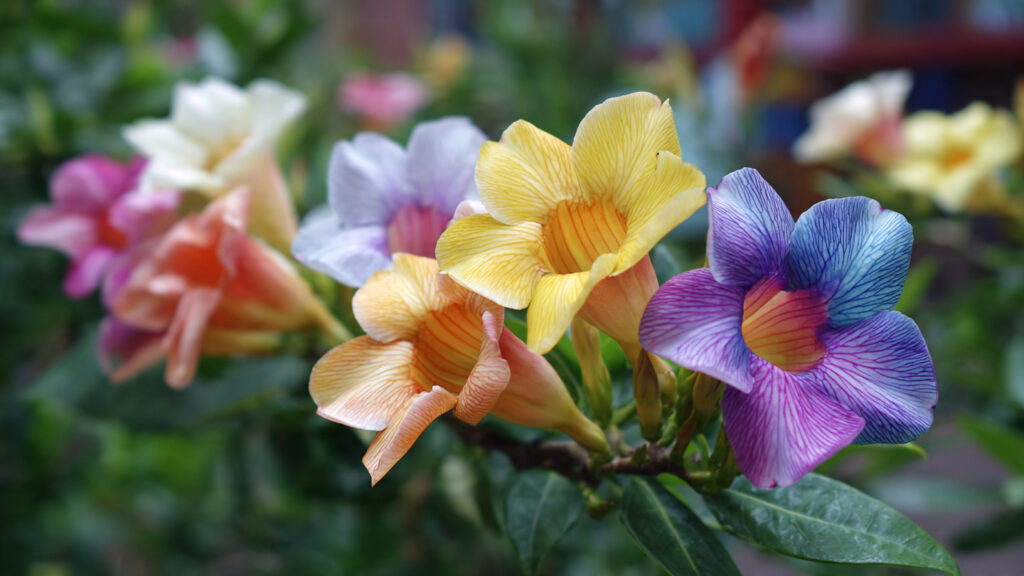
Imagine stepping into your garden and seeing a single Allamanda plant blooming in bright yellow, soft pink, creamy white, and even deep golden shades—all at once. It may sound like a gardening fantasy, but with the right grafting techniques, you can grow a stunning “rainbow” Allamanda on just one plant. Multiple-colour grafting is a fascinating and rewarding method that allows gardeners to combine different varieties onto a single rootstock, creating a vibrant, eye-catching display.
In this guide, you’ll learn how multiple-colour grafting works, why Allamanda is a perfect candidate, and step-by-step instructions to successfully grow your own rainbow Allamanda plant.
Understanding Allamanda: A Tropical Beauty
Allamanda, often called Golden Trumpet, is a tropical flowering plant known for its large, trumpet-shaped blooms and glossy green foliage. It thrives in warm climates and produces abundant flowers for much of the year in favorable conditions.
Common varieties include:
- Bright yellow Allamanda
- Dwarf varieties for containers
- Lighter cream or pale yellow types
- Rare pink-toned hybrids (in some regions)
Because Allamanda has a strong growth habit and thick, flexible stems, it responds well to grafting when done correctly.
What Is Multiple-Colour Grafting?
Grafting is a horticultural technique where a piece of one plant (called the scion) is attached to another plant (the rootstock) so they grow together as one. In multiple-colour grafting, several scions from different varieties are attached to a single rootstock.
The result? One plant producing flowers of different colors simultaneously.
This technique works best when:
- The varieties are closely related
- Growth habits are similar
- The grafts are healthy and compatible
Allamanda varieties are generally compatible, making them excellent candidates for rainbow grafting.
Why Choose Multiple Grafting for Allamanda?
There are several benefits to growing a multi-colour Allamanda:
1. Stunning Visual Impact
A single plant blooming in multiple colors becomes an instant focal point in your garden.
2. Space Saving
Instead of planting several Allamanda plants, you can grow multiple colors in one pot or garden space.
3. Creative Gardening
It allows you to experiment and customize your plant according to your favorite shades.
4. Stronger Growth
Using a vigorous rootstock often improves the overall resilience of the grafted plant.
Best Time for Grafting Allamanda
Timing is crucial for successful grafting. The ideal period is during active growth, typically in warm seasons when:
➡️ How to Grow Malabar Spinach from Cuttings for Fast, Easy Greens
➡️ How to Grow Super Delicious Cabbage at Home Without a Garden
➡️ How to Grow Bean Sprouts at Home in Plastic Bottles Easily (Step‑by‑Step Guide)
➡️ Why is Your Lemon Tree Blooming in the Heart of Winter?
➡️ Why Should Your Garden Have a Dedicated Pollinator Highway?
➡️ Why Do Your Fruit Trees Need a Winter Wash to Thrive in Spring?
➡️ How Can Rice Water Transform Your Fruits into Sweeter Delights?
➡️ Jumpstart Your Winter Garden: Seed Starting Under Lights
- Temperatures are consistently above 20°C (68°F)
- The plant is not under stress
- There is strong sap flow
Avoid grafting during cold weather or extreme heat, as the plant’s healing ability decreases.
Choosing the Right Rootstock
Your rootstock should be:
- Healthy and disease-free
- At least pencil-thick in stem size
- Actively growing
- Well-established in soil
A strong yellow Allamanda plant often makes an excellent rootstock due to its vigorous growth.
The healthier the rootstock, the higher the success rate of multiple grafts.
Selecting Scions of Different Colours
Scions are cuttings taken from the varieties you want to combine. When selecting scions:
- Choose semi-hardwood stems
- Ensure they have 2–3 healthy nodes
- Avoid flowering stems
- Select disease-free growth
The scion thickness should closely match the thickness of the rootstock branch where you plan to graft.
Step-by-Step Guide to Multiple Grafting on Allamanda
Step 1: Prepare Tools
You will need:
- Sharp grafting knife or blade
- Grafting tape or plastic wrap
- Pruning shears
- Clean cloth
- Optional: grafting wax
Sterilize all tools before starting to prevent infection.
Step 2: Decide Grafting Points
Choose different branches around the plant to attach different coloured scions. For balance and symmetry, space grafts evenly.
You can graft:
- Two colours opposite each other
- Three or four colours around the main stem
- Multiple grafts on separate branches
Avoid crowding too many grafts in one small area.
Step 3: Make the Cut (Cleft Grafting Method)
The cleft graft method works well for Allamanda:
- Cut the selected rootstock branch cleanly.
- Make a vertical slit about 1–1.5 inches deep.
- Shape the base of the scion into a wedge.
- Insert the wedge into the slit, ensuring cambium layers align.
The cambium layer (just under the bark) must contact properly for the graft to succeed.
Step 4: Secure the Graft
Wrap the graft tightly with grafting tape or plastic strip. The wrap should:
- Hold the scion firmly
- Prevent moisture loss
- Keep air out
You may apply grafting wax to seal exposed areas if needed.
Step 5: Provide Aftercare
After grafting:
- Keep the plant in partial shade
- Avoid heavy watering
- Protect from strong winds
- Do not disturb the graft union
Within 2–4 weeks, successful grafts will show new leaf growth.
Caring for Your Rainbow Allamanda
Once grafts are established, focus on balanced care to support all scions equally.
Pruning
Remove shoots emerging below graft unions. These belong to the rootstock and can overpower grafted varieties.
Fertilizing
Use a balanced flowering fertilizer every 4–6 weeks during the growing season. Avoid excessive nitrogen.
Sunlight
Provide at least 6–8 hours of sunlight daily for abundant blooming.
Watering
Keep soil moist but well-drained. Allamanda dislikes waterlogged soil.
Common Challenges and Solutions
Graft Failure
If a scion dries out or turns black, it may not have fused properly. Try again with fresh material.
Uneven Growth
Some colours may grow faster than others. Light pruning helps balance growth.
Pest Problems
Watch for aphids or spider mites. Treat early using neem oil or insecticidal soap.
Weak Flowering
Ensure adequate sunlight and balanced feeding.
Growing Rainbow Allamanda in Containers
Multiple-colour grafted Allamanda grows beautifully in large pots.
Tips for container growing:
- Use well-draining potting mix
- Ensure drainage holes
- Use sturdy support stakes
- Repot every 1–2 years
Container plants are easier to manage and move during harsh weather.
How Long Before You See Multiple Colours?
If grafting is successful:
- New growth appears in 3–4 weeks
- Flowering may resume in 6–8 weeks
- Full multi-colour display develops within one season
Patience is key, but the reward is breathtaking.
Is Multiple Grafting Suitable for Beginners?
While grafting requires precision, beginners can succeed with practice. Start with two colours before attempting three or more.
The more carefully you align the cambium layers and secure the graft, the better your success rate.
Final Thoughts
Growing multiple colours on a single Allamanda plant is a creative and impressive gardening achievement. With proper technique, healthy rootstock, compatible scions, and attentive care, you can transform a simple flowering shrub into a vibrant rainbow masterpiece.
Multiple-colour grafting not only saves space but also turns your garden into a showcase of horticultural skill. Whether planted in the ground or grown in a container, a rainbow Allamanda becomes a conversation starter and a source of pride for any gardener.
If you love experimenting with plants and enjoy vibrant tropical blooms, this grafting project is absolutely worth trying. With patience and practice, you’ll soon enjoy the spectacular sight of different coloured trumpet flowers blooming together on one magnificent plant.