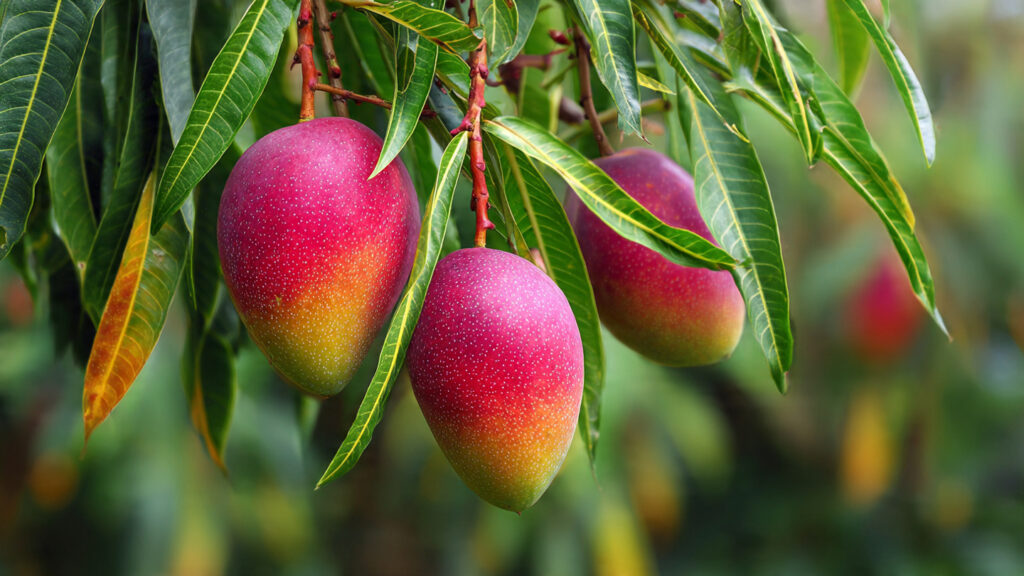
Mango is often called the “king of fruits,” and for good reason. Its rich flavor, sweet aroma, and wide adaptability make it one of the most loved tropical fruits worldwide. Scientifically known as Mango, mango trees can grow large and take several years to bear fruit when grown from seed. However, if you want faster fruiting, consistent quality, and higher success rates, grafting is the best method.
Among the various grafting techniques, V grafting (also known as wedge grafting) is one of the simplest and most reliable methods for propagating mango trees. This guide provides a complete step-by-step explanation of the Mango V grafting technique to help you achieve high success and encourage early fruiting.
Why Choose V Grafting for Mango?
V grafting is popular among home gardeners and nursery growers because:
- It offers a high success rate when done correctly.
- It promotes faster fruiting compared to seed-grown trees.
- It maintains the exact characteristics of the mother plant.
- It is suitable for small-scale and large-scale propagation.
- It is simple enough for beginners to learn.
Seed-grown mango trees may take 6–8 years to produce fruit and often vary in quality. Grafted mango trees, on the other hand, can start fruiting in 2–4 years while preserving the desired variety traits.
Understanding the Basics of Grafting
Grafting involves joining two plant parts so they grow as one:
- Rootstock – The lower portion with roots.
- Scion – The upper portion taken from a high-quality fruiting tree.
The success of grafting depends on the proper alignment of the cambium layers (the green tissue just under the bark). When these layers connect properly, the graft heals and begins growing as a single plant.
Best Time for Mango V Grafting
Timing is crucial for high success.
The ideal period for mango grafting is:
- Late winter to early spring
- During active growth phase
- When sap flow is steady but not excessive
Avoid extreme heat or heavy rainfall periods. Mild temperatures improve healing and reduce stress.
Tools and Materials Required
Prepare everything before starting:
- Healthy rootstock (6–12 months old)
- Healthy scion from a disease-free tree
- Sharp grafting knife
- Pruning shears
- Grafting tape or polythene strip
- Plastic cover or grafting bag
- Alcohol for sterilizing tools
Using clean, sharp tools ensures smooth cuts and reduces infection risk.
Step 1: Selecting a Healthy Rootstock
The rootstock plays a critical role in plant vigor and disease resistance.
Choose:
- Seedling mango plants 6–12 months old
- Stem thickness similar to a pencil
- Strong and healthy growth
- Disease-free leaves
A well-developed root system supports strong graft union and faster growth.
Step 2: Selecting the Right Scion
The scion determines fruit quality and characteristics.
➡️ How to Grow Malabar Spinach from Cuttings for Fast, Easy Greens
➡️ How to Grow Super Delicious Cabbage at Home Without a Garden
➡️ How to Grow Bean Sprouts at Home in Plastic Bottles Easily (Step‑by‑Step Guide)
➡️ Why is Your Lemon Tree Blooming in the Heart of Winter?
➡️ Why Should Your Garden Have a Dedicated Pollinator Highway?
➡️ Why Do Your Fruit Trees Need a Winter Wash to Thrive in Spring?
➡️ How Can Rice Water Transform Your Fruits into Sweeter Delights?
➡️ Jumpstart Your Winter Garden: Seed Starting Under Lights
Select:
- Mature, healthy branch from a proven fruiting tree
- Similar thickness to rootstock
- 3–4 healthy buds
- Free from pests and diseases
The scion should not be too soft or too woody. Semi-hardwood material works best.
Step 3: Preparing the Rootstock (V Cut)
Now comes the actual V cut preparation.
- Cut the rootstock stem horizontally at about 6–8 inches above soil level.
- Make a vertical split in the center about 1–1.5 inches deep.
- This creates a “V” shaped opening.
Ensure the cut is clean and smooth. Rough cuts reduce success rates.
Step 4: Preparing the Scion (Wedge Cut)
The scion must fit perfectly into the rootstock split.
- Trim the bottom end of the scion into a wedge shape.
- Make two slanting cuts forming a sharp V shape.
- The wedge length should match the depth of the rootstock split.
The goal is to ensure maximum cambium contact between both parts.
Step 5: Joining the Scion and Rootstock
Carefully insert the wedge-shaped scion into the rootstock split.
Important points:
- Align at least one side of the cambium layers perfectly.
- Ensure the scion fits tightly.
- Avoid gaps or air pockets.
Precise alignment significantly improves graft success.
Step 6: Securing the Graft
After joining:
- Wrap the graft union firmly with grafting tape or polythene.
- Ensure no moisture enters the cut area.
- Cover completely but avoid excessive tightness.
A secure wrap keeps the scion stable and prevents drying.
Step 7: Protecting the Graft
To maintain humidity:
- Cover the scion with a transparent plastic bag.
- Make small ventilation holes.
- Keep the plant in partial shade.
This mini-greenhouse effect prevents dehydration and encourages healing.
Step 8: Aftercare and Monitoring
Aftercare determines long-term success.
Watering:
- Keep soil moist but not waterlogged.
- Avoid heavy watering immediately after grafting.
Sunlight:
- Provide indirect sunlight.
- Avoid harsh direct sun for 2–3 weeks.
Monitoring:
- Watch for bud swelling (usually 2–4 weeks).
- Remove plastic cover gradually once growth appears.
Do not disturb the graft during healing.
Step 9: Removing Rootstock Shoots
Sometimes new shoots emerge from the rootstock below the graft union.
Remove them immediately.
These shoots divert energy away from the scion and reduce growth performance.
Step 10: Removing Grafting Tape
After 4–6 weeks, once the graft union is strong:
- Carefully remove the tape.
- Avoid damaging the new growth.
If tape is biodegradable, it may naturally decompose.
How to Ensure High Success Rate
Follow these expert tips:
- Always sterilize tools before use.
- Perform grafting during moderate temperatures.
- Use fresh scion wood.
- Match stem thickness closely.
- Avoid touching cut surfaces with bare hands.
- Keep graft area clean and dry.
Attention to detail dramatically increases success rates.
Advantages of Mango V Grafting
1. Early Fruiting
Grafted mango trees produce fruit much earlier than seed-grown plants.
2. True-to-Type Variety
The fruit will be identical to the parent tree.
3. Disease Resistance
Strong rootstock enhances plant health.
4. Controlled Tree Size
Easier to manage and suitable for small gardens.
5. Higher Productivity
Uniform growth leads to better yield.
Common Mistakes to Avoid
Misaligned Cambium
Even slight misalignment reduces success.
Loose Wrapping
Air gaps cause drying and failure.
Using Weak Scion
Poor-quality scion leads to low survival.
Excessive Sunlight
New grafts are sensitive to heat stress.
Overwatering
Too much moisture encourages fungal infection.
Avoiding these mistakes improves your chances significantly.
When Will the Tree Bear Fruit?
Under proper care:
- Grafted mango trees may flower in 2–3 years.
- Fruiting may begin within 3–4 years.
Actual timing depends on climate, care, and variety.
Regular fertilization, pruning, and pest management promote healthy development.
Long-Term Care After Successful Grafting
Once established:
- Provide balanced fertilizer twice a year.
- Prune lightly to shape canopy.
- Protect from strong winds.
- Monitor for pests like mango hoppers or mealybugs.
- Mulch around base to retain moisture.
Healthy maintenance ensures consistent fruit production.
Final Thoughts
The Mango V grafting technique is a powerful and reliable method for producing high-quality mango plants with early fruiting potential. By carefully selecting healthy rootstock and scion, making precise cuts, ensuring proper alignment, and providing attentive aftercare, you can achieve a high success rate even as a home gardener.
Grafting not only shortens the waiting period for fruit but also guarantees that you grow your favorite mango variety with consistent taste and quality. With patience, precision, and practice, you can master this technique and enjoy abundant harvests for years to come.
Start with one plant, refine your method, and soon you’ll gain the confidence to graft multiple trees successfully. The reward of harvesting sweet, homegrown mangoes from your own grafted tree makes the effort truly worthwhile.