Cleaning your home can feel like a never-ending task. No matter how often you vacuum, dust, or scrub surfaces, the chores pile up, leaving you frustrated and exhausted. Many people assume that cleaning faster means skipping steps or rushing through tasks. But what if the secret to dramatically reducing your cleaning time isn’t working harder—but working smarter?
There’s an often-overlooked step in home cleaning that can transform the way you maintain your space. By incorporating this step into your routine, you can cut your cleaning time in half, make your efforts more effective, and even enjoy a more organized, stress-free environment.
The Overlooked Step: Preparation and Organization
The key to faster cleaning isn’t in the mop, vacuum, or cleaning products—it’s in preparing your space before you start cleaning. Many people dive straight into scrubbing and dusting without taking a moment to organize, which leads to repeated effort, wasted time, and missed areas.
Preparation involves three main actions:
- Decluttering before cleaning
- Gathering all necessary cleaning supplies
- Planning a systematic cleaning order
By spending just 5–10 minutes preparing, you can dramatically reduce cleaning time and effort.
1. Decluttering: Clear the Path for Efficient Cleaning
Clutter is one of the biggest obstacles to quick and effective cleaning. Objects scattered across countertops, tables, and floors force you to clean around them, which wastes time and energy.
How to declutter efficiently:
- Room-by-room approach: Focus on one room at a time. Pick up items that don’t belong and place them in a temporary “holding bin” to sort later.
- Sort by category: Quickly group items into categories: trash, relocate, or keep.
- Use baskets or boxes: Place loose items in containers to keep surfaces clear for faster cleaning.
By removing clutter before cleaning, you allow your tools—vacuum, mop, and cloth—to work uninterrupted, making the process faster and more thorough.
2. Gather Supplies Ahead of Time
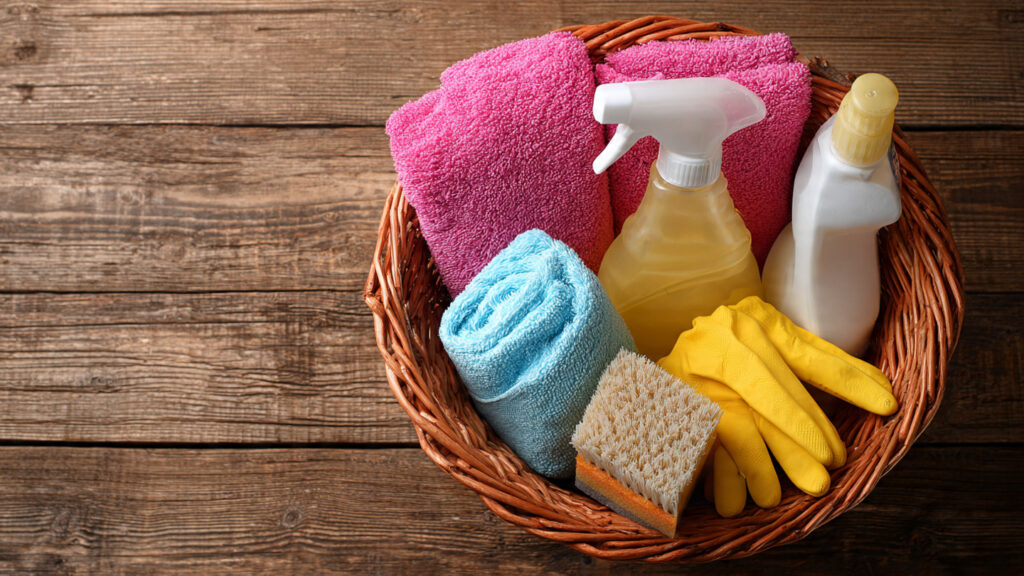
Nothing wastes more time than running back and forth to fetch cleaning products, towels, or brushes. Before you start, gather everything you’ll need:
- All-purpose cleaner
- Microfiber cloths
- Mop or vacuum
- Sponges and scrubbers
- Trash bags or bins
- Optional: gloves, dusters, and disinfectants
Tip: Keep a small cleaning caddy stocked with essentials in each major area of your home. This way, you won’t waste time searching for items and can move seamlessly from one task to the next.
3. Plan a Systematic Cleaning Order
Many people clean haphazardly, moving from one room to another without a plan. This can cause you to redo tasks or miss spots. By planning a cleaning order, you save energy and time.
Effective cleaning order strategies:
- Top-to-bottom cleaning: Dust ceiling fans, shelves, and surfaces first, then clean floors. This prevents dirt from falling onto freshly cleaned areas.
- Room-to-room workflow: Finish one room completely before moving to the next.
- Wet-to-dry sequence: Start with tasks involving water or liquids (e.g., kitchen counters, sinks), then move to dry tasks like dusting or vacuuming.
A systematic approach ensures you clean efficiently and avoid unnecessary repetition.
Why Preparation Saves Time
Preparation may seem like an extra step, but it actually reduces overall cleaning time by minimizing obstacles, interruptions, and repeated effort. Here’s why:
- Fewer interruptions: Everything you need is within reach, so you don’t waste minutes searching for supplies.
- Streamlined workflow: Cleaning tasks flow logically, reducing energy spent switching tasks.
- Reduced effort: Clear surfaces make it easier to clean thoroughly the first time, preventing the need for repeat cleaning.
- Mental clarity: A structured approach keeps you focused and motivated, making the process feel less overwhelming.
Many professional cleaners swear by preparation because it multiplies the effectiveness of every cleaning action.
➡️ How to Grow Malabar Spinach from Cuttings for Fast, Easy Greens
➡️ How to Grow Super Delicious Cabbage at Home Without a Garden
➡️ How to Grow Bean Sprouts at Home in Plastic Bottles Easily (Step‑by‑Step Guide)
➡️ Why is Your Lemon Tree Blooming in the Heart of Winter?
➡️ Why Should Your Garden Have a Dedicated Pollinator Highway?
➡️ Why Do Your Fruit Trees Need a Winter Wash to Thrive in Spring?
➡️ How Can Rice Water Transform Your Fruits into Sweeter Delights?
➡️ Jumpstart Your Winter Garden: Seed Starting Under Lights
Extra Tips to Maximize Cleaning Efficiency
Beyond preparation, a few additional strategies can further reduce cleaning time:
1. Use Multipurpose Products
Instead of switching between multiple products, use cleaners that work on several surfaces. For example, an all-purpose cleaner can handle counters, cabinets, and even some floors. This reduces trips to storage and simplifies the process.
2. Work in Zones
Divide larger areas into smaller zones, and focus on completing each zone before moving on. For instance, in the kitchen, start with countertops, then move to the sink area, appliances, and finally the floor. This makes cleaning more manageable and ensures nothing is skipped.
3. Adopt Quick Daily Habits
Small daily habits can prevent dirt and clutter from piling up, making your deep cleaning sessions shorter:
- Wipe kitchen counters after each use
- Sweep high-traffic areas daily
- Put items back in their designated spots immediately
These tiny actions reduce the time and effort needed for a full cleaning session.
4. Invest in Time-Saving Tools
Modern cleaning tools can dramatically cut your effort:
- Microfiber cloths for quick dusting and streak-free cleaning
- Cordless vacuum cleaners for easy mobility
- Spray mop systems that combine water and cleaner in one motion
The right tools, combined with preparation, multiply your cleaning efficiency.
5. Set a Timer
Time yourself for each room or task. This creates a sense of urgency, keeps you focused, and prevents over-cleaning. Often, you’ll find you can finish tasks in less than half the time when you commit to a set timeframe.
Putting It All Together: Sample Efficient Cleaning Routine
Here’s a step-by-step example of how to implement the overlooked preparation step in your routine:
- Preparation (5–10 minutes)
- Declutter each room, putting items in temporary bins.
- Gather all cleaning supplies in a caddy.
- Plan the order: top-to-bottom, wet-to-dry, room-to-room.
- Cleaning Session (20–40 minutes, depending on home size)
- Dust ceiling fans, shelves, and furniture.
- Wipe counters, tables, and sinks with multipurpose cleaner.
- Clean windows, mirrors, or glass surfaces.
- Vacuum or sweep floors, then mop if necessary.
- Finishing Touches (5 minutes)
- Empty trash bins.
- Put clutter back in its designated place.
- Inspect each room to ensure nothing was missed.
By starting with preparation, the cleaning session flows smoothly, reduces frustration, and dramatically shortens total cleaning time.
The Psychological Benefits of Preparation
Preparation doesn’t just save time—it also reduces stress. A structured cleaning routine:
- Reduces decision fatigue: You already know what to clean and in what order.
- Increases motivation: Seeing clutter removed and supplies ready gives you momentum.
- Creates a sense of accomplishment: Completing tasks efficiently makes you feel productive and satisfied.
When cleaning becomes a more organized, less chaotic process, you’re more likely to maintain a clean home consistently.
Conclusion
The next time you dread cleaning, remember that the key to reducing your cleaning time isn’t rushing—it’s preparation. By decluttering, gathering your supplies, and planning a systematic cleaning order, you set yourself up for a faster, more efficient, and less stressful cleaning experience.
Combine this overlooked step with multipurpose products, time-saving tools, and daily habits, and you’ll notice a remarkable difference. Cleaning will no longer feel like a dreaded chore, but rather a quick, manageable, and even satisfying routine.
In essence, the secret to cutting cleaning time is not about working harder, but working smarter. Start incorporating this step today, and transform the way you clean your home forever. You’ll save time, reduce stress, and enjoy a consistently tidy and welcoming living space.